
Flannel Shirt Outfits for Men: 12 Proven Looks That Actually Work
Flannel shirt outfits for men are easy to get wrong and surprisingly simple to get right once you know the rules. Almost every man owns a flannel shirt. Far fewer own one that fits.
That is the whole problem in a sentence. Flannel gets blamed for looking sloppy, bulky, or like a costume, but the shirt is rarely at fault. It is usually a size too big, buttoned the wrong way, or paired with the three other items that push the look straight into lumberjack territory.
Done properly, flannel is one of the most useful things in a cold-weather wardrobe. It works as a shirt, a light jacket, or a layer under something heavier. It handles a Saturday morning and a Thursday night out with the same shirt and different trousers.
This guide covers the fit rules first, because nothing below matters if the shirt sits wrong. Then twelve outfits — jeans, chinos, layering, office, date night, outdoors — plus colour, footwear, grooming, and the mistakes that keep showing up. At the end there is a short buying guide, because the right shirt makes the styling easy.
How a Flannel Shirt Should Fit
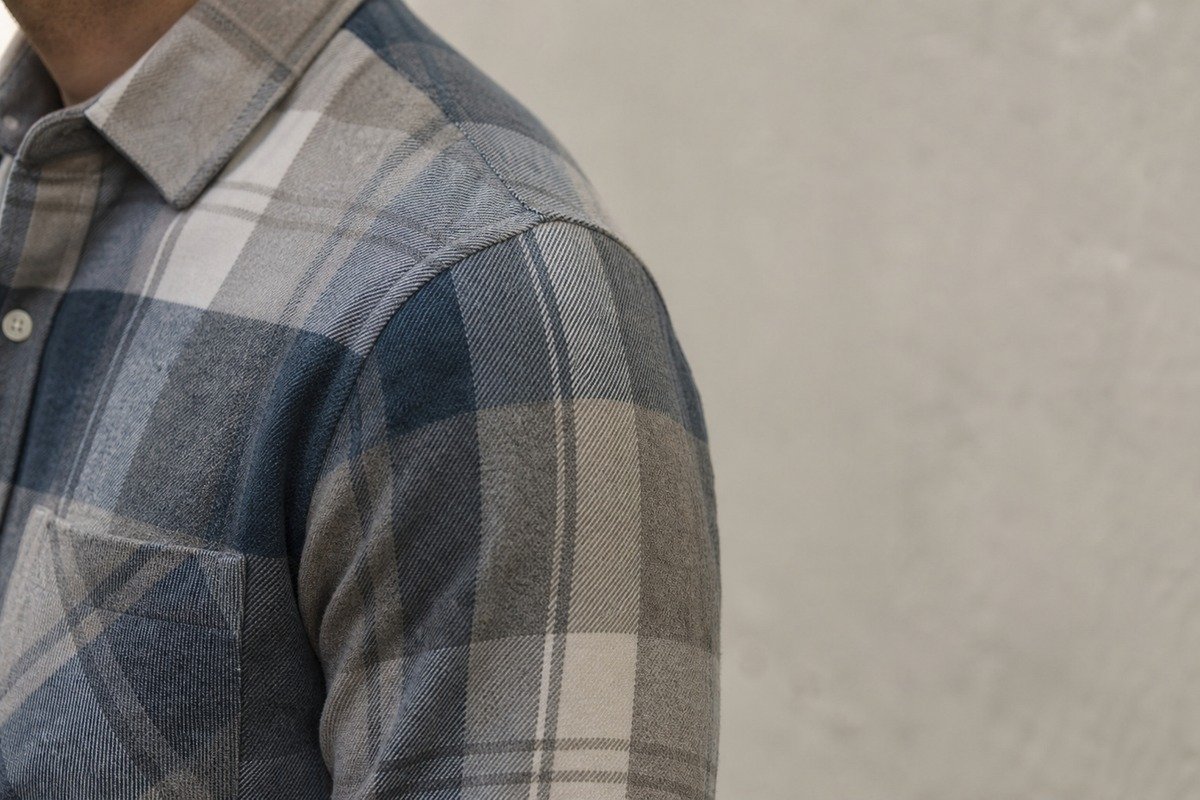
Flannel is brushed cotton, which means it is thicker and softer than a standard poplin shirt. It drapes less and holds its shape more. The practical effect is that flannel reads one size larger than the same size in a dress shirt.
Four checks:
- Shoulder seam sits at the edge of your shoulder, not down your arm. This is the one thing you cannot alter cheaply, so get it right in the shop.
- Sleeve ends at the wrist bone when your arm hangs straight. If it covers half your hand, size down.
- Chest lets you pinch about an inch of fabric at each side. Less and it pulls across the back when you reach forward; more and it balloons.
- Hem finishes around the bottom of your fly. Long enough to cover your belt when untucked, short enough that it is clearly a shirt and not a tunic.
The most common error is buying flannel for how it feels rather than how it looks. A shirt that feels wonderfully roomy on the hanger is usually the one that makes you look twenty pounds heavier in photographs. Buy the size that fits your shoulders and accept that it will feel slightly less like a blanket.
Tucked vs. Untucked
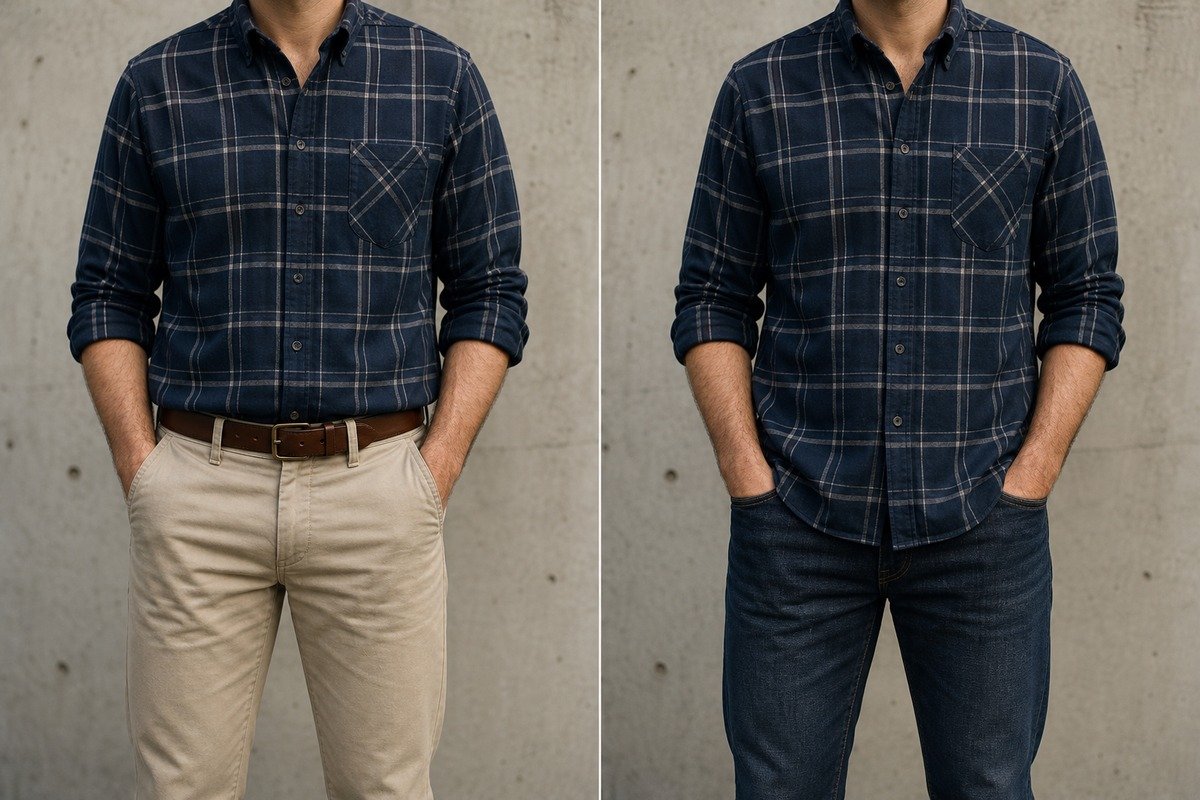
Untucked is the default. Flannel is a casual fabric and tucking it everywhere makes it look like you are trying to promote it above its rank.
Tuck it in three situations: when the flannel is your only top layer and you want to show a belt, when you are wearing it with chinos rather than jeans, and when you are in any setting where an untucked shirt would read as careless — an office, a restaurant with tablecloths, meeting someone’s parents.
The hem itself tells you what the shirt wants. A curved, longer hem is designed to be tucked. A straight, square hem that sits level all the way round is designed to hang out. Most flannels have the curved kind, which is why so many men tuck them and wonder why it looks slightly wrong — the shirt is long because it was cut to be tucked, but the fabric is too casual for it.
Skip the half-tuck. It is a womenswear styling move and on a heavy flannel it just looks like the shirt came loose.
1. Flannel Shirt with Jeans
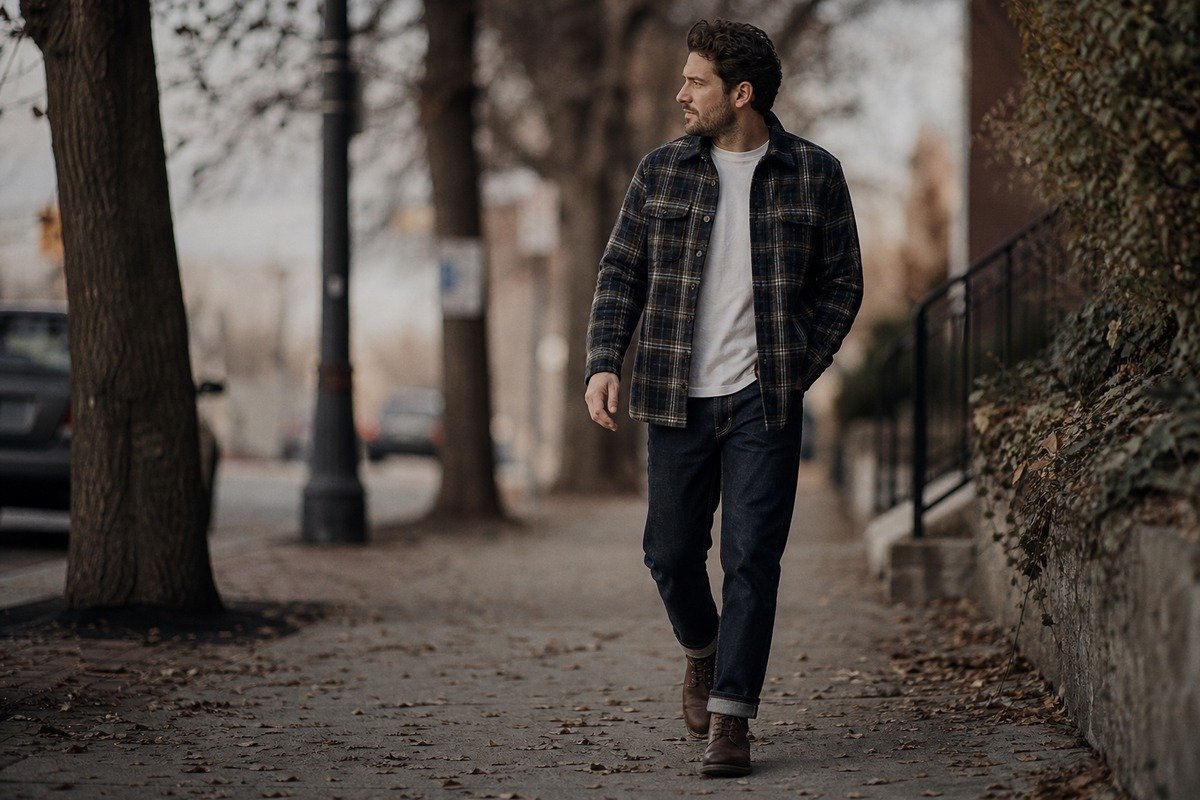
The default pairing, and the one most likely to go wrong, because the failure mode looks so close to the success.
Dark indigo or raw denim is the safest partner. The deep, flat colour gives the check something to sit against, and the contrast does the work. Mid-wash denim works with a muted check — greys, navies, olives. What rarely works is light-wash jeans with a bright red check, which is the exact combination that reads as a costume rather than an outfit.
Keep the jean cut straight or slim-straight. Skinny jeans under a flannel make you top-heavy, since the shirt already adds volume through the chest and shoulders. You want roughly consistent proportions from shoulder to ankle.
Finish with boots, white leather sneakers, or moc-toe shoes. Leave the shirt untucked, roll the sleeves twice to just below the elbow, and leave the top button undone.
2. Flannel Shirt with Chinos
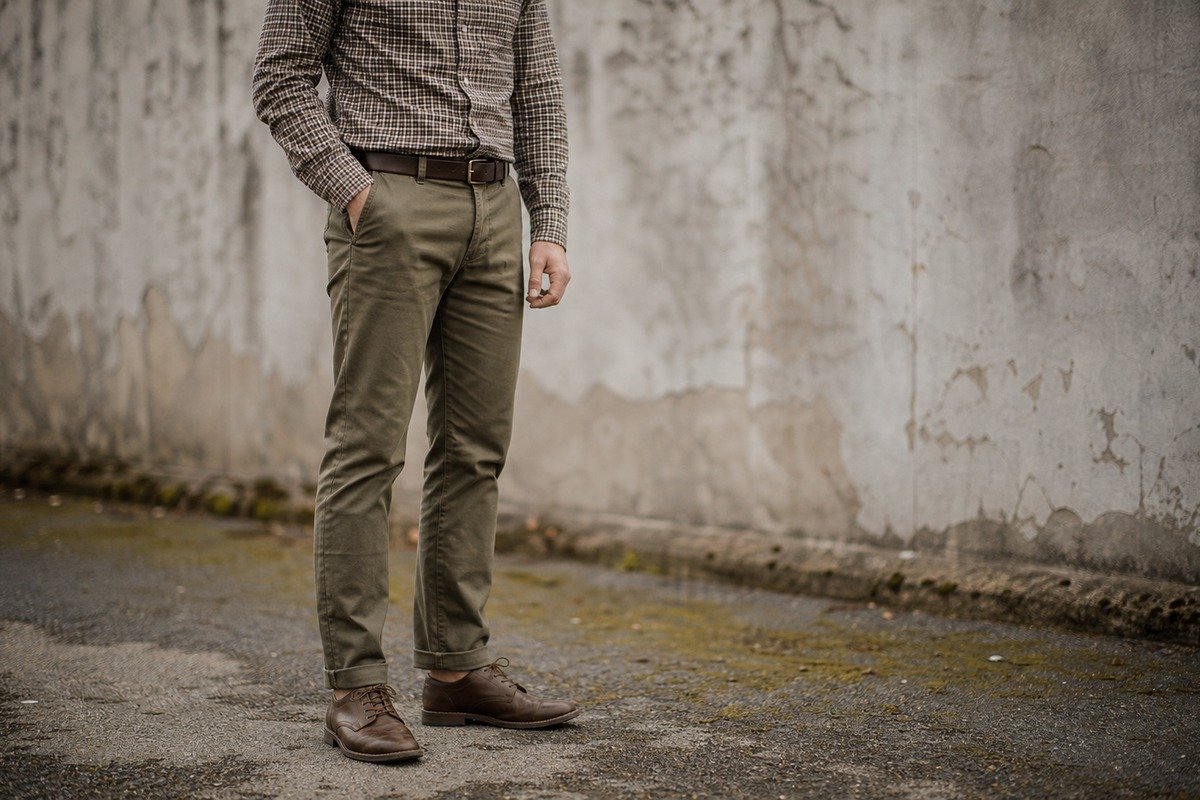
This is the upgrade most men never try, and it is the single fastest way to make flannel look deliberate rather than default.
Stone, olive, or navy chinos, flannel tucked in, leather belt that matches your shoes. The tuck is what changes the register — it says the outfit was assembled rather than grabbed. Suddenly the same shirt that looked like a weekend throw-on reads as smart casual.
Two things to get right. The chinos should be slim or straight, never pleated and baggy, because baggy trousers plus a textured shirt is a lot of fabric with no structure. And the check should be on the quieter side — this is not the look for an oversized buffalo plaid.
Brown leather shoes, a simple watch, done.
3. Flannel Open Over a Plain Tee
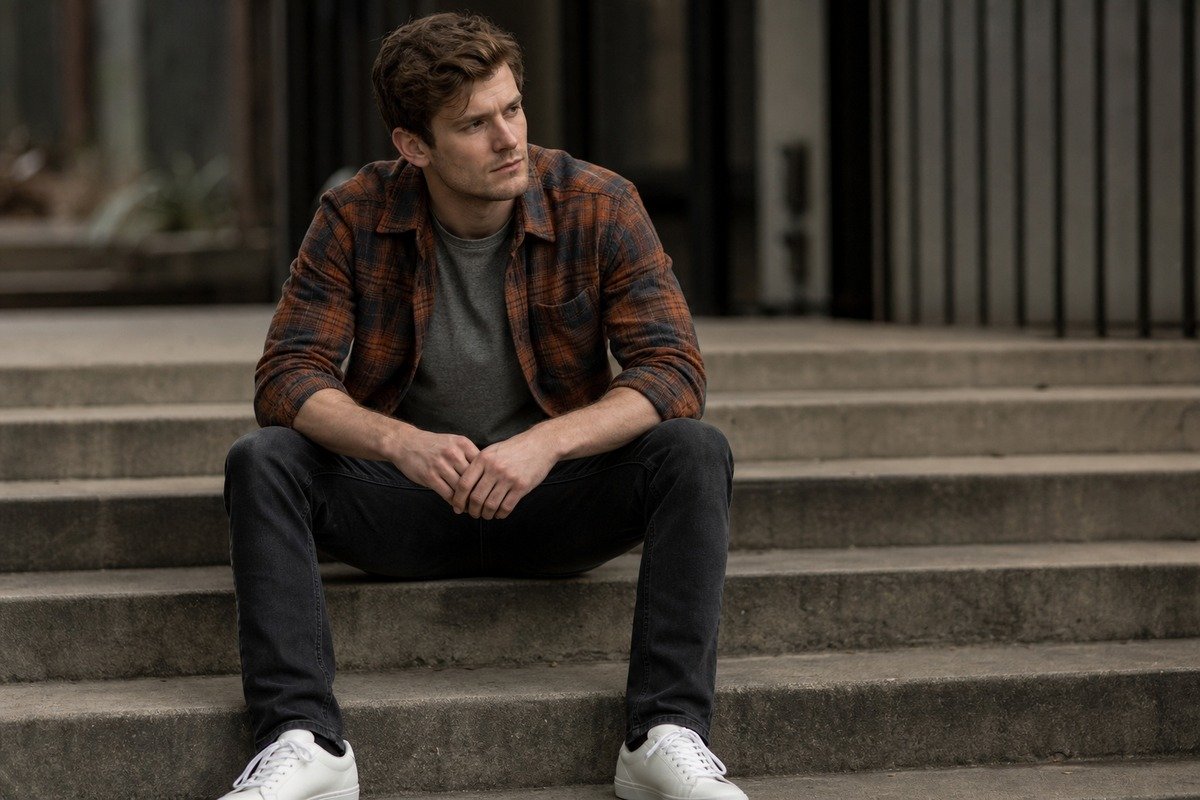
The lowest-effort version, and genuinely good when the pieces are right.
Wear the flannel fully unbuttoned as a light jacket over a plain T-shirt. The tee has to be plain — white, grey, black, or navy. A graphic tee fights the check for attention and both lose. It also needs to fit properly, because it is now a visible part of the outfit rather than an undershirt.
For this look specifically, a slightly roomier flannel is fine, since it is functioning as outerwear rather than a shirt. Roll the sleeves. Let the tee hem sit just above the flannel hem.
This is the version most men already do by instinct. The difference between it looking considered and looking like you grabbed whatever was on the chair is almost entirely the tee underneath.
4. Flannel Under a Denim Jacket
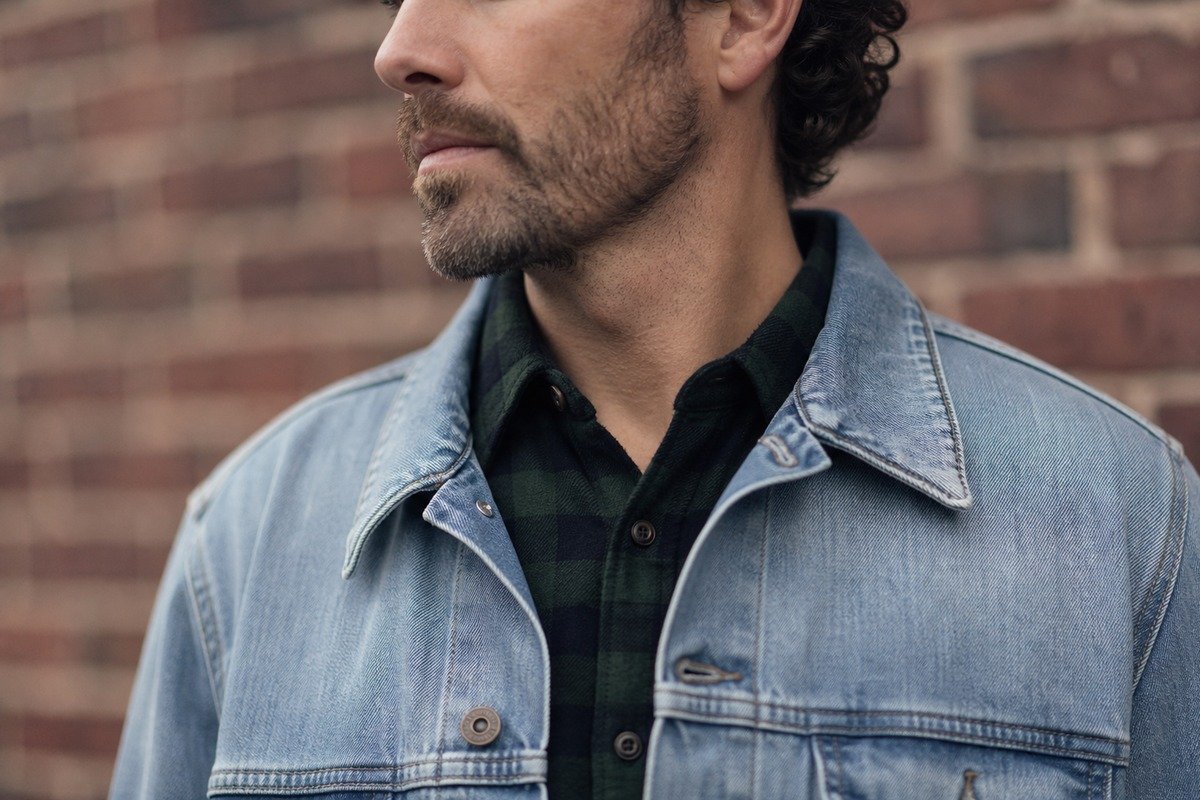
Two casual classics, and they work together as long as you avoid matching.
Contrast the washes. A dark flannel under a light or mid-wash denim jacket gives you depth. A light flannel under a dark jacket does the same in reverse. What flattens the whole thing is similar tones in both layers — it reads as one shapeless mass of blue.
Keep the flannel buttoned or mostly buttoned here, since the jacket is doing the open-layer job. The collar and the hem are the only parts of the check that will show, so a bolder pattern is fine; you are only seeing a few inches of it.
One warning: a sherpa-lined denim jacket over a heavy flannel is too much bulk. Pick one textured layer and let the other be smooth.
5. Flannel Under a Leather Jacket
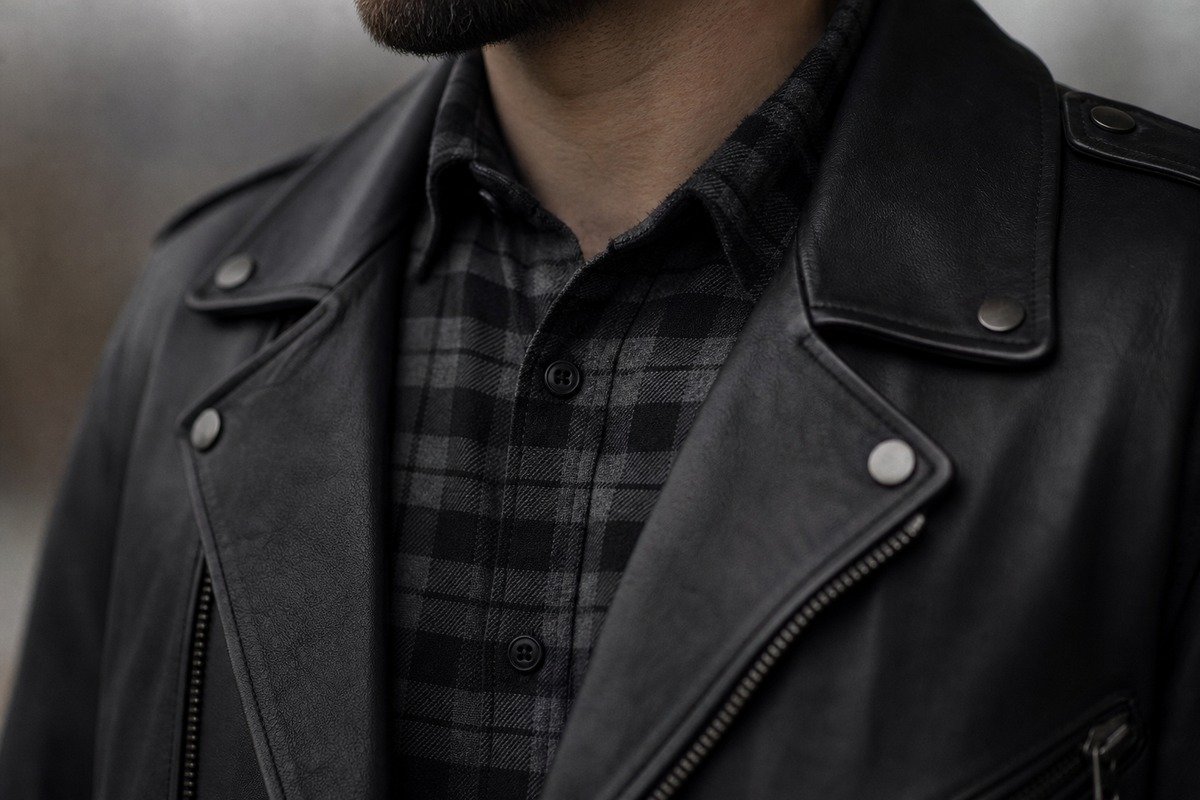
The same principle, sharper result.
A leather jacket covers most of the shirt, so what you actually see is the collar, a sliver at the front, and the hem below the jacket. That makes this the ideal home for a subtle check — small scale, muted colours, nothing with a heavy white grid.
Black leather with a charcoal or deep green check is close to foolproof. Brown leather sits better with rust, olive, or tan tones.
Keep the flannel slim here. Leather jackets are cut close, and a roomy shirt underneath will bunch at the armpit and ruin the line of the jacket.
6. Oversized Flannel Without Looking Sloppy
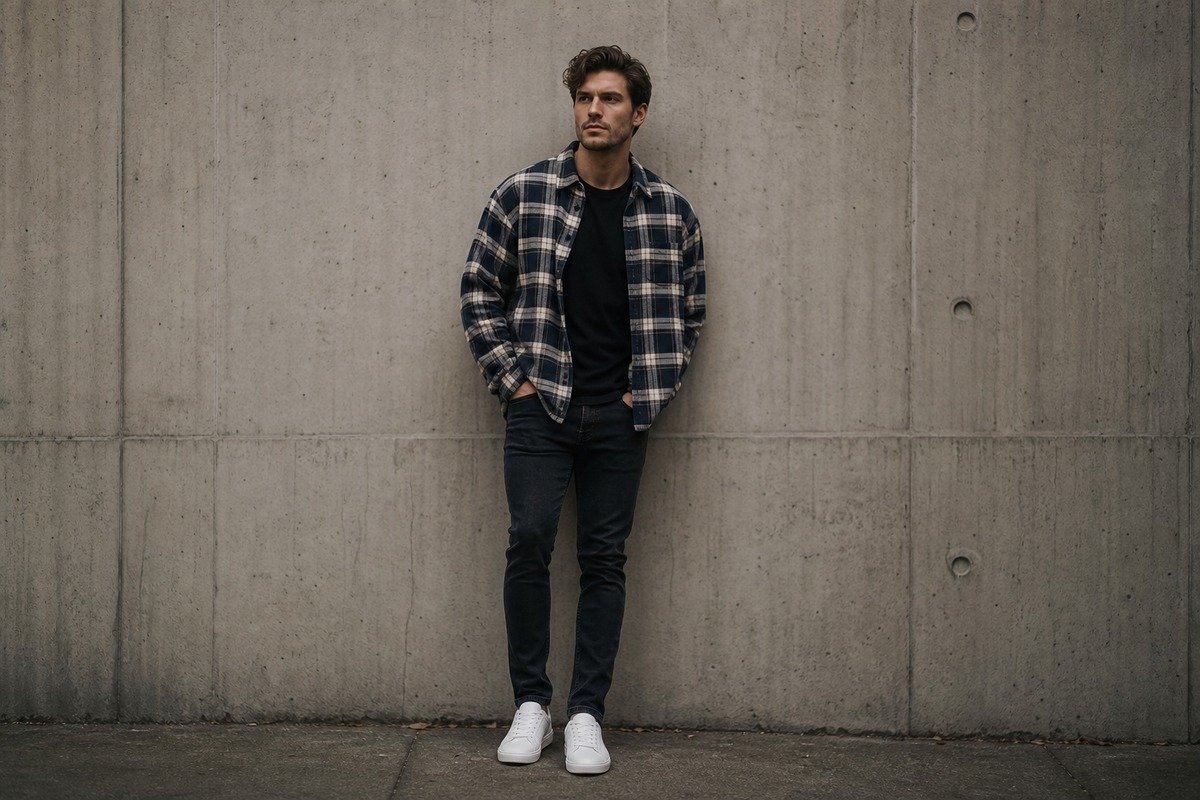
Oversized flannel works. It works under one condition: only one thing in the outfit is oversized.
If the shirt is big, everything else gets slim. Fitted tee underneath, straight or slim trousers, clean shoes. The moment you pair an oversized flannel with baggy jeans you have stopped making a style choice and started looking like you got dressed in the dark.
There is also a difference between oversized and long. The shoulder seam can drop an inch or two past your shoulder — that is the look. The hem still should not fall much past your fly. A shirt that reaches mid-thigh is not oversized, it is the wrong size.
Wear it open over the tee rather than buttoned. Buttoned oversized flannel has nowhere to go but shapeless.
7. Flannel with Shorts
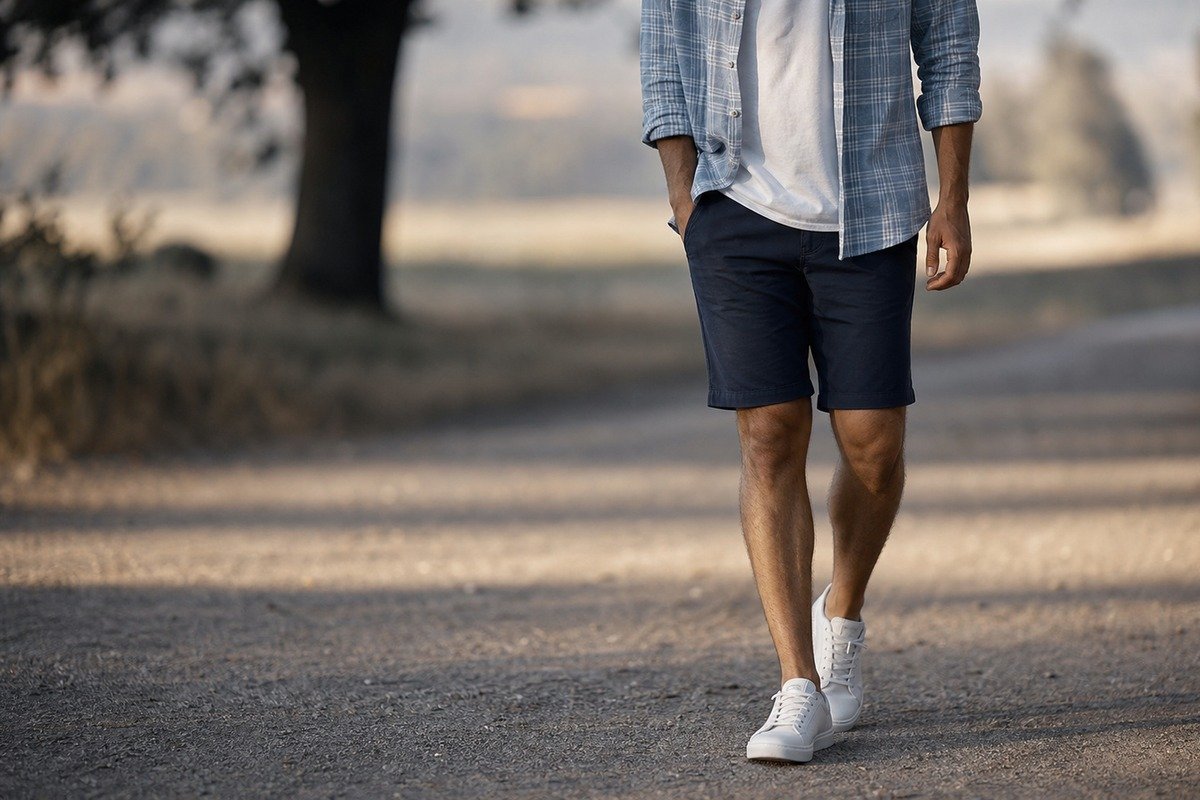
Underrated, and seasonal in a specific way.
This is a cool-evening look, not a hot-afternoon one — spring, early autumn, a summer night when the temperature drops. It needs a lightweight flannel, the kind brushed on one side only, not the heavy brushed-both-sides winter version.
Chino or tailored shorts, hitting an inch or two above the knee. Not cargo shorts; the pocket bulk plus the shirt texture is too busy. Sneakers rather than boots, because boots with shorts needs more confidence than most outfits are worth.
Flannel open over a tee is the easiest version here. Buttoned works too if the shirt is light enough not to look like you are overdressed from the waist up.
8. Choosing Your Flannel Colour
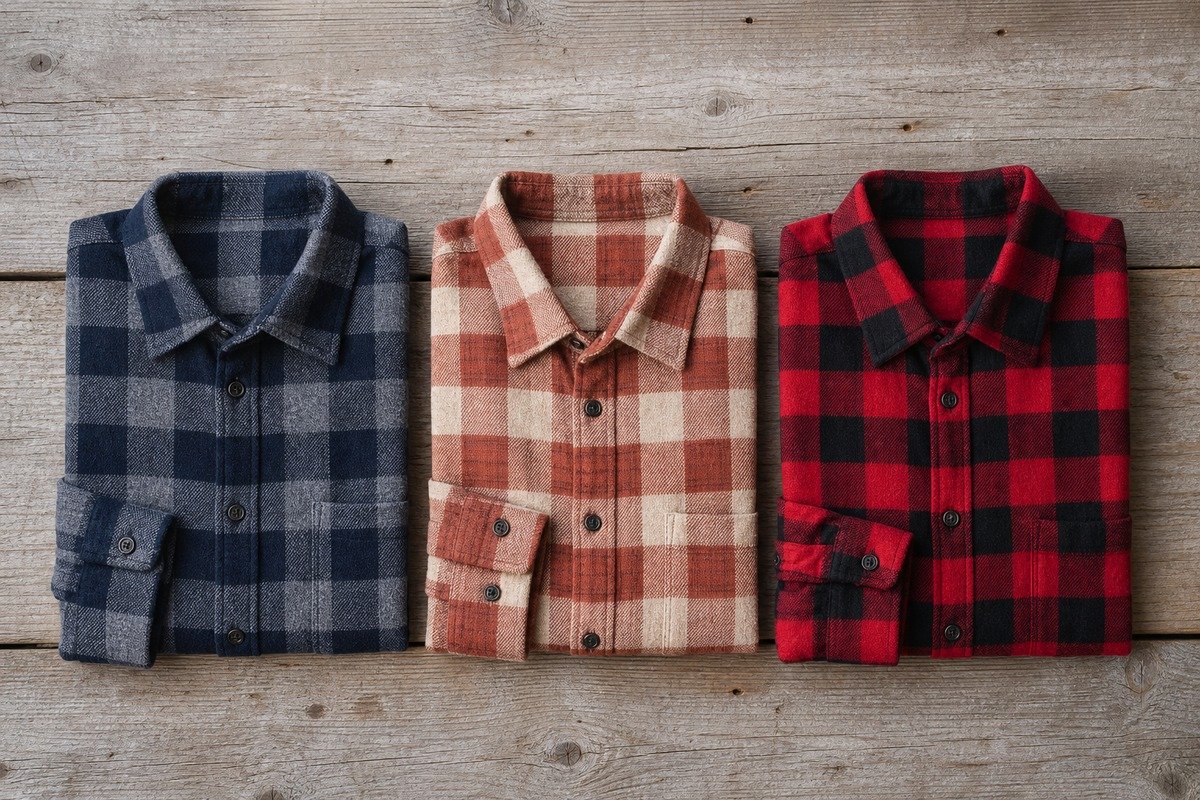
The colour of the check matters less than the colour of the ground it sits on. A red check on a navy ground is a completely different shirt from a red check on a white ground, and they suit different people.
Fair or cool-toned skin. Navy, charcoal, forest green and muted blue grounds give you contrast without washing you out. Pale yellows, beiges, and light greys tend to blend into fair skin and make you look tired.
Medium or olive skin. This is the easiest range. Earth tones sit beautifully — rust, olive, brown, mustard, burnt orange. Warm grounds with warm accents.
Deep or dark skin. Contrast is your advantage. Bright red, cobalt, camel, and white-ground checks all read clean and sharp. Muddy mid-browns are the ones to skip, since they sit too close to the skin tone to register as a separate colour.
A general rule that survives all three: if the shirt is the loudest thing you are wearing, everything else should be plain.
9. Flannel for the Office
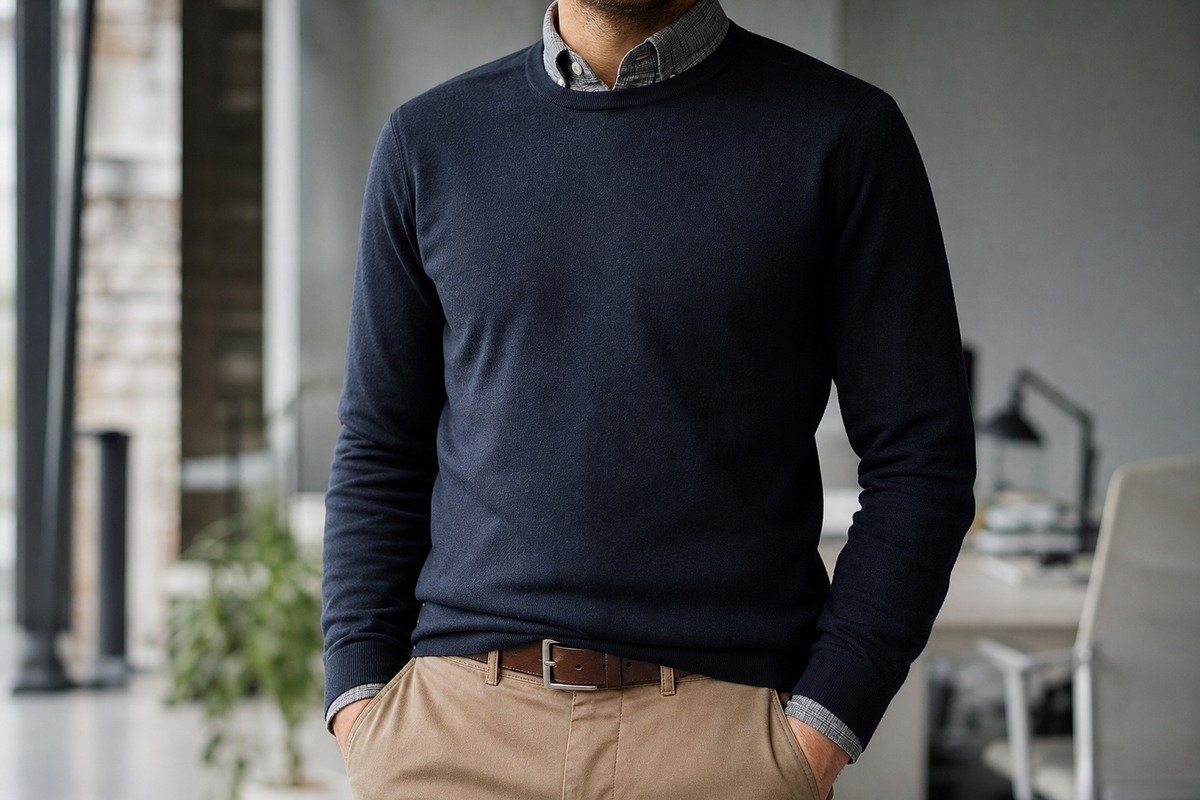
Possible, but only in a genuinely casual office, and only with discipline.
The rules are tighter than anywhere else in this guide. Small-scale, muted check. Tucked in. Chinos, not jeans. Leather belt and leather shoes. No exceptions on the tuck — an untucked flannel at a desk reads as “forgot there was a meeting.”
The move that makes it unambiguous is a second layer. A plain crew-neck sweater over the flannel, with just the collar and a few inches of cuff showing, turns the whole thing business-casual. An unstructured blazer in navy or grey does the same job with more authority.
What never works in an office: large buffalo check, bright red, flannel with sneakers, flannel untucked. If your workplace is business casual rather than casual, leave the flannel for the weekend.
10. Flannel for a Date Night
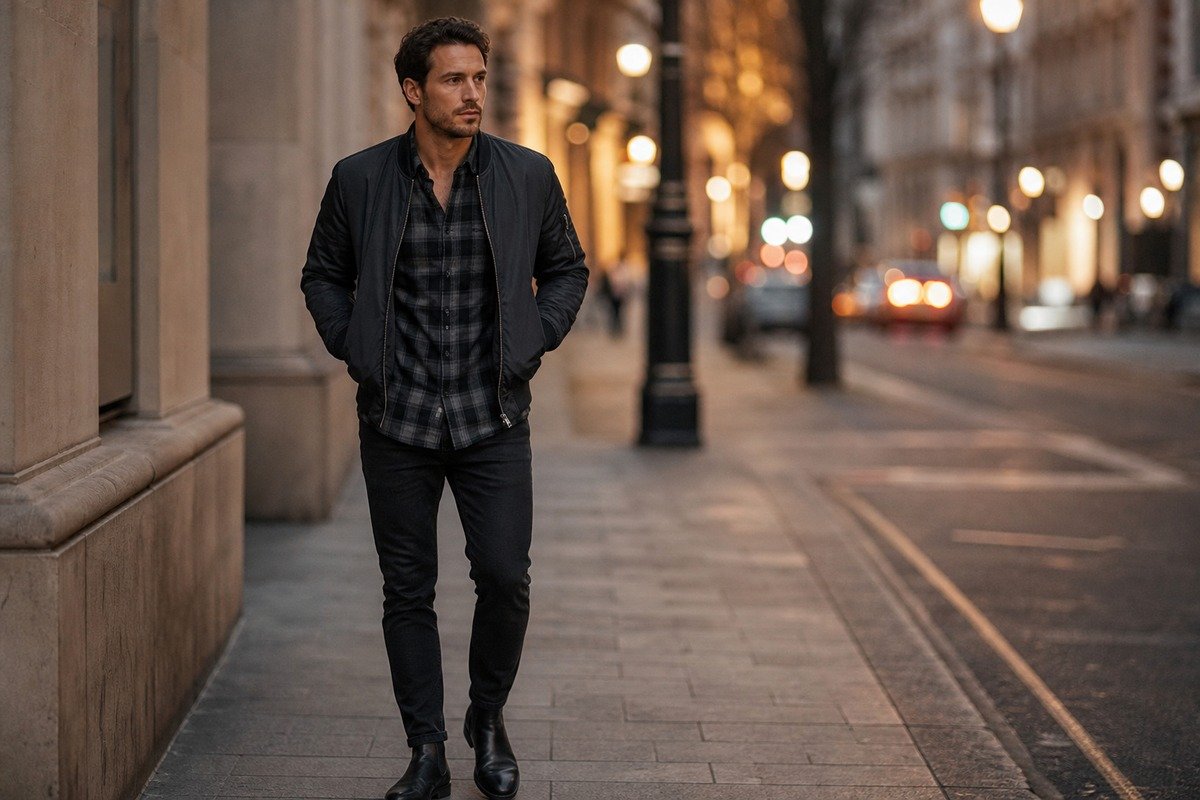
Go dark and slim.
Charcoal, black, deep green, or navy-ground checks. Slim fit. Dark jeans or dark chinos, Chelsea boots or clean leather sneakers. Layer it under a bomber, a wool overshirt, or a leather jacket.
The brief here is “put together but not trying too hard,” which flannel does naturally as long as you steer it away from the rugged end. Anything that looks like it belongs on a hiking trail is working against you.
Grooming carries more weight on this one than the clothes do. Flannel is a textured, slightly rough fabric, and it only reads as a choice when the rest of you looks deliberate — clean edges on the beard, hair that has had some attention, and skin that does not look neglected. More on that below.
11. Flannel for Hiking and Outdoor Looks
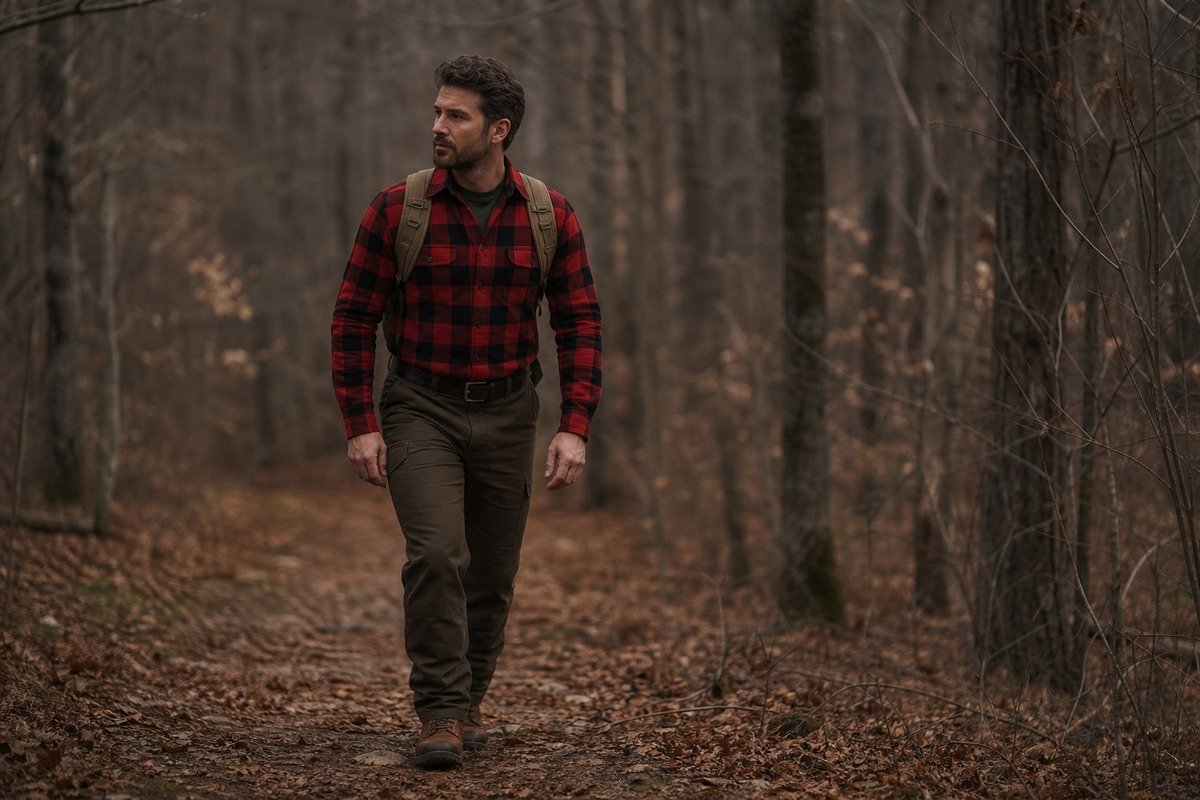
This is flannel doing the job it was invented for, and the only context where loud checks are entirely at home.
Go heavy. Nine ounces and up, or a wool-blend flannel if you are genuinely in the cold — cotton holds moisture and stops insulating the moment you sweat. Wear it over a base layer and under a shell, where it functions as a mid-layer rather than a shirt.
Pair with work trousers or technical trousers and proper boots. Keep it buttoned. Tuck it if you are wearing a pack, since an untucked hem rides up under a hip belt and bunches.
Buffalo check, bright red, large-scale plaid — all fine here. The setting earns it.
12. Flannel with a Sweater or Overshirt
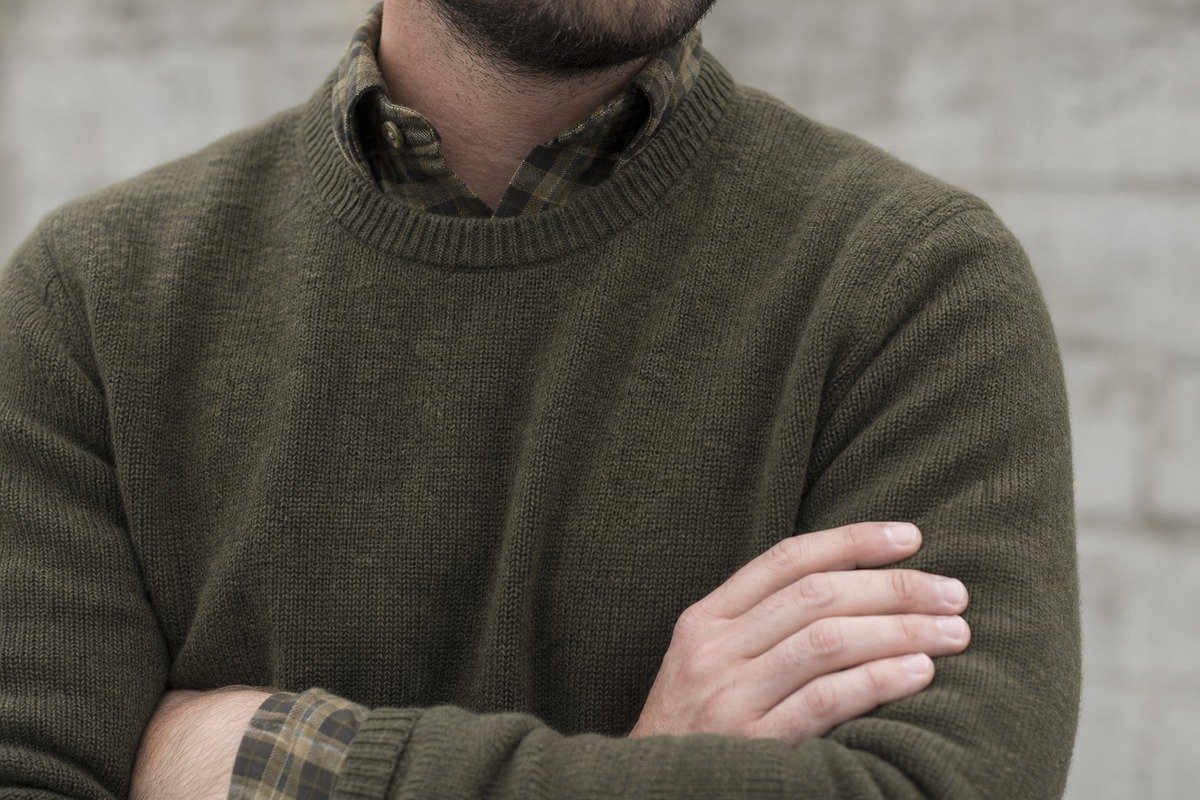
The layering move worth learning, because it extends one shirt across the whole winter.
A crew-neck or V-neck sweater over a flannel leaves the collar and cuffs visible, which gives you pattern and texture without the shirt dominating. Merino or lambswool in a plain colour pulled from the check — if the flannel has olive in it, an olive sweater ties the whole thing together.
An overshirt or chore coat over flannel works on the same logic with a more rugged result. Keep the overshirt plain; two patterns at this weight is too much.
This is the version that takes flannel into December without a coat indoors.
Can You Mix Flannel with Other Patterns?
Yes, under two conditions: the patterns are different scales, and they share at least one colour.
A fine-striped tee under a medium-scale check works if the stripe picks up a colour from the flannel. A small houndstooth scarf over a large plaid works for the same reason. What fails is two patterns at the same scale, or two patterns with no colour in common, which just looks like an accident.
The safest approach is to let the flannel be the only pattern and keep everything else solid. If you want a second pattern, put it on an accessory rather than a main garment — a scarf, a cap, socks nobody will see until you sit down. For the full breakdown on pairing checks with skin tone, see the colour of the check section above.
What to Wear on Your Feet
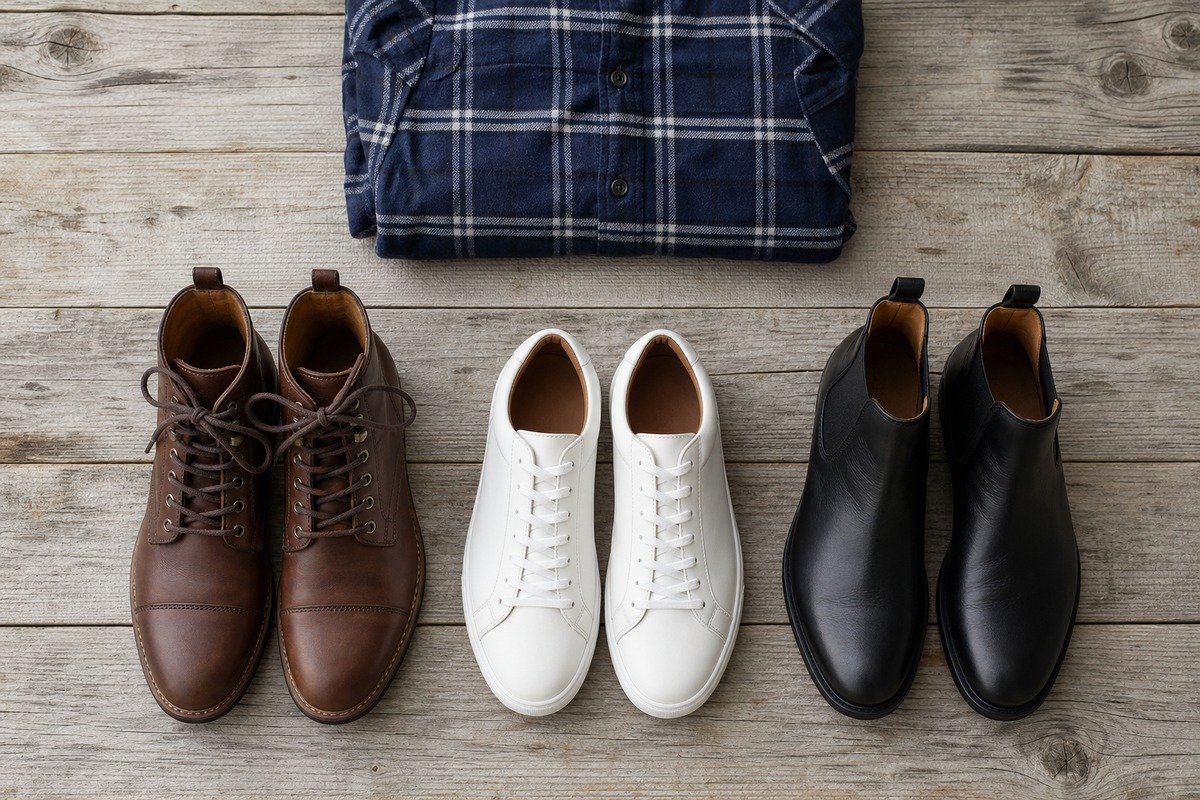
Footwear decides whether flannel shirt outfits for men read rugged, casual, or smart, more than any other single choice.
| Shoe | Works for | Notes |
|---|---|---|
| Leather boots (brown) | Nearly everything | The most versatile option. Brown suits more flannel colours than black. |
| Moc-toe boots | Jeans, outdoors | Leans rugged. Pairs naturally with heavier checks. |
| White leather sneakers | Jeans, chinos, shorts | Keeps the look modern and stops flannel reading dated. |
| Chelsea boots | Date night, chinos | The dressiest option that still works. Dark palettes only. |
| Hiking boots | Genuine outdoor use | Only when you are actually outdoors. |
Two to avoid: running shoes, which pull the whole outfit toward gym clothes, and formal oxfords, which are too dressy and make the flannel look like you lost your suit jacket.
Grooming That Matches the Flannel Look
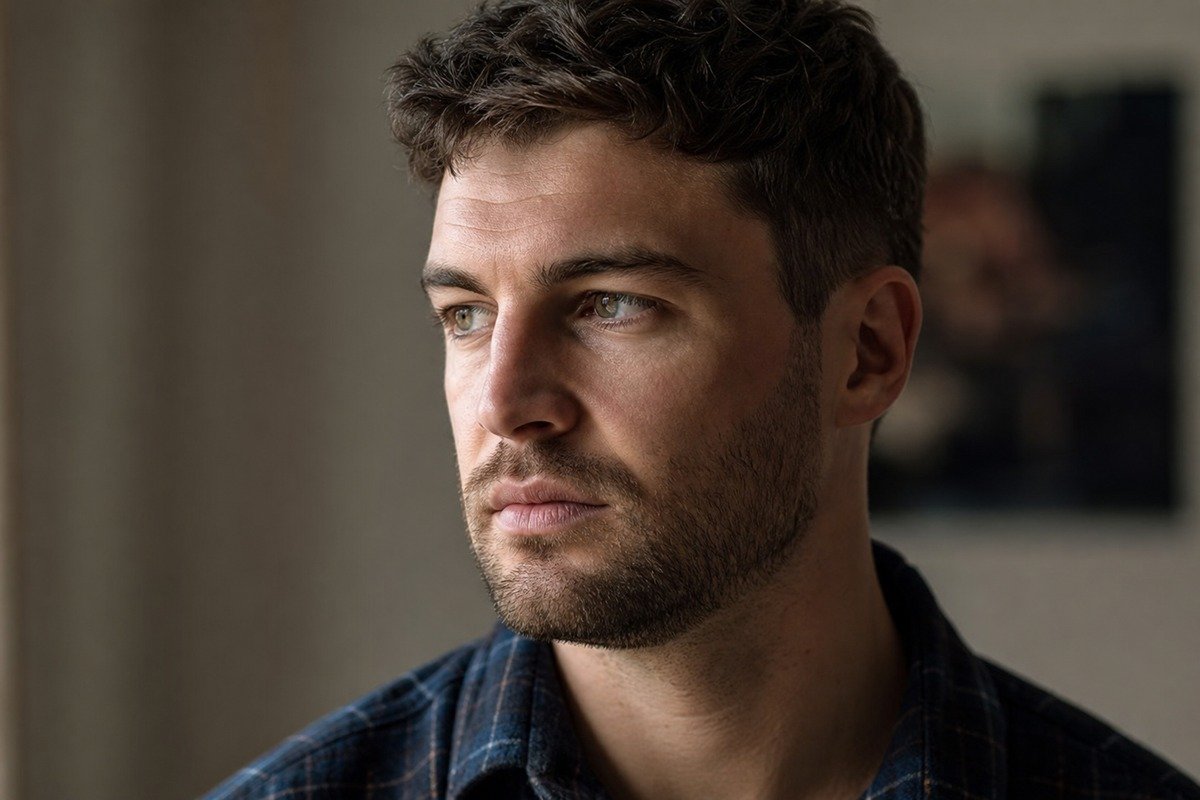
This is where most style guides stop and most outfits actually succeed or fail.
Flannel sits in the rugged-casual register. The grooming that matches it is deliberate but not fussy — the look should say you made choices, not that you spent forty minutes in front of a mirror.
Facial hair. Short, trimmed stubble or a neat short beard is the natural partner. Clean-shaven works too. What undermines the outfit is a patchy, untended beard, because the shirt already has texture and visible intent, and an unkempt beard makes the whole thing read as neglected rather than relaxed. Clean neckline, clean cheek line, even length.
Hair. Textured styles work with flannel — a textured crop, a loose quiff, a natural side part. What fights it is heavily gelled, slicked-back hair, which belongs to a sharper, smoother kind of outfit. You want hair with some movement to echo the fabric.
Skin. Nothing complicated. Clean, moisturised skin is what separates “casual on purpose” from “did not try.” Rugged clothing raises the bar on grooming rather than lowering it.
Fragrance. Woody, smoky, or spiced scents sit naturally alongside flannel. Fresh aquatics feel slightly out of place against a heavy winter fabric.
Common Flannel Mistakes to Avoid
A handful of mistakes keep showing up in flannel shirt outfits for men, and they are easy to fix once you know to look for them.
- Buying for cosiness, not fit. The single most common error. A flannel that feels perfect in the shop is usually a size too big.
- The full lumberjack. Red buffalo check, light wash jeans, tan work boots, beard. Each piece is fine; all four together is a costume.
- Two plaids at once. A plaid shirt under a plaid jacket never works, however good each one looks alone.
- Buttoning to the collar. Unless you are wearing a tie or going for a specific high-fashion look, leave the top button open.
- A graphic tee underneath. Two things competing for attention in the same few square inches.
- Athletic trainers. They drag an otherwise decent outfit toward sportswear.
- Ignoring the hem. Too long and it looks borrowed; too short and it rides up every time you move.
How to Buy a Flannel Shirt That Lasts
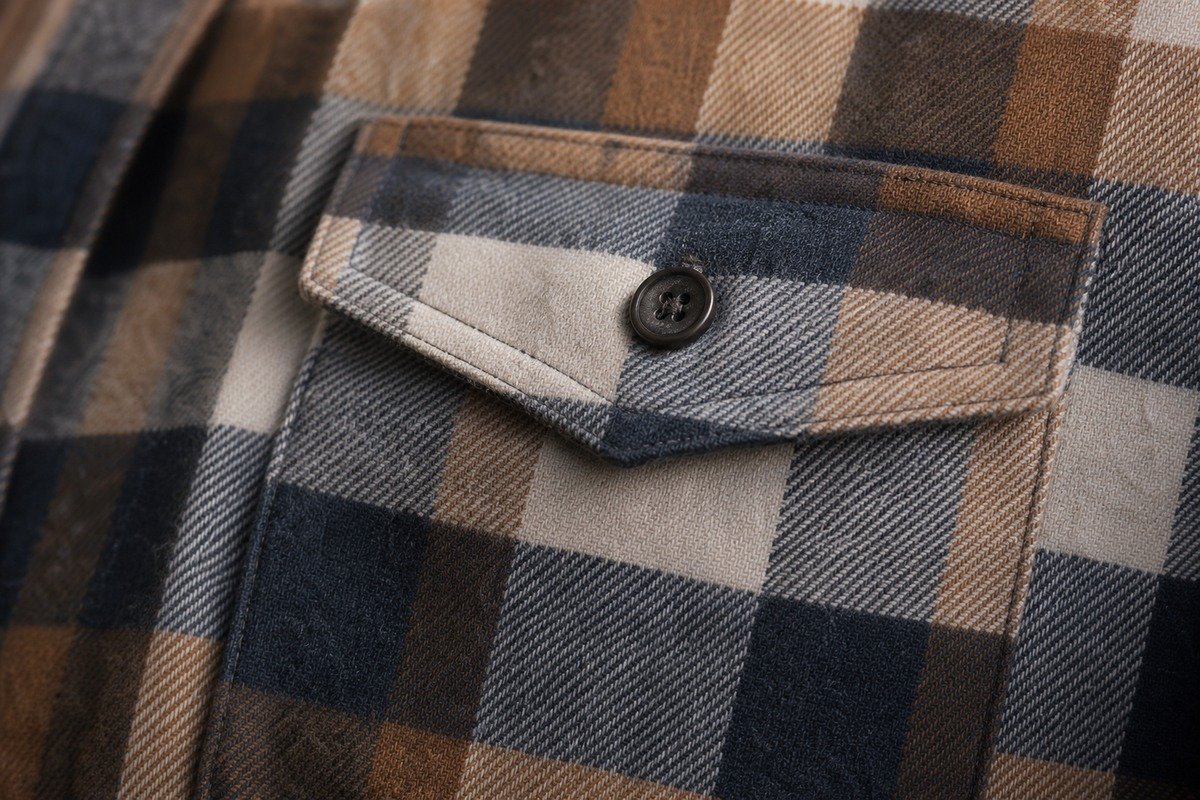
Fabric weight. Usually listed in ounces per square yard. Five to seven ounces is lightweight — good for layering and warmer months. Seven to nine is the versatile middle, and where most of your shirts should sit. Nine and above is genuine winter or outdoor weight, warm but bulky under a jacket.
Material. Hundred per cent cotton feels best and breathes well but pills over time. Cotton-polyester blends resist pilling and hold colour longer, at some cost to how they feel and breathe. Wool-blend flannel is the warmest and the right choice for actual cold, though it needs more careful washing.
Brushing. Brushed on one side is lighter and less prone to pilling. Brushed both sides is softer and warmer but will pill faster at the cuffs and underarms.
Pattern alignment. This comes down to how the flannel fabric is cut and sewn — look at where the pocket meets the body and where the placket meets the front panel. On a well-made shirt the check lines up across both seams. On a cheap one it does not. This one detail tells you more about construction quality than the price tag does.
Other markers. Pre-shrunk or sanforized fabric, so it still fits after washing. Buttons sewn in a cross-stitch rather than parallel. A second spare button on the inner placket.
Price. Entry-level flannel runs roughly thirty to fifty dollars and will last a season or two. The seventy to a hundred and twenty range is where construction and fabric improve enough to notice. Above that you are buying heritage mills and heavier weights, which is worth it if flannel is a staple for you and overkill if you own one shirt.
Frequently Asked Questions
Quick answers to the questions that come up most often about flannel shirt outfits for men.
Can you wear a flannel shirt in summer?
Yes, if it is a lightweight, single-brushed flannel. Wear it open over a tee on cool evenings. A heavy winter-weight flannel in July will be uncomfortable regardless of how it looks.
Is flannel the same as plaid?
No, and the two get confused constantly. Flannel is a fabric — soft, brushed cotton or wool. Plaid is a pattern. Most flannel shirts happen to be plaid, but you can buy a plain flannel shirt and a plaid shirt that is not flannel.
Can you wear flannel to a wedding?
Not to the ceremony. A casual, outdoor, or rustic-themed reception can take a dark, fine-check flannel under a blazer, tucked, with chinos and leather shoes. Anything with a dress code above “casual” is a no.
How do you stop flannel from pilling?
Wash cold, inside out, on a gentle cycle, and skip the tumble dryer. Pilling comes mostly from friction and heat. A fabric shaver will clean up what does appear.
Should a flannel shirt be tight or loose?
Neither. It should follow your shoulders and chest with about an inch of room to pinch at each side. If you want the oversized look, size up deliberately and keep everything else slim.
Can you wear flannel over a hoodie?
It works if the hoodie is slim and plain, and the flannel is sized to fit over it. What does not work is a thick hoodie under a fitted flannel, which pulls across the back and bunches at the arms.
Where to Start
If you own one flannel and it has never looked right, check the fit before you blame the shirt. Shoulders in the correct place, sleeves at the wrist, hem at the fly. That one adjustment fixes more flannel outfits than any styling tip here.
If you own one flannel and it fits, the two flannel shirt outfits for men worth learning first are flannel with dark jeans and boots for the weekend, and flannel tucked into chinos with leather shoes for everything else. Between them they cover most of what winter asks for.
Everything after that — the layering, the colour work, the office version — is building on the same shirt.


One Comment