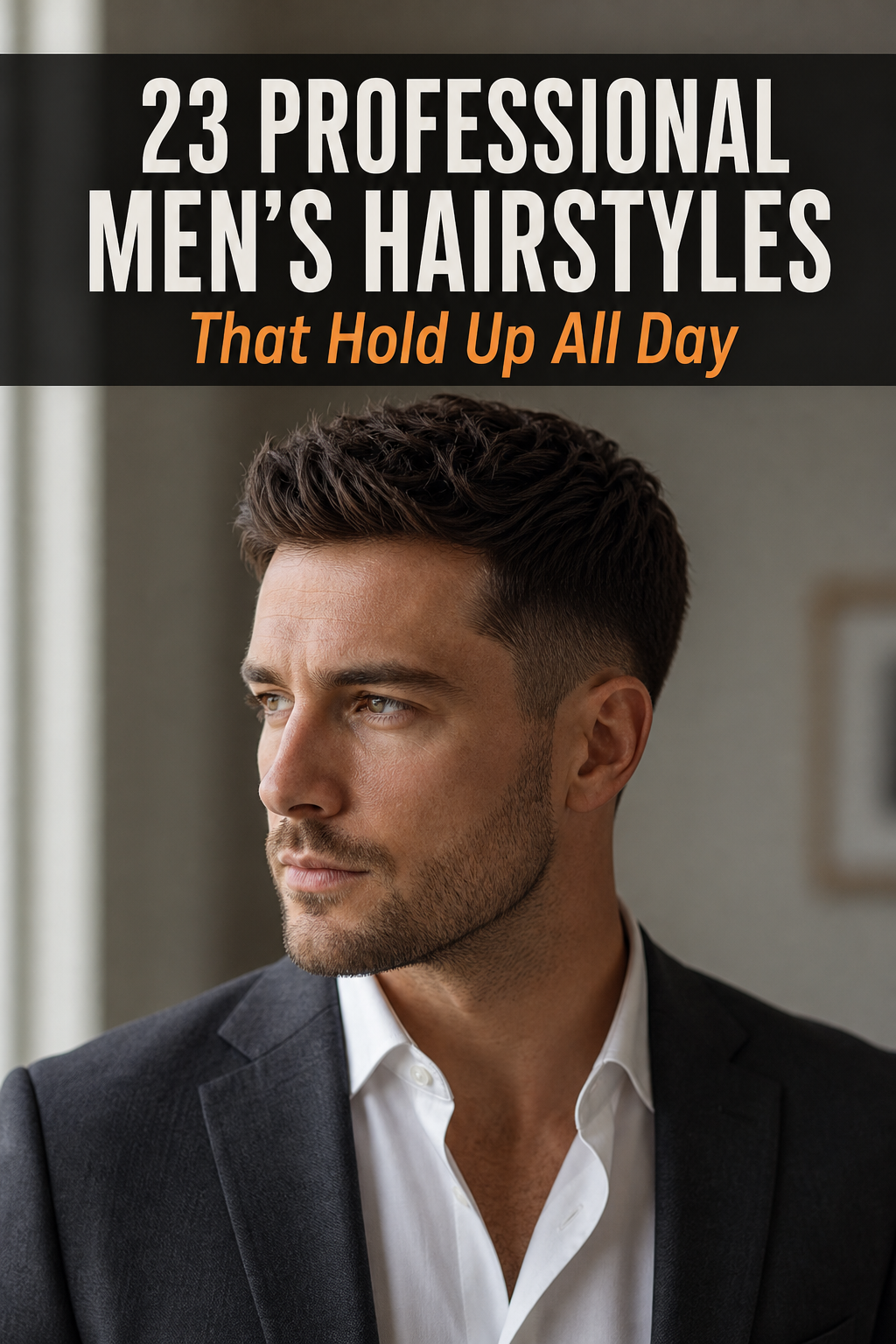
23 Professional Men’s Hairstyles That Hold Up All Day at Work
Professional men’s hairstyles have one job: look sharp on day one and still look sharp by Tuesday morning, without a trip back to the barber’s chair.
The cut looks sharp when you leave the shop. It has been blow-dried, loaded with product, and styled by someone who does this for a living. Then Tuesday comes, you have six minutes, and the same hair does something completely different.
That gap is the whole problem. The best professional men’s hairstyles are not the ones that photograph best on day one. It is the one you can recreate yourself, in a few minutes, on a normal morning, and still look put together in a 4 PM meeting.
The 23 professional men’s hairstyles below are sorted that way. Every one lists what to ask your barber for, how to style it, and how often you need to go back — because a cut that needs a visit every ten days is not low maintenance, no matter how good it looks the day you get it.
Before the list: two things that decide everything
Most hairstyle guides skip this and go straight to the photos. That is why men walk out of the barbershop with a cut that looked good on someone else.
Your face shape decides the silhouette
- Round face — you want height on top and short sides. Anything wide and flat makes a round face wider. Quiffs, pompadours and textured crops with a taper all work.
- Long or oblong face — the opposite. Avoid height. Keep some width at the sides and consider a fringe, which visually shortens the face.
- Square or strong jaw — almost everything works. If the jaw is very heavy, soften it with texture rather than hard lines.
- Heart shape (wide forehead, narrow chin) — medium length with some weight forward. Slicking everything straight back exposes the widest part of your face.
- Oval — you have the easiest job here. Most of this list will suit you.
Your hair type decides what is actually possible
- Fine or thinning — matte products only. Anything with shine separates the hair and shows scalp. Texture is your friend; slickness is not.
- Thick and coarse — you need weight removed, not just length. Ask for scissor layers or the cut will sit like a helmet.
- Wavy — work with the wave, not against it. Creams, not clays.
- Curly or coily — the top must be cut with scissors. Clippers crush the curl pattern and leave it looking flat.
- Straight — holds a part better than any other type, but needs product for texture or it falls flat by midday.
And one more: read your office
- Conservative (law, finance, government, client-facing) — defined parts, tapers rather than skin fades, no hard disconnects.
- Creative or tech — texture, length and skin fades are all fine.
- Somewhere in between — a taper with texture on top is the safe middle ground and is why it appears so often below.
23 Professional Men’s Hairstyles
1. Classic Side Part with a Low Taper
Best for: Straight to slightly wavy hair · Most face shapes · Conservative offices
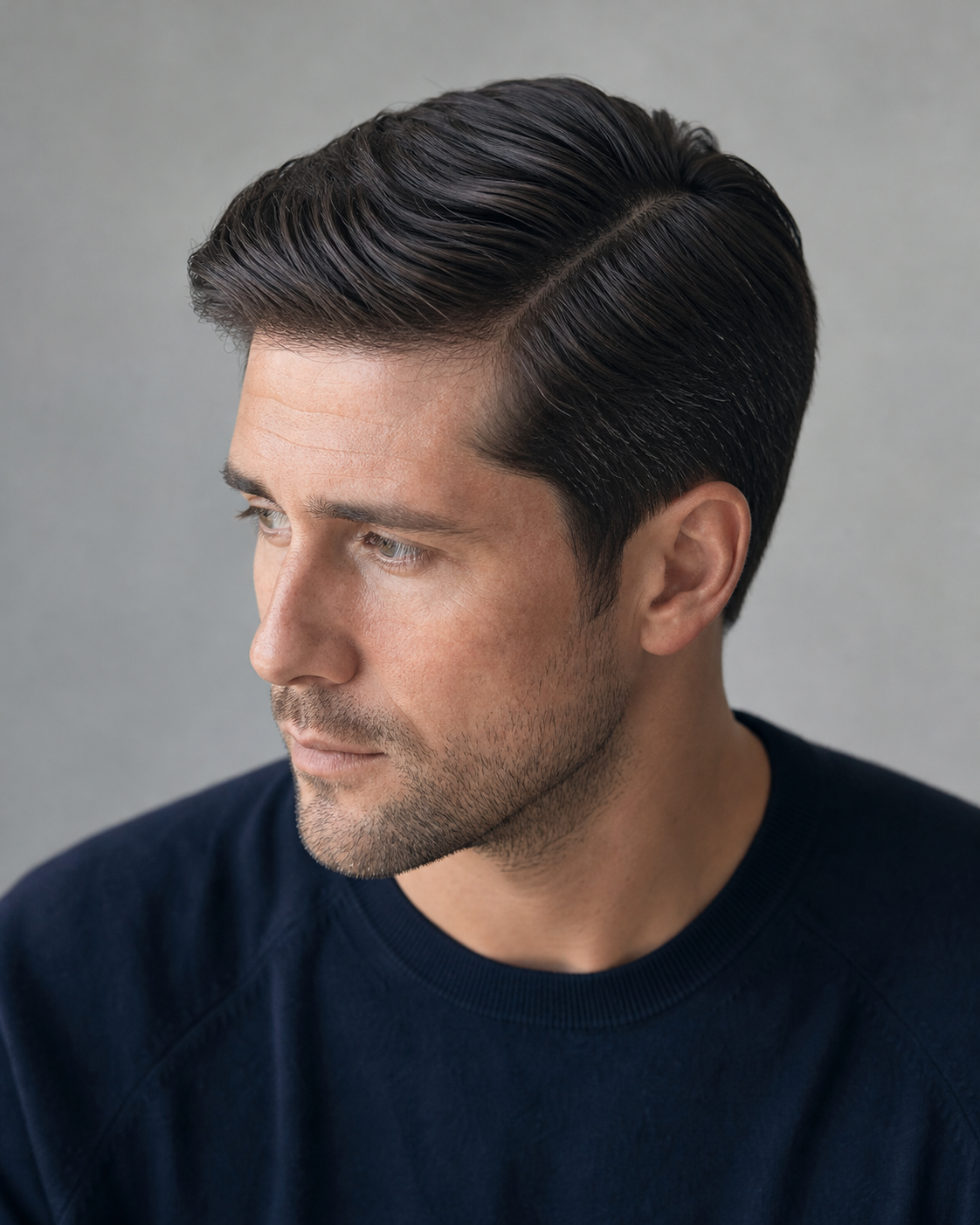
The one cut that has never looked out of place in a boardroom. The top stays long enough to comb — around three inches — and the sides taper down gradually instead of dropping to skin. The part does the work, so the cut itself can stay understated.
Ask for: “Low taper on the sides, leave about three inches on top, and cut in a natural part on my left.”
Styling: Light pomade or cream on damp hair. Comb the part, then break up the comb lines with your fingers so it does not look lacquered.
Back to the barber: 4 weeks.
2. Ivy League
Best for: Straight or wavy, medium density · Oval, square · Any office
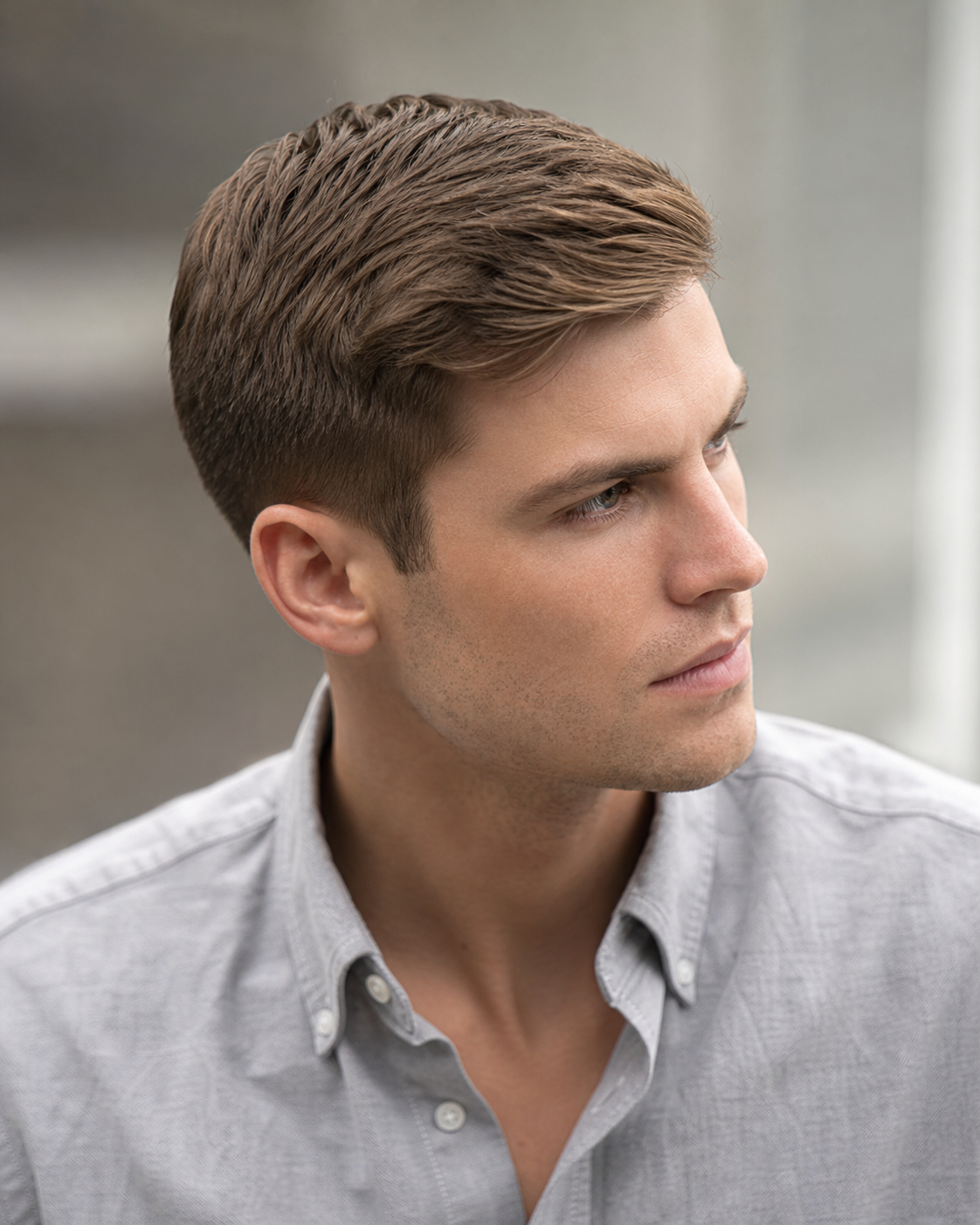
A crew cut with enough length left at the front to part and sweep. It is the most forgiving cut on this list — it grows out evenly, works with a suit or a t-shirt, and almost never looks wrong.
Ask for: “Ivy League — about two inches at the front, tapered down the back and sides, enough length to part.”
Styling: Matte paste, fingers only. Thirty seconds.
Back to the barber: 4–5 weeks.
3. Textured French Crop
Best for: Fine to medium straight hair · Oval, square, long faces · Creative to mixed offices
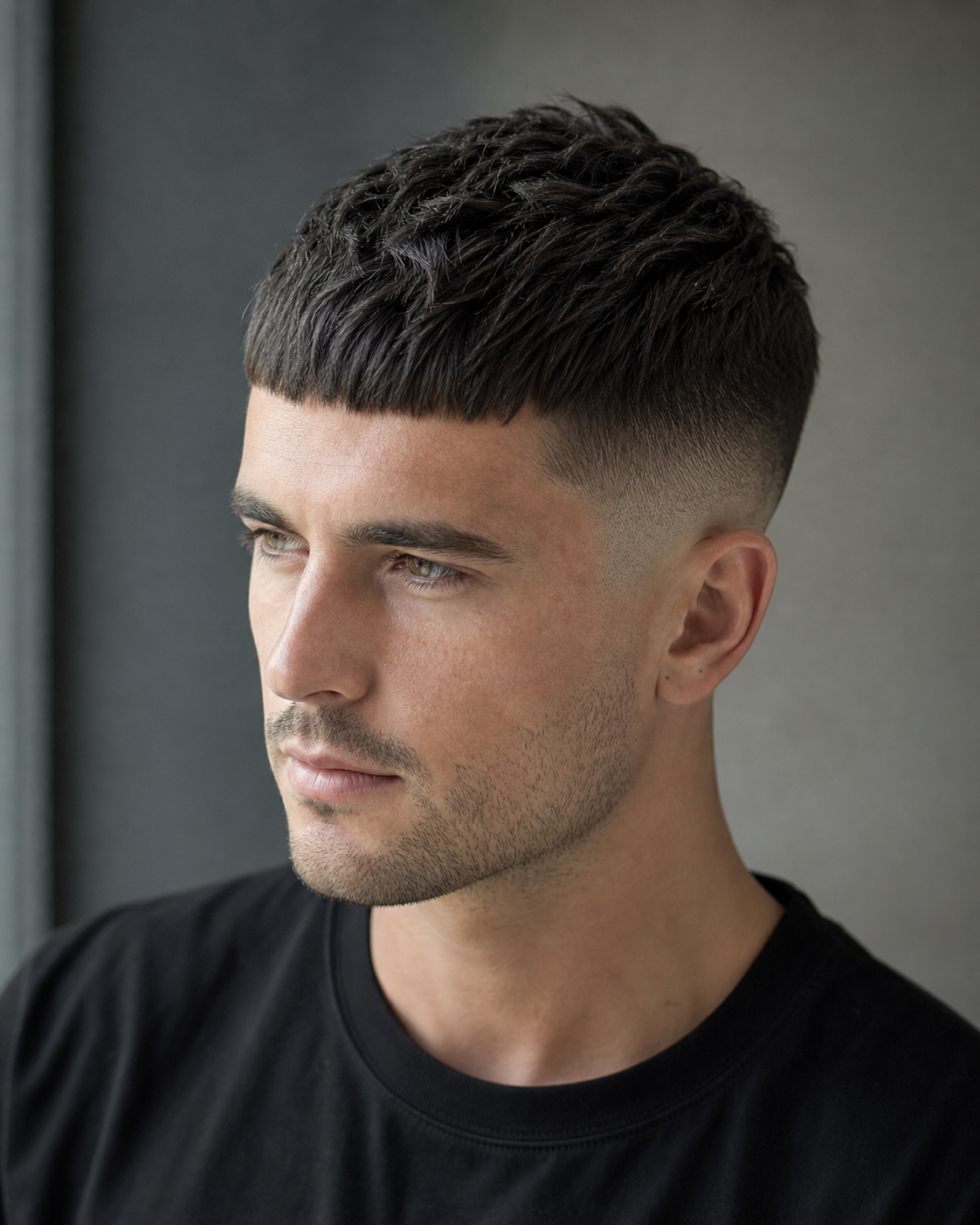
Short, blunt fringe cut straight across, textured through the top, with the sides dropping away underneath. This is the best cut on this list for fine hair, because the texture creates an appearance of density the hair itself does not have.
Ask for: “French crop — textured on top, blunt fringe, mid fade on the sides.”
Styling: A small amount of matte clay, worked forward from the root. Too much and the fringe goes flat and looks greasy.
Back to the barber: 3 weeks. The fringe line is what sells this cut, and it blurs fast.
4. Modern Pompadour with a Taper
Best for: Thick, straight to wavy hair · Round, heart, oval · Mixed to creative offices
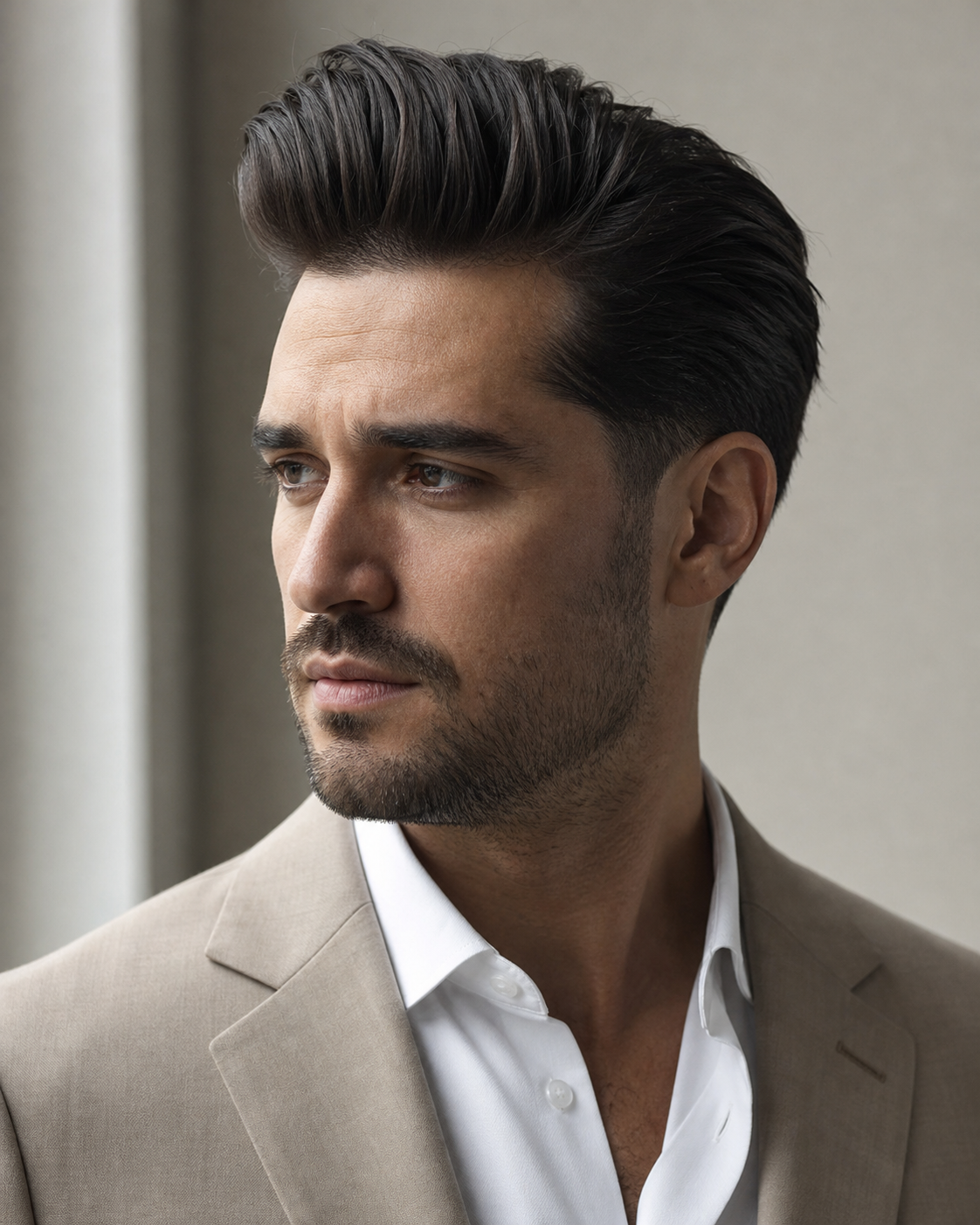
Height at the front, swept back and up, with the sides tapered rather than shaved. The modern version keeps the volume moderate — enough to lengthen a round face, not enough to look like a costume.
Ask for: “Pompadour with a low taper, about four inches at the front, leave the sides long enough to blend.”
Styling: Blow-dry upward with a round brush first. This is not optional — no product creates this height on its own. Then matte paste to hold.
Back to the barber: 4 weeks.
5. Tapered Quiff
Best for: Medium to thick, any texture · Most face shapes · Any office
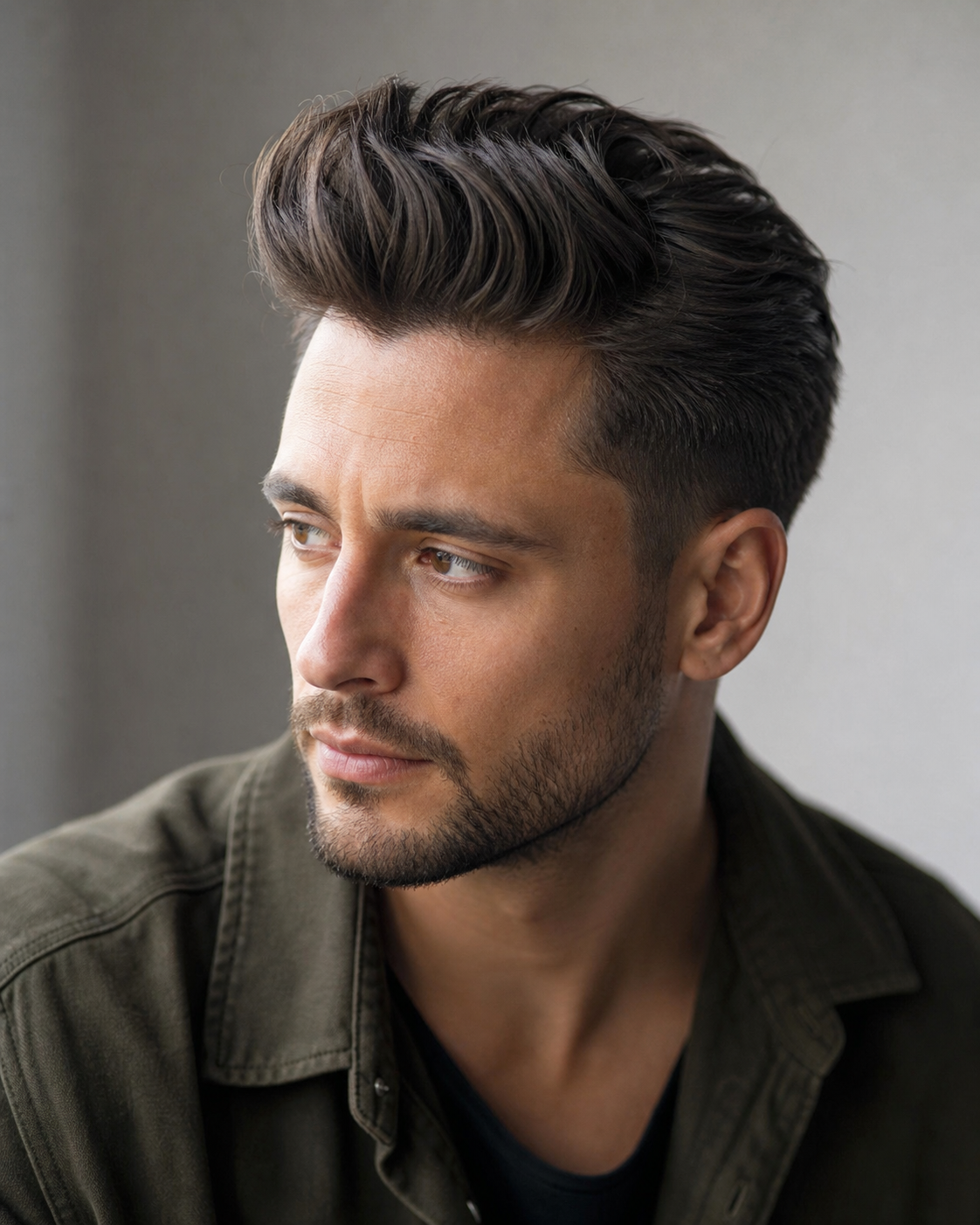
Lift at the front that softens as it moves back, blending into tapered sides. Less formal than a pompadour, less effort than a slick back, and it sits comfortably in almost every workplace.
Ask for: “Quiff with a low taper — lift at the front, natural finish, nothing shaved.”
Styling: Rough dry with your fingers pushing up and forward, then light paste.
Back to the barber: 4 weeks.
6. Soft Slick Back
Best for: Medium to thick, straight or wavy · Square, oval · Conservative to mixed offices
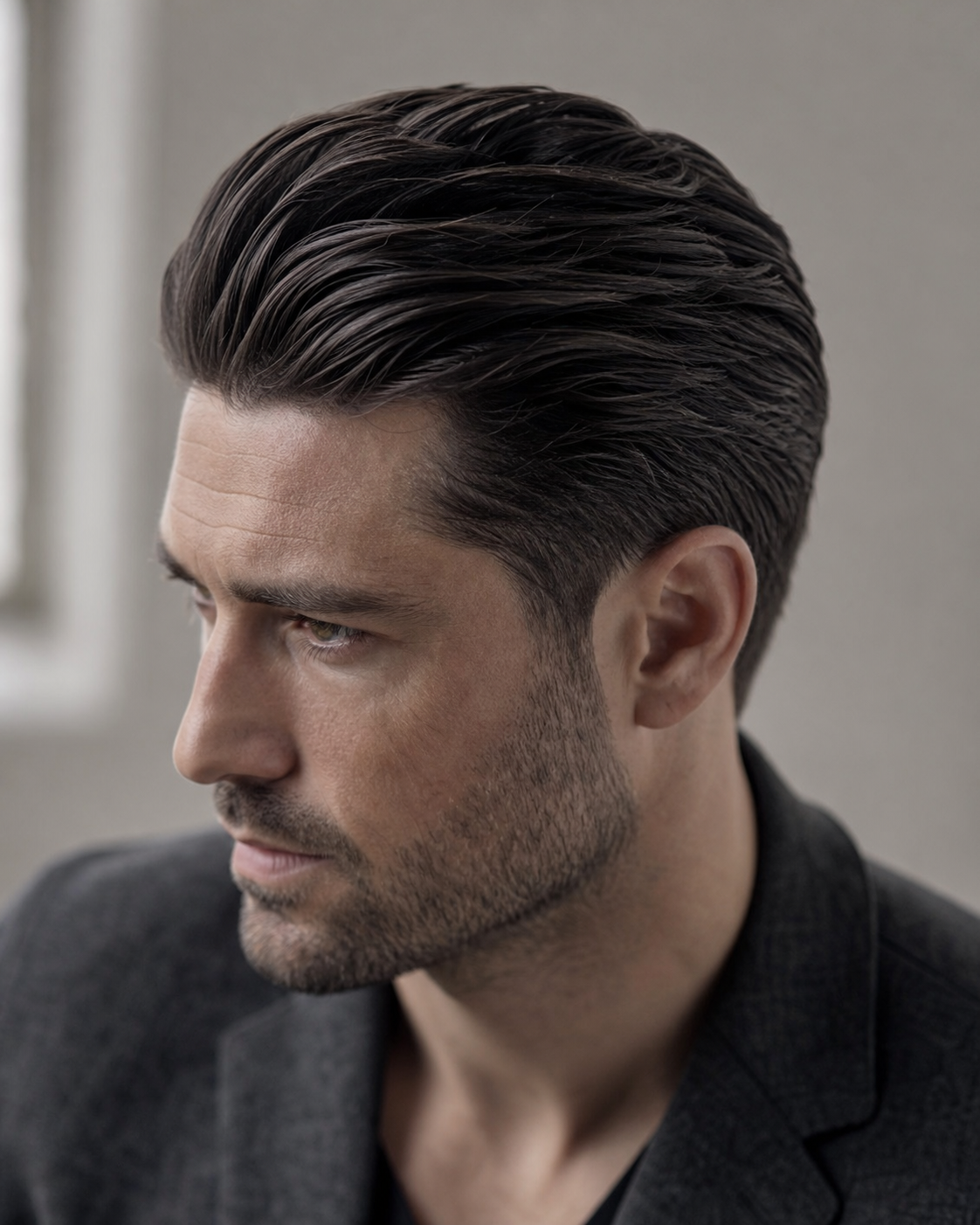
Everything combed back off the face, but with a matte finish instead of a wet shine. The wet version reads slick in the wrong way under office lighting, and it shows every bit of scalp if your hair is thinning. The matte version just looks tidy.
Ask for: “Four to five inches on top, taper the sides, scissor-cut so I can comb it straight back.”
Styling: Blow-dry back with a brush, then medium-hold cream. Rake through with your fingers at the end so it is not perfect.
Back to the barber: 5 weeks.
7. Buzz Cut with a Mid Fade
Best for: Any hair type, especially thinning · Square, oval · Any office
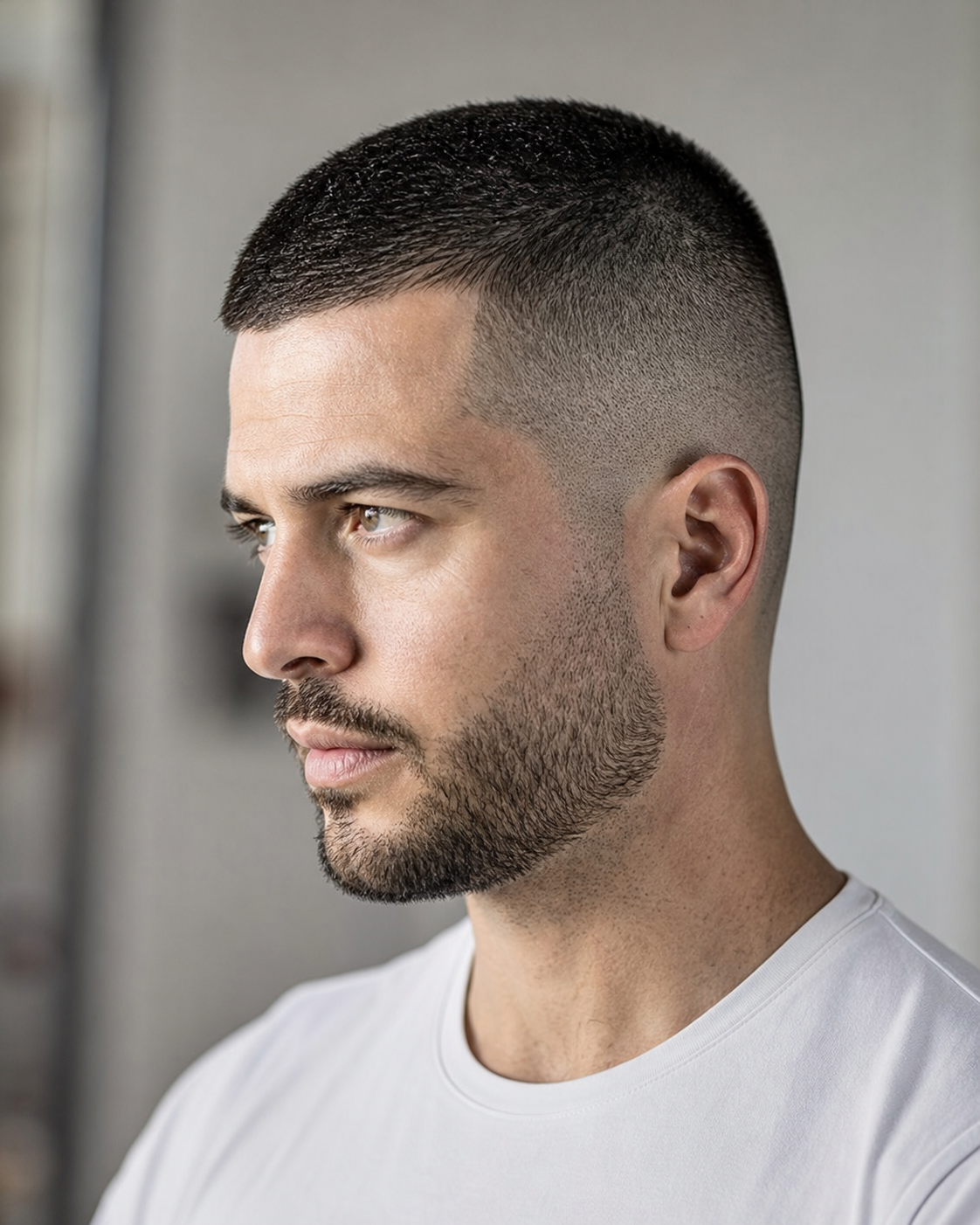
The lowest-effort cut that still reads deliberate. The fade is what separates a buzz cut from having given up — the gradient makes it a choice. It is also the single best option for an early receding hairline, because it removes the contrast that makes recession obvious.
Ask for: “Number two on top, mid fade on the sides, clean up the neckline.”
Styling: None. A little moisturiser on the scalp if it looks dry.
Back to the barber: 2–3 weeks. The shortest cuts show growth fastest.
8. Short Afro with a Line-Up
Best for: Coily hair · Most face shapes · Any office
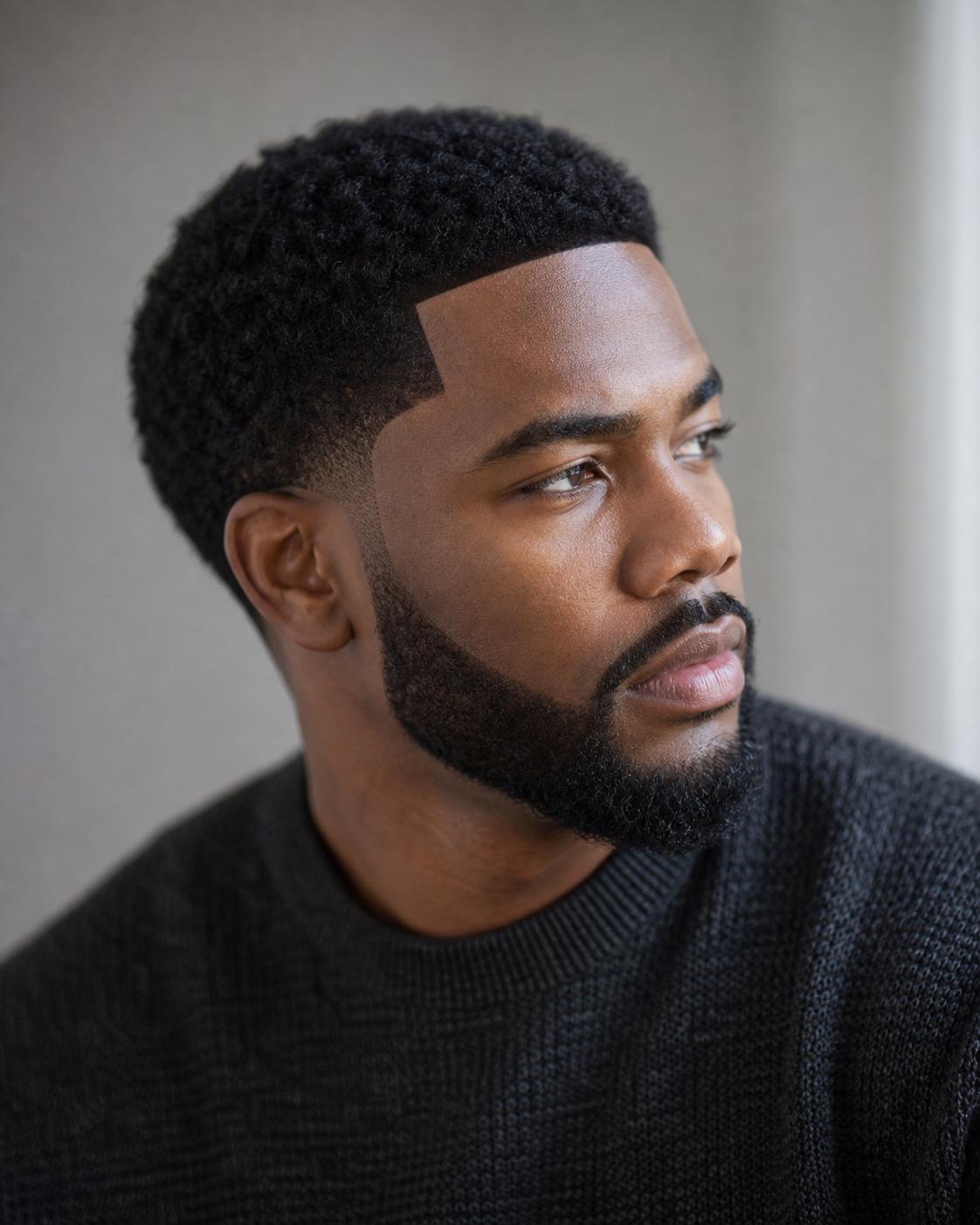
Kept short and even through the top with a sharp, squared line at the hairline and temples. The line-up is what makes it formal — the same length without it reads casual.
Ask for: “Keep the length even on top, temple taper, and a clean line-up on the front and sides.”
Styling: Leave-in moisturiser or hair butter, daily. Coily hair goes dull without moisture, and dull is what reads unkempt.
Back to the barber: 2–3 weeks for the line-up.
9. Textured Crop with Tapered Sides
Best for: Straight to wavy, fine to medium · Round, square · Mixed to creative offices
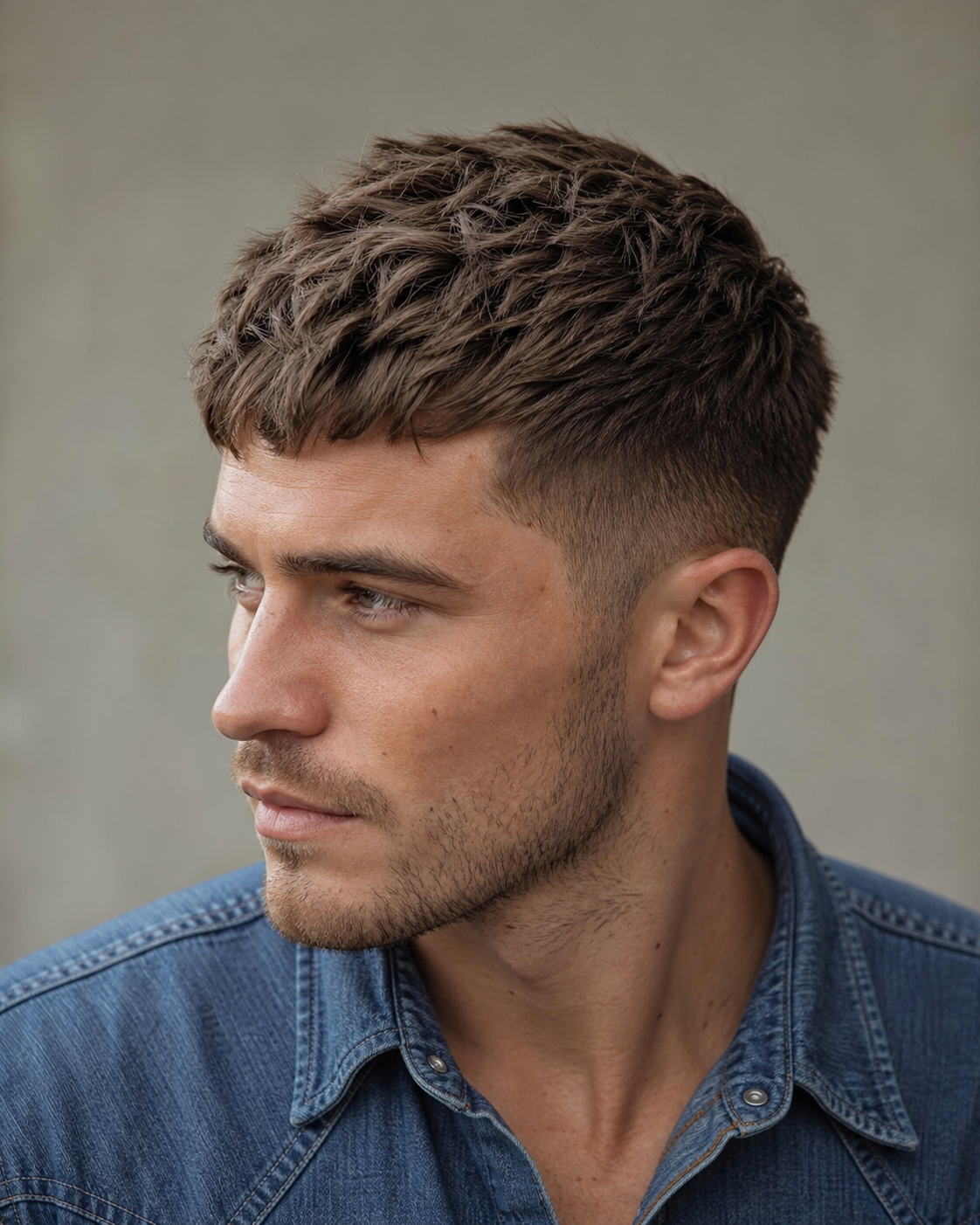
A crop with the top left deliberately choppy. The texture is the entire point — it adds volume to flat hair and hides cowlicks that a blunt cut would fight with every single morning.
Ask for: “Point-cut the top for texture, low taper on the sides, keep about two inches.”
Styling: Matte clay, pinched between the fingers and separated through the top.
Back to the barber: 4 weeks.
10. Hard Part with Short Back and Sides
Best for: Straight, medium to thick · Oval, square · Conservative offices, sales, client-facing roles
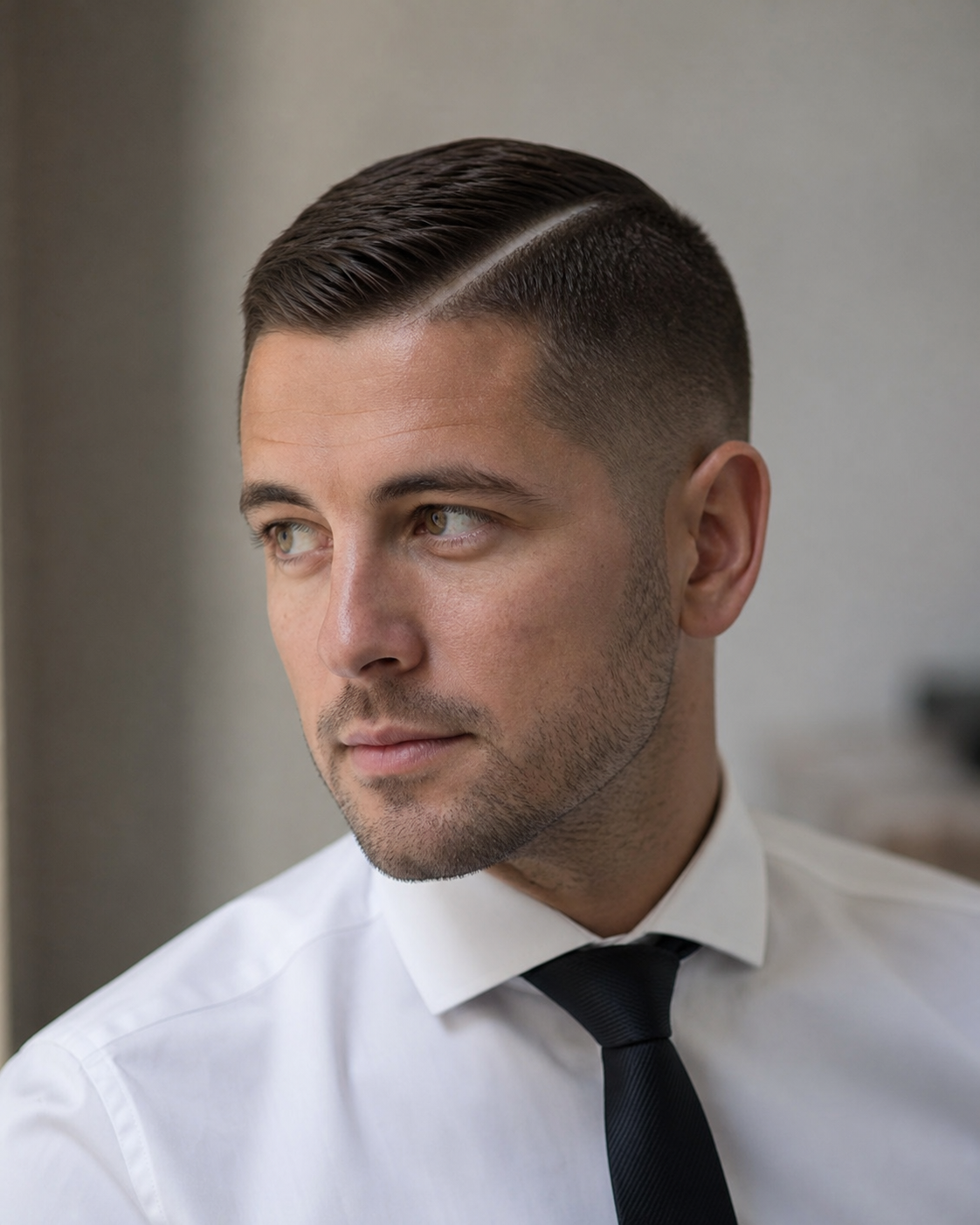
A standard short professional cut with one razored line where the part falls. It is a small detail that does a disproportionate amount of work — it photographs sharply and signals precision.
Ask for: “Short back and sides, and razor in a hard part on my left.”
Styling: Light pomade, combed along the part line.
Back to the barber: 2–3 weeks. A blurred hard part looks worse than no hard part at all.
11. Comb Over with a Skin Fade
Best for: Straight to wavy, medium to thick · Long, oval, square · Creative to mixed offices
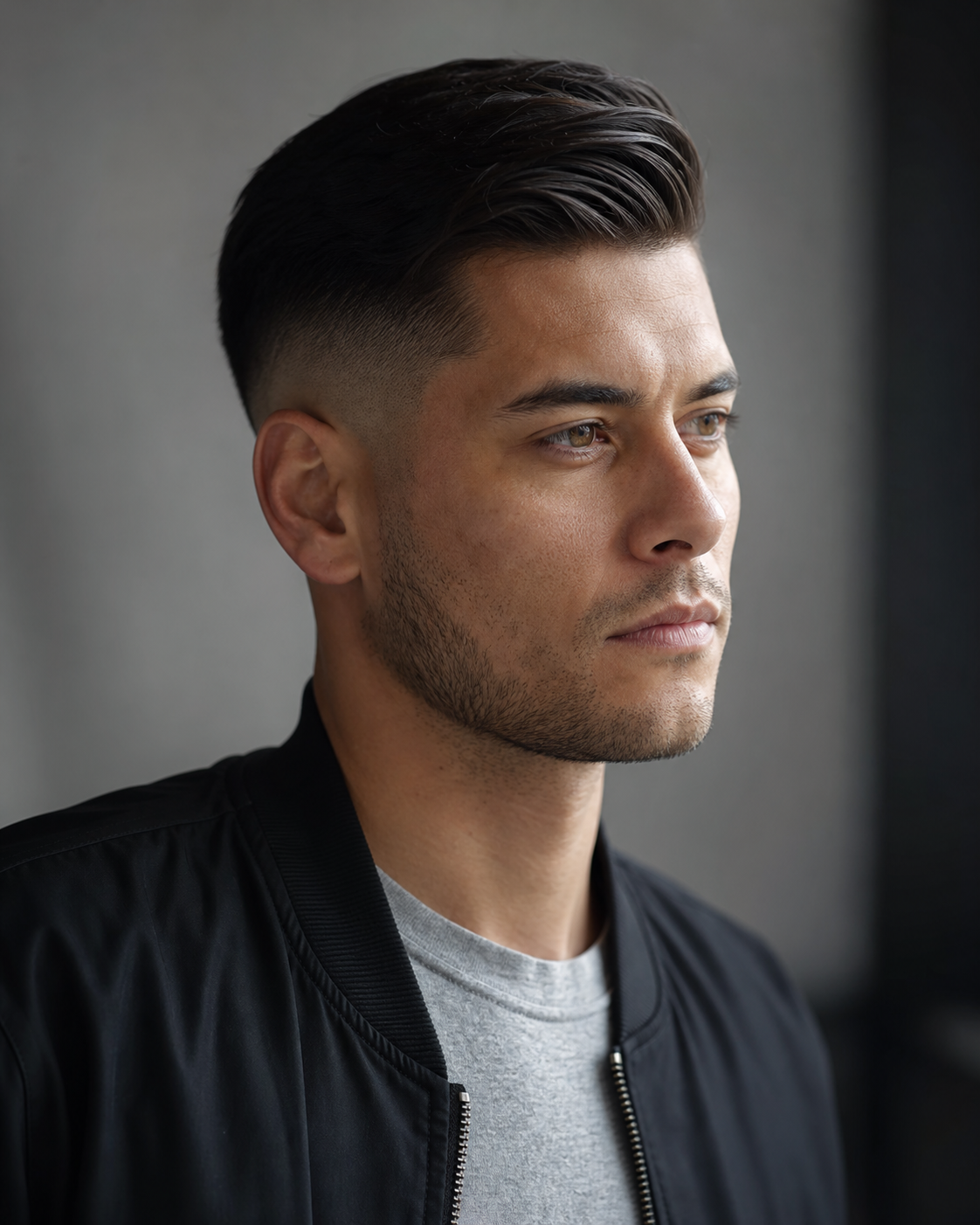
The modern comb over has nothing to do with covering a bald spot. Length on top is swept across to one side and the fade drops to skin underneath for contrast. It is sharp, but the skin fade is a step too far for genuinely conservative workplaces — swap it for a low taper if that is your environment.
Ask for: “Comb over with a low skin fade, three to four inches on top.”
Styling: Blow-dry across the direction of the sweep, then medium-hold paste.
Back to the barber: 2–3 weeks. Skin fades grow out visibly within a fortnight.
12. Caesar Cut
Best for: Fine to medium straight hair, especially receding at the front · Round, square · Any office
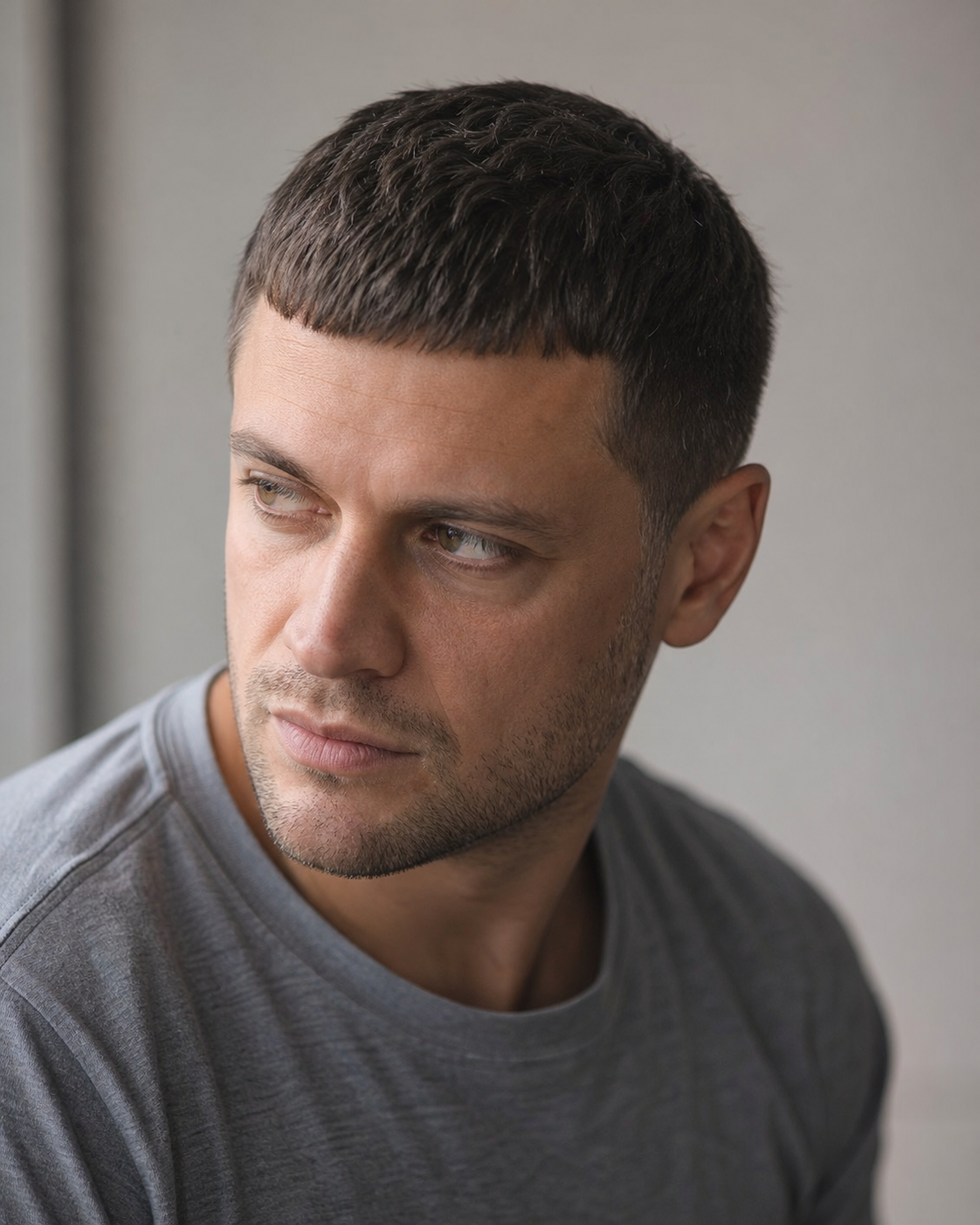
Short all over with the top combed forward into a straight fringe. It is one of the only cuts that genuinely helps a receding front hairline, because the hair moves toward the recession instead of away from it.
Ask for: “Caesar cut — short all over, about an inch and a half on top, combed forward.”
Styling: Matte cream, pushed forward from the crown.
Back to the barber: 3–4 weeks.
13. Side-Swept Medium Length
Best for: Wavy hair, medium density · Oval, heart, square · Creative offices
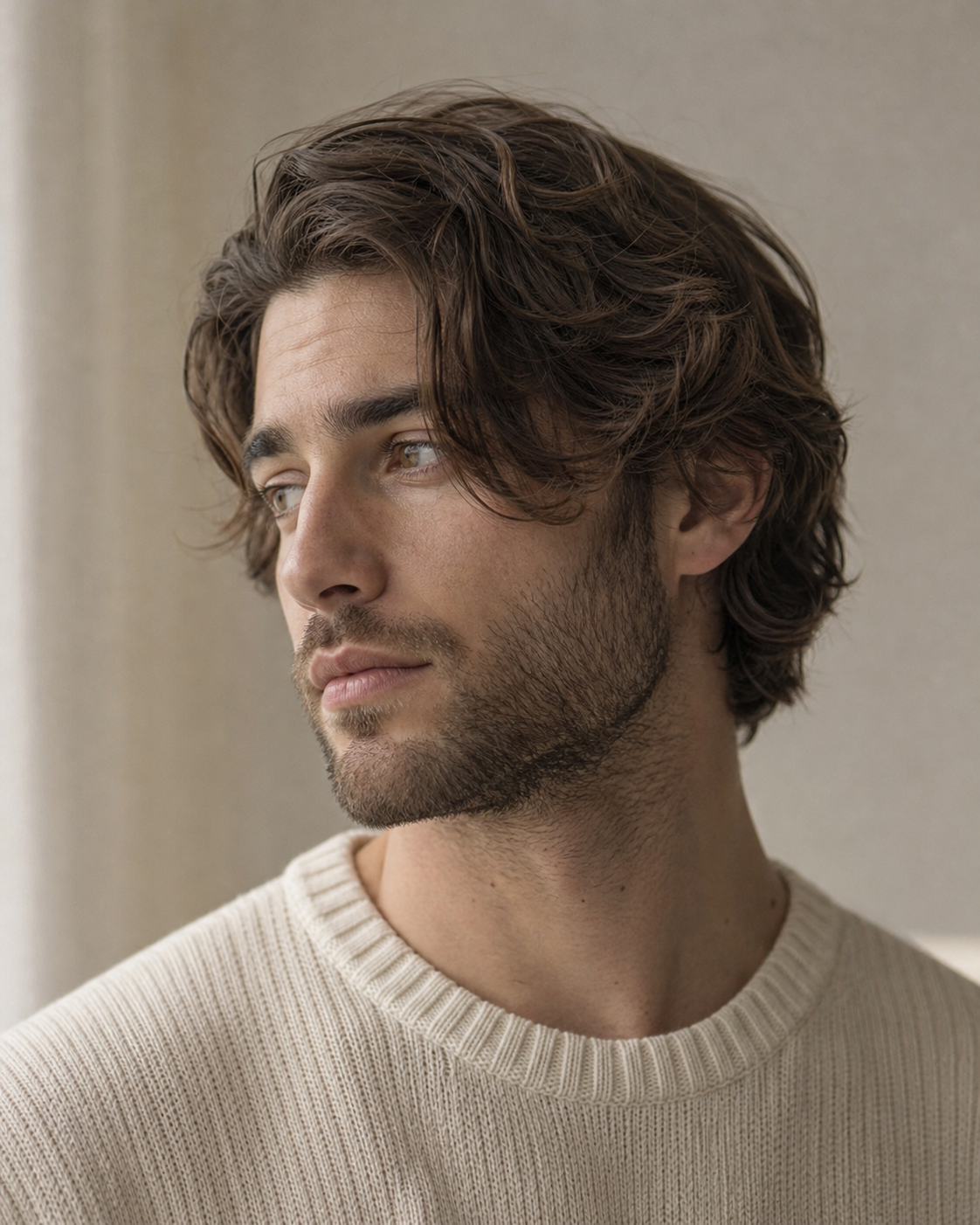
Length through the top and sides, parted loosely and allowed to fall to one side. The cut relies on layering to remove bulk without removing length — ask for scissors, not thinning shears, which leave the ends looking frayed.
Ask for: “Scissor-cut layers through the top to take weight out, keep the length, soft taper at the neck.”
Styling: Light mousse or cream on damp hair, then air dry.
Back to the barber: 6–8 weeks.
14. Brushed-Back Waves
Best for: Natural wave, medium to thick · Oval, square · Mixed to creative offices

Four or five inches on top, brushed back and left to fall into its own wave pattern. No part and no hard line at the sides, so the shape stays round rather than squared — which softens an angular face.
Ask for: “Keep the length on top, blend the sides without a fade, no part.”
Styling: Sea salt spray on damp hair, then cream. Let it air dry.
Back to the barber: 6 weeks.
15. Curly Crop with a Taper
Best for: Type 2–3 curls · Most face shapes · Mixed to creative offices
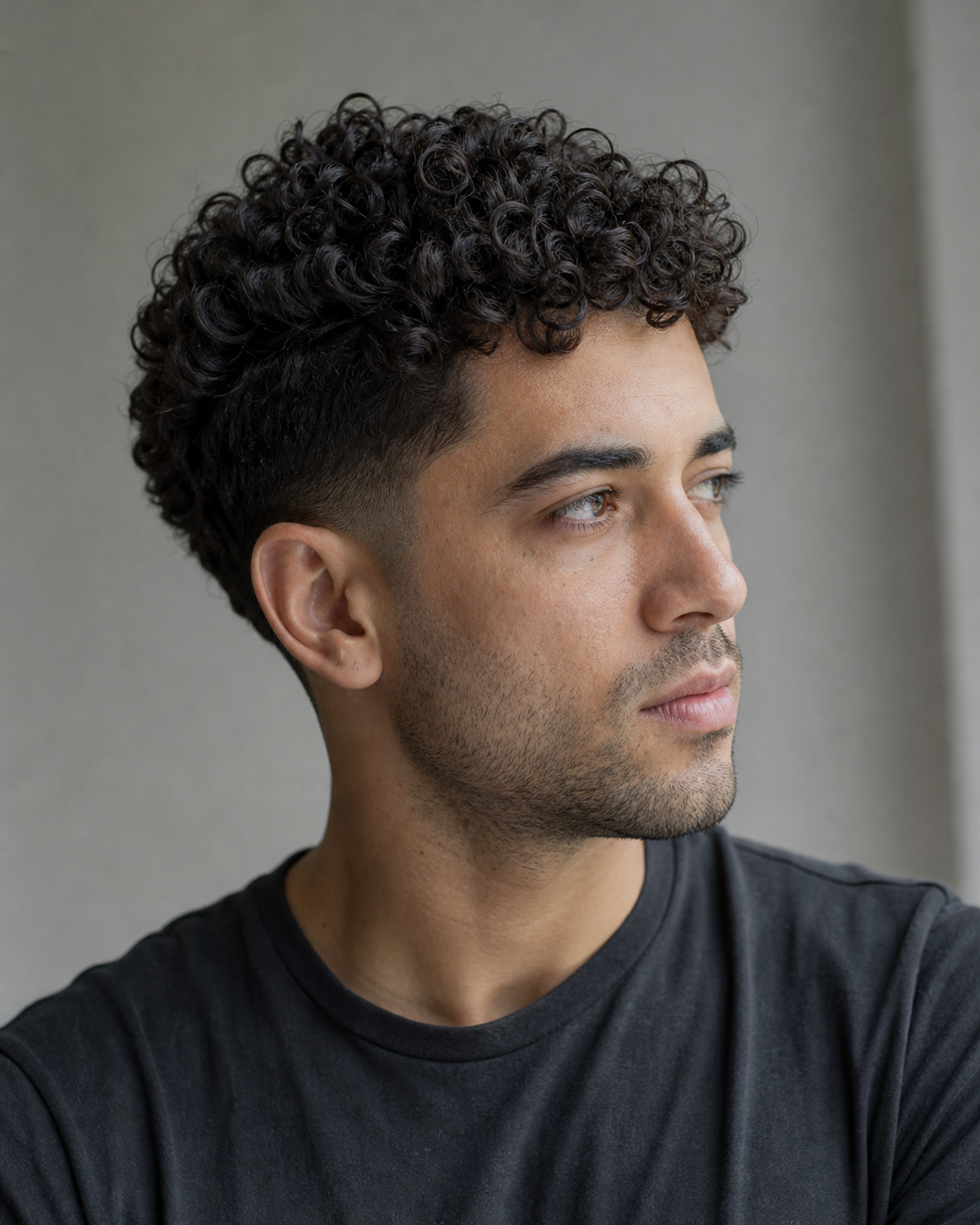
Curls kept full through the crown with the sides tapering down close. The critical detail is the tool. Curls have to be cut with shears — clippers flatten the curl pattern and leave the top looking crushed, which is the single most common way a curly cut goes wrong.
Ask for: “Cut the top with scissors, don’t use clippers on the curl, and taper the sides.”
Styling: Curl cream on damp hair, scrunch, then leave it alone.
Back to the barber: 5–6 weeks.
16. Low Taper with Natural Coils
Best for: Type 4 hair · Most face shapes · Any office
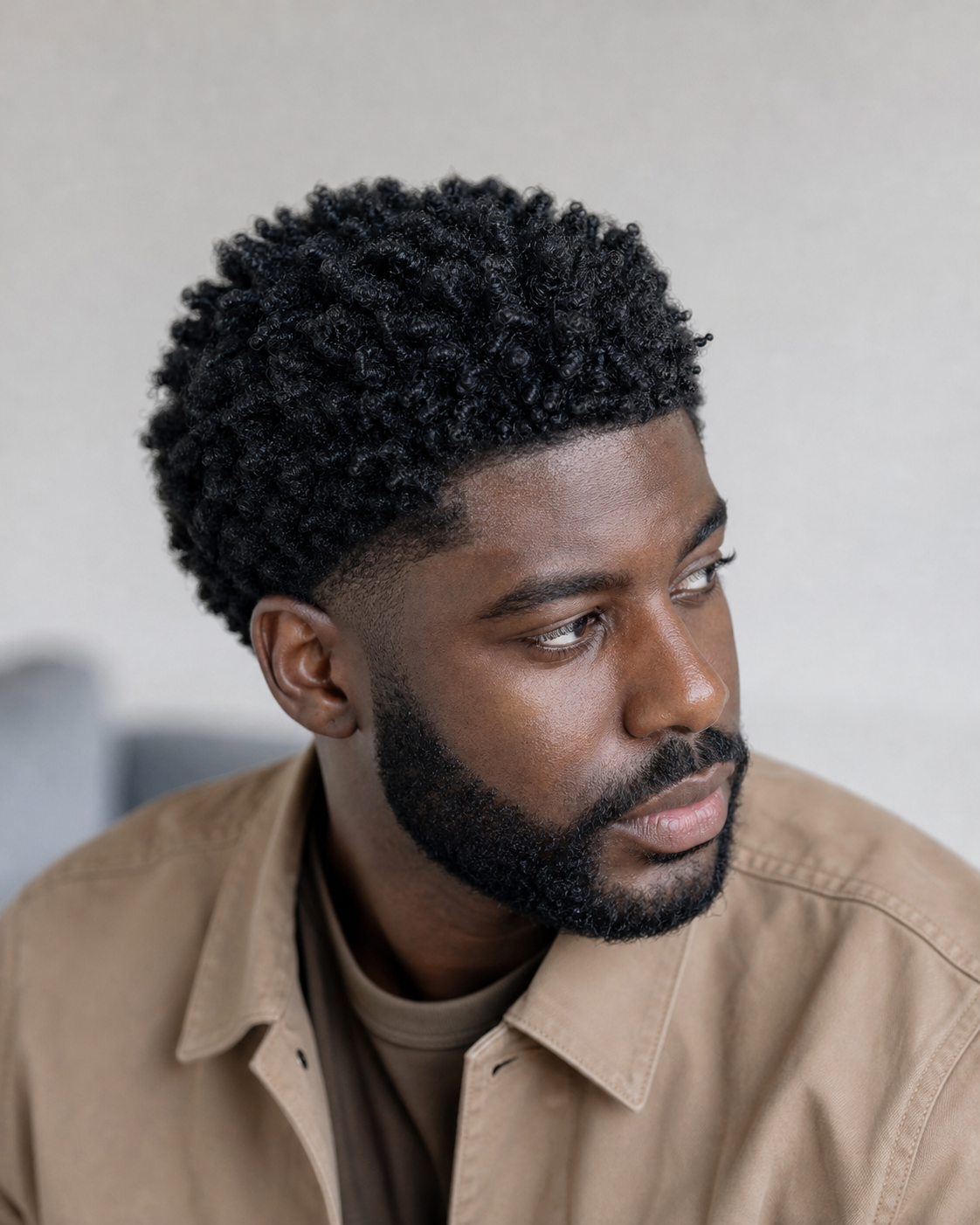
Coils kept at a short-to-medium, even length with a soft taper at the temples and neckline rather than a hard fade. It is the most office-neutral way to wear natural texture without cutting it short.
Ask for: “Keep my natural length on top, low taper at the temples and neckline, no hard line.”
Styling: Moisturiser, then a brush to set the pattern. Re-moisturise daily, not only on wash day.
Back to the barber: 3–4 weeks.
17. The Businessman Cut (Scissors Only, No Fade)
Best for: Any straight or wavy hair · Any face shape · Conservative offices, law, finance, government

No clippers anywhere. Everything is cut and graduated with scissors, so there is no visible fade line at all. It is the most conservative cut here and the one that grows out most gracefully — genuinely useful if you cannot get to a barber on a reliable schedule.
Ask for: “Scissor cut only, no clippers, tapered at the back and sides, about two and a half inches on top.”
Styling: Light cream, comb, done.
Back to the barber: 6 weeks.
18. Disconnected Undercut, Slicked Back
Best for: Thick, straight hair · Oval, square · Creative offices only
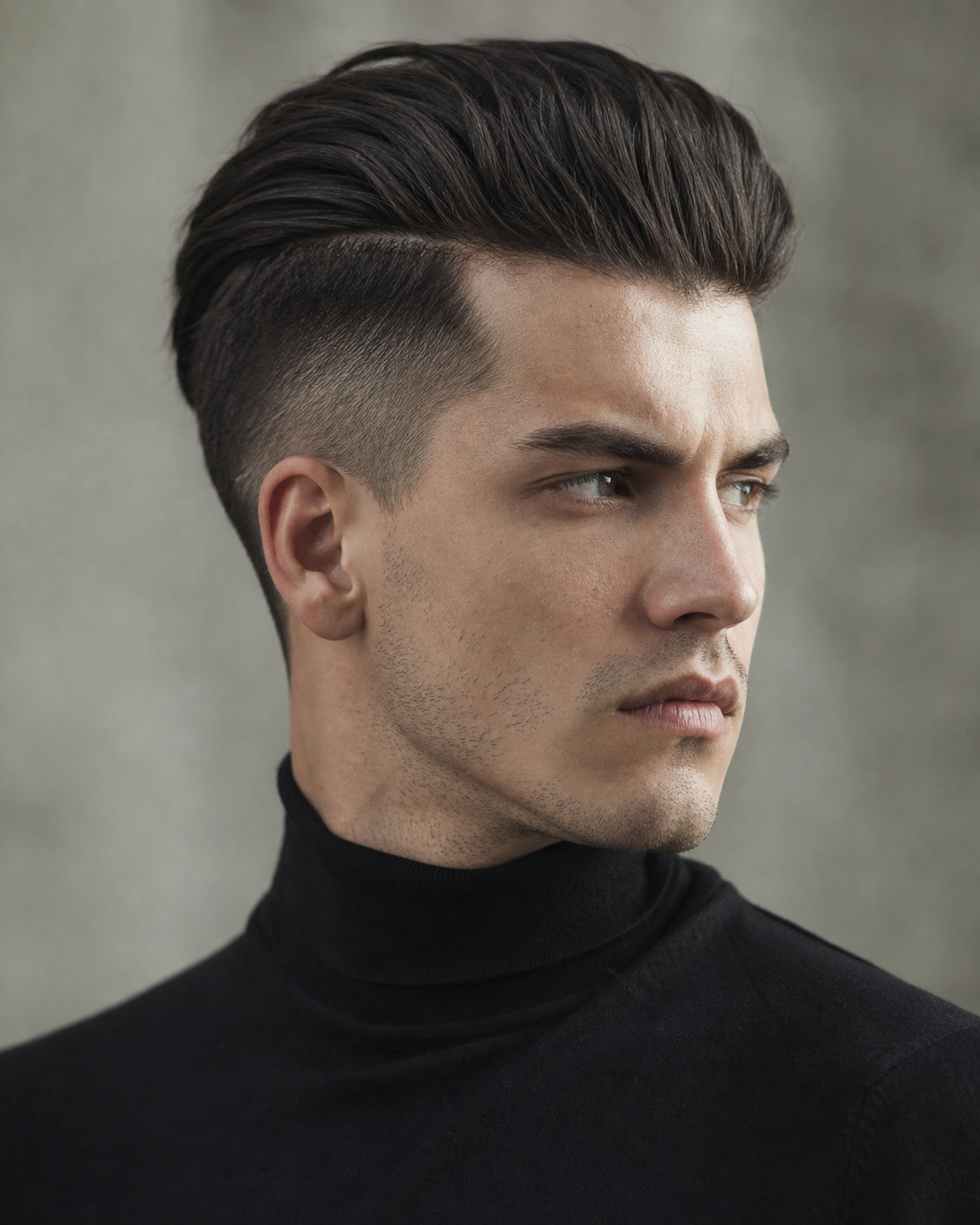
Sides taken short with no blend into the top, and the top swept straight back. It is the sharpest-looking cut on this list and the least forgiving. The hard disconnect reads as a deliberate fashion choice, which is exactly why it does not belong in a conservative office.
Ask for: “Disconnected undercut — number two on the sides, no blend, leave about five inches on top.”
Styling: Blow-dry back, then strong-hold matte pomade.
Back to the barber: 3 weeks.
19. Classic Crew Cut
Best for: Straight hair, any density · Square, oval · Any office
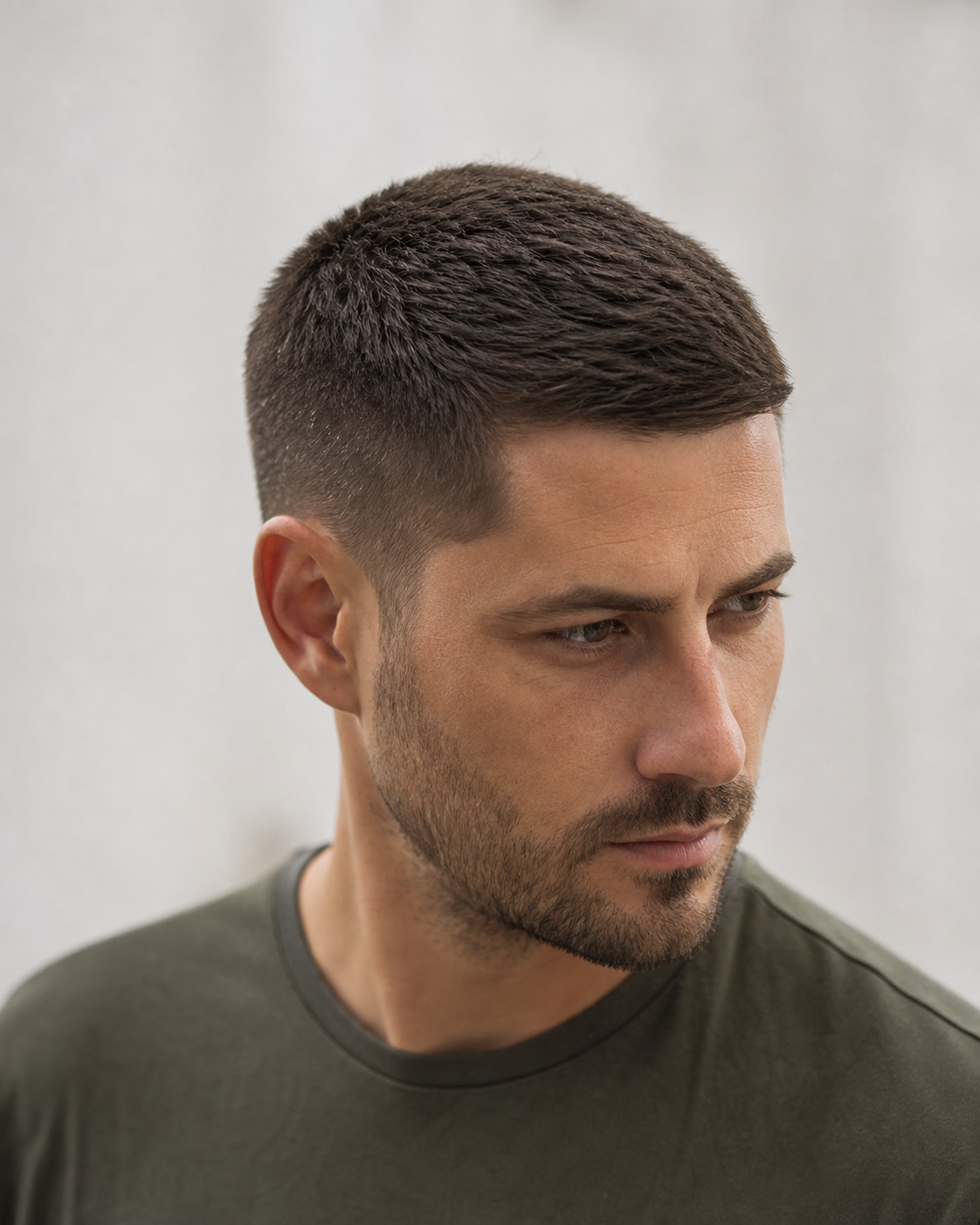
Short and graduated, slightly longer at the front than at the crown. It is the default for a reason — it suits most men, needs no styling, and no workplace has ever objected to it.
Ask for: “Crew cut — short on the sides, about an inch at the front, graduated down.”
Styling: Nothing, or a trace of matte paste at the front.
Back to the barber: 3–4 weeks.
20. Textured Fringe
Best for: Straight to wavy, fine to medium · Long, oval · Creative offices
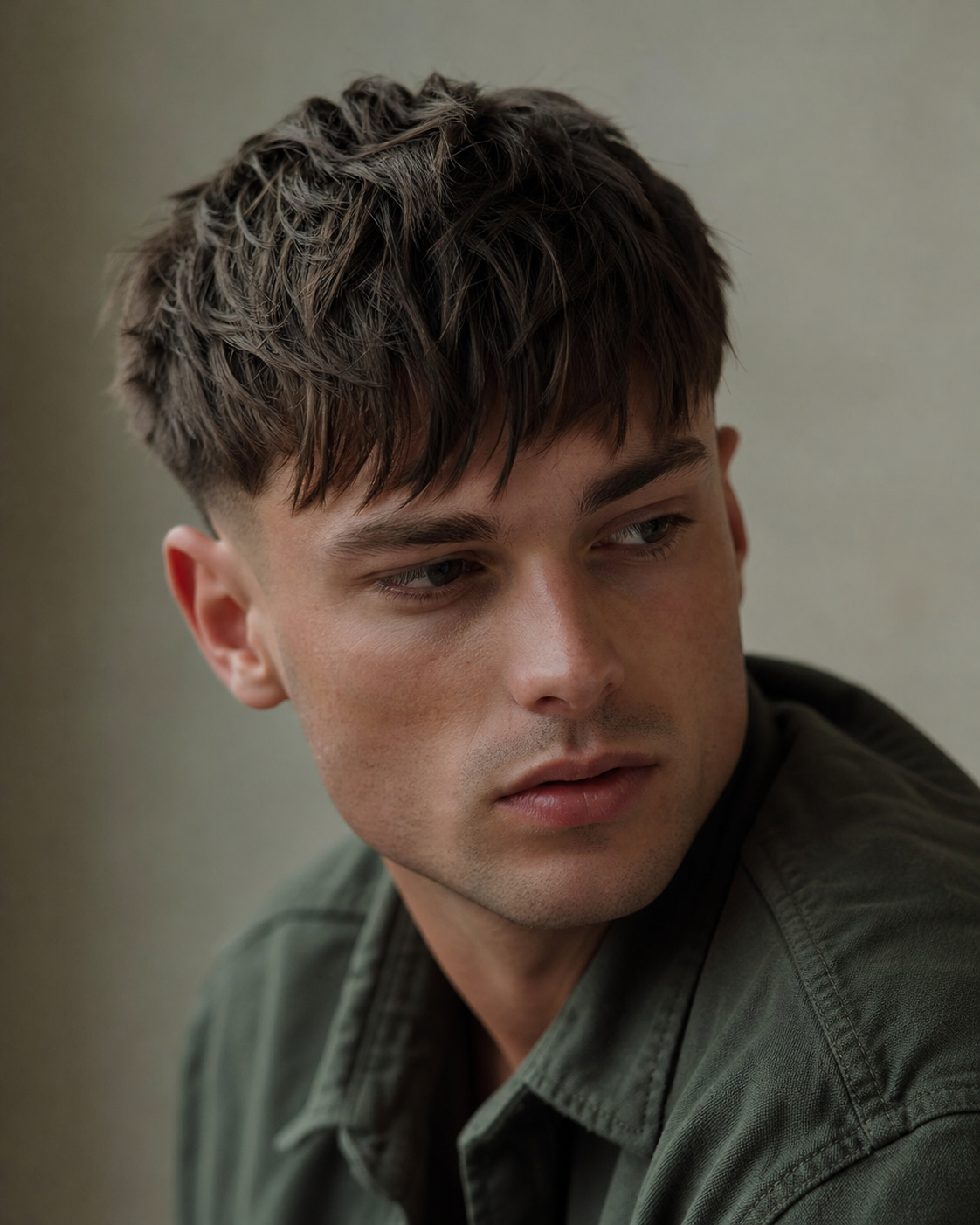
Length left at the front and worn down across the forehead, textured so it separates into pieces rather than sitting as a solid curtain. Good for shortening the look of a long face, and good cover if you have started to lose a corner at the temple.
Ask for: “Leave the fringe long and texture it, taper the sides, keep some weight at the back.”
Styling: Matte paste at the roots, pushed forward.
Back to the barber: 4–5 weeks.
21. Long Hair, Tied Back Low
Best for: Thick, straight to wavy, shoulder length or longer · Oval, square · Creative offices
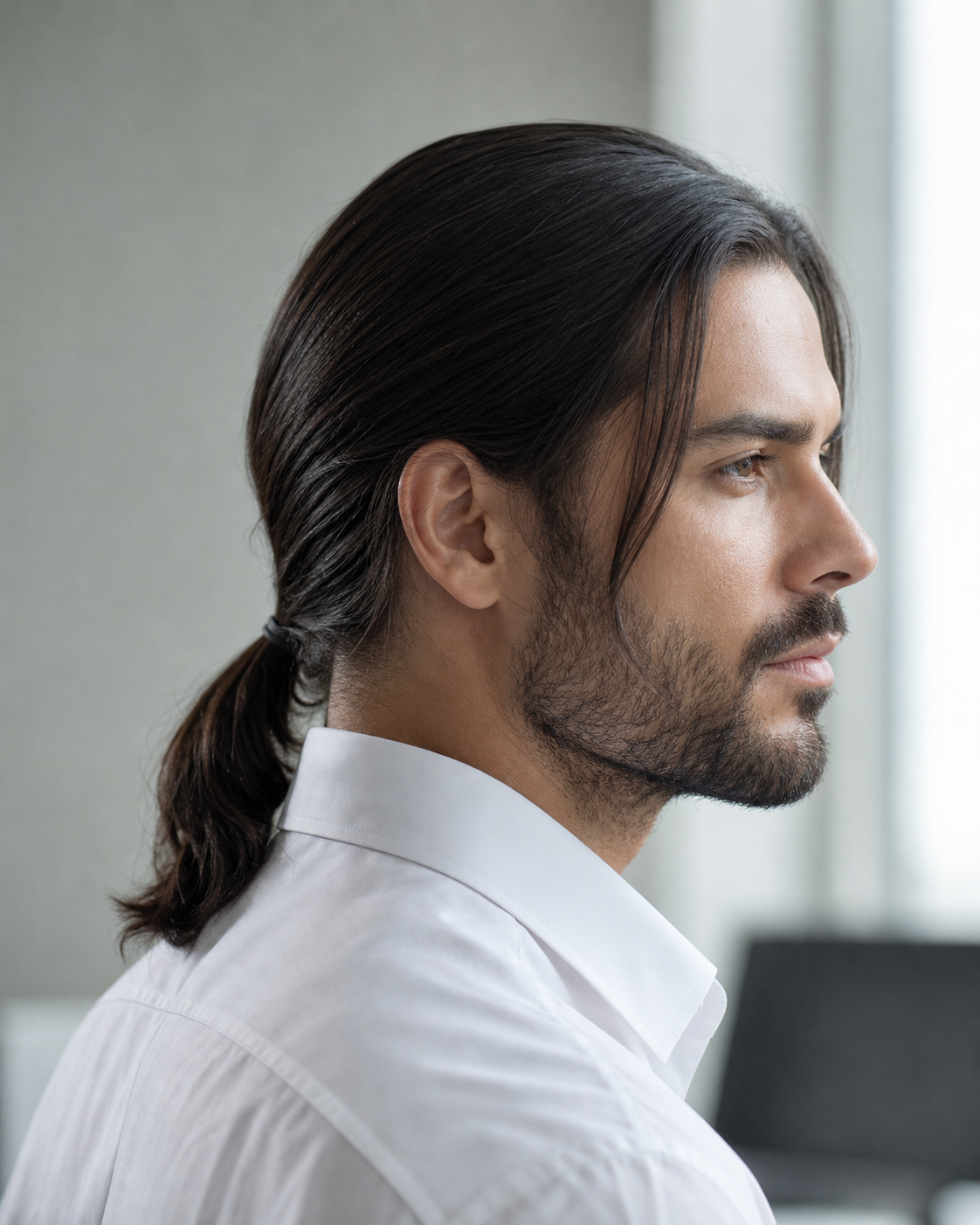
Almost every professional hairstyle guide ignores long hair entirely, which is strange given how many men have both long hair and a job. The rule is simple: long hair reads professional when it is deliberately contained, and unprofessional when it is half escaping. A low, tight tie at the nape — not a high bun — is the version that works with a collar.
Ask for: “Keep the length, clean up the ends, and layer slightly at the front so it holds when it’s tied back.”
Styling: Brush through, tie low and tight, plain dark elastic. Condition it properly. Dry, frizzy long hair is what looks unprofessional, not the length itself.
Back to the barber: 10–12 weeks for a trim.
22. Short Crop for a Receding Hairline
Best for: Thinning or receding at the temples · Any face shape · Any office
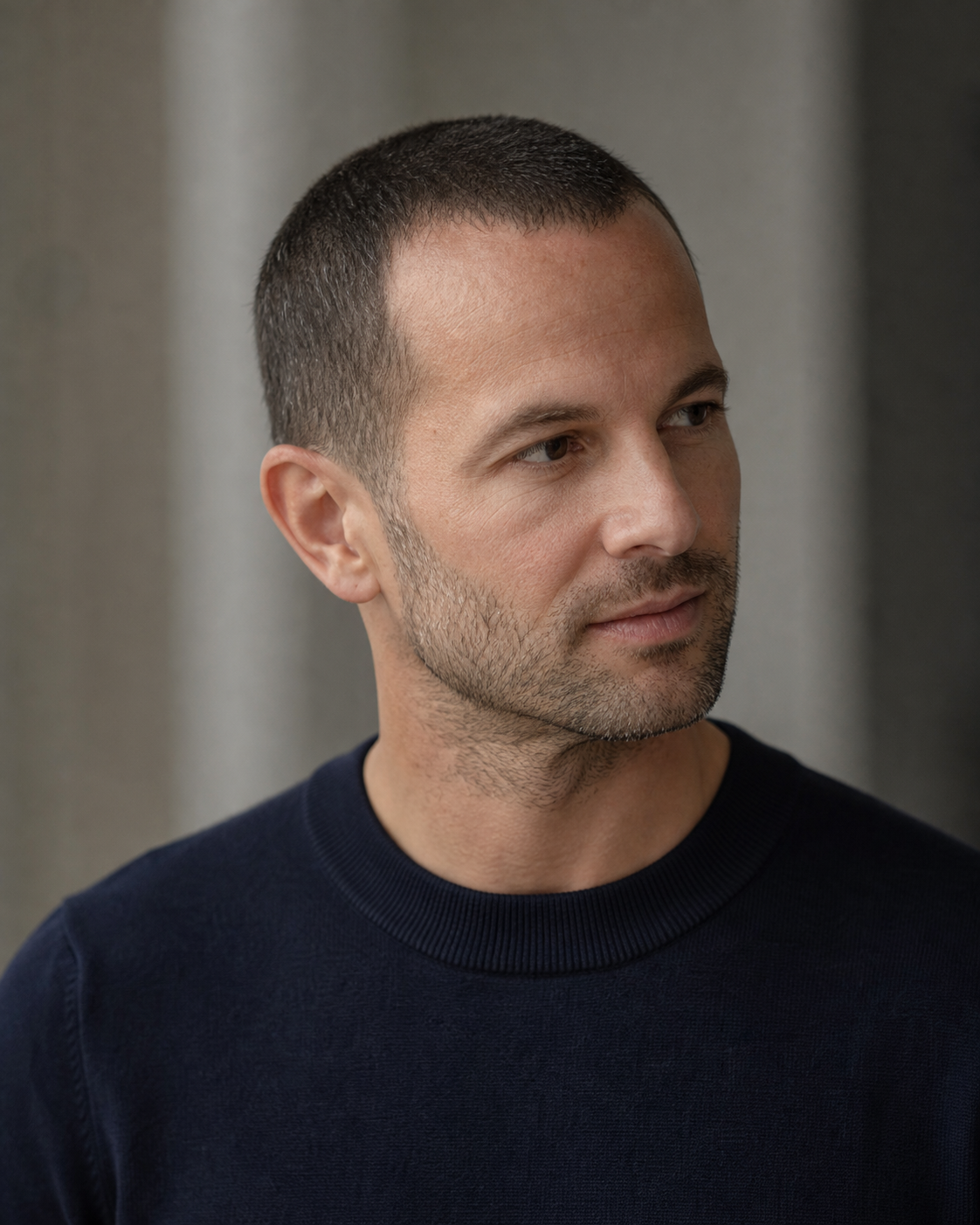
The honest option for the stage before shaving it all off. Keeping the top short and uniform removes the contrast between where hair is dense and where it is not — and that contrast is what actually makes recession noticeable. Growing the top longer to compensate does the exact opposite.
Ask for: “Keep it short and even on top, around a number four, and blend the sides in — don’t fade it too high.”
Styling: Matte product only. Anything with shine highlights the scalp.
Back to the barber: 3 weeks.
23. Tapered Cut with Natural Grey
Best for: Salt-and-pepper or fully grey hair · Any face shape · Any office
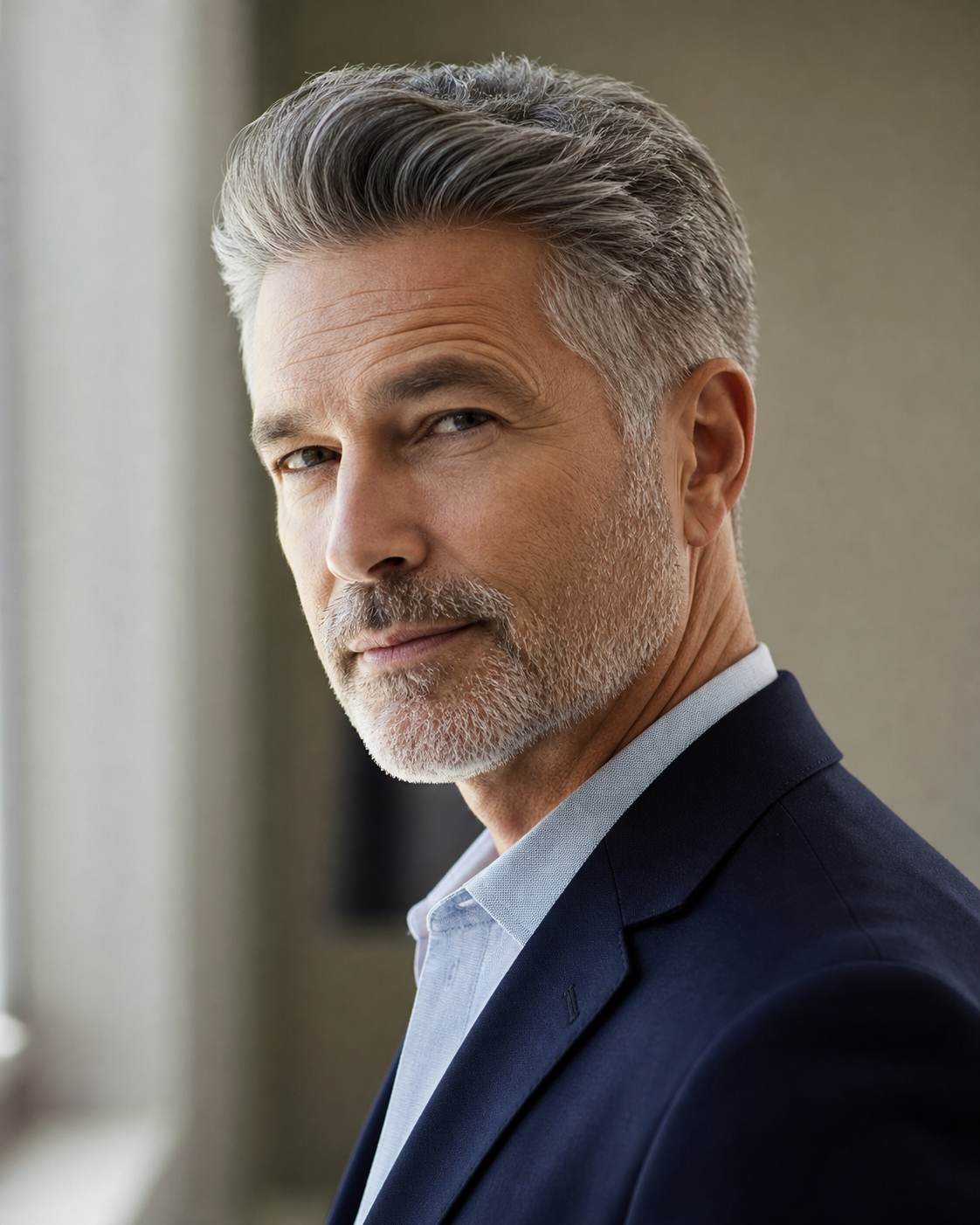
Grey hair is coarser and drier than it used to be, so it holds a shape well but looks dull without conditioning. Keep the cut simple and well defined — a clean taper and a tidy neckline — and let the colour do the work. Dyeing it is almost always more obvious than leaving it alone.
Ask for: “Clean taper, tidy the neckline and around the ears, keep about two inches on top.”
Styling: A light conditioning cream. Grey hair that looks dry reads older than grey hair that looks healthy.
Back to the barber: 4 weeks.
What to Actually Say at the Barber
When it comes to professional men’s hairstyles, most bad haircuts are communication failures, not skill failures. Three numbers and one word solve most of it.
Fade height. Low sits above the ear. Mid sits at the temple. High runs up near the corner of the crown. A taper is none of these — it never goes down to skin.
Length on top. In inches or clipper guard numbers. “Short” and “medium” mean nothing; they mean whatever the barber’s last client meant.
Finish. Matte, natural, or shine. This changes which products the cut will actually work with.
Taper or fade. This is the one word that matters most. A taper never reaches skin; a fade can. If your office is conservative, say taper.
Bring a photo — but the right photo. Not a celebrity. Find a man with your hair type and roughly your face shape. A reference photo of thick straight hair is useless if yours is fine and wavy, and you will get something that looks nothing like the picture.
Say how you style it at home. “I have three minutes and I use my fingers” produces a different cut than “I blow-dry it every morning.” A barber who knows which one you are will cut you something you can actually recreate.
Product Cheat Sheet by Hair Type
| Hair type | Use | Avoid |
|---|---|---|
| Fine / thinning | Matte clay, sea salt spray, texture powder | Pomade, oils, anything with shine |
| Thick, straight | Matte paste, strong-hold pomade | Light creams — they will not hold it |
| Wavy | Cream, light mousse | Clay, which stiffens and breaks the wave |
| Curly (type 2–3) | Curl cream, light gel | Clay, wax, alcohol-heavy gels |
| Coily (type 4) | Leave-in moisturiser, hair butter | Anything drying, and skipping days |
| Grey or coarse | Conditioning cream | Matte clay, which makes it look drier |
Final Thoughts
The best professional haircut is the one that still looks intentional on day eighteen, with four minutes of effort. That quietly rules out most skin fades and every hard part, unless you are genuinely happy going back to the barber every two weeks — the fade haircut in particular grows out fastest of anything on this list.
If you are not sure which of these professional men’s hairstyles to start with, the Ivy League and the textured crop with tapered sides handle more hair types, face shapes and office environments than anything else on this list. Start with one of those, then get specific once you know what your hair actually does on a normal morning.
And once the hair is sorted, the rest of the picture has to keep up. A sharp cut above a badly fitted shirt is a wasted haircut — our guide to flannel shirt outfits for men covers the fit rules that make casual clothes look deliberate rather than accidental.


