
19 Grooming Mistakes Men Make (and the Exact Fix for Each)
Most razor bumps, beard itch and flaking scalps are not bad luck. They are the result of one habit, repeated for years, that nobody ever corrected.
Grooming mistakes survive because they look harmless in the moment. You shave a little too fast before a meeting. You skip moisturiser because the tube is in another room. You push your cuticles back because it looks tidier. None of it feels like a mistake until the skin reacts — and by then it is easy to blame the razor, the weather or “sensitive skin” rather than the habit underneath it.
This guide to common grooming mistakes covers five areas where the grooming mistakes cluster — shaving, beard, hair and scalp, nails, and aftercare — and adds a sixth most grooming guides skip entirely: how your routine should change depending on what your day actually looks like. Each fix below names the exact product type to reach for, not just “use something gentle.”
Shaving Mistakes That Cause Razor Burn
Shaving mistakes are some of the most common grooming mistakes men make. A close shave and an irritated shave are not the same achievement, even though they can look identical for the first hour.
1. Shaving on dry, unprepared skin
Dry hair is stiff. A blade dragging across stiff, dry hair has to work harder to cut it, and that extra friction is what tears at the surrounding skin.
Fix: Shave at the end of a shower, when hair is softest, or hold a warm damp cloth against the area for sixty seconds first. Apply a shaving cream or gel — not soap, which strips the skin’s natural oil — and give it two to three minutes before the first stroke. For sensitive skin, a slick, non-foaming shave oil leaves a more durable barrier than an aerosol foam.
2. Shaving against the grain for a “closer” shave
Going against the direction of growth does cut closer, at the cost of noticeably more irritation, because the blade is lifting the hair against its natural angle rather than slicing through it cleanly.
Fix: Find your grain by pulling the skin tight in a mirror and watching which way the hairs lie. On a jaw or neck where growth runs in two directions, shave each patch in its own grain rather than forcing one direction across the whole face.
3. Shaving with a blade that has gone past its life
A worn blade does not cut — it drags. Dragging is what produces burn, nicks and ingrown hairs, usually blamed on “sensitive skin” when the blade is the actual cause.
Fix: Replace a cartridge or disposable after five to seven shaves. Rinse the blade after every stroke during the shave itself, so built-up cream and hair do not force it to drag even sooner.
4. Assuming more blades means a better shave
A five- or six-blade cartridge can cut so close that the hair retracts below the skin’s surface before it has a chance to exit cleanly — a common, underreported cause of ingrown hairs along the jawline.
Fix: If bumps persist with otherwise good technique, try a single- or double-blade razor instead, with lighter pressure and skin left unstretched.
5. Shaving too rarely and letting hair grow out between sessions
A week of growth curves more easily than a day’s worth, and a curved hair is far more likely to re-enter the skin and cause a bump.
Fix: Shave daily or every two to three days rather than batching it weekly. If ingrown hairs keep recurring in the same spot regardless, letting that patch grow out for several weeks — rather than continuing to shave over it — removes the cause entirely.
What to actually buy, by skin type
| Skin type | Pre-shave | Shave product | Post-shave |
|---|---|---|---|
| Normal | Warm water rinse | Shaving cream, brush-applied | Alcohol-free balm |
| Sensitive / prone to bumps | Pre-shave oil | Non-foaming shave oil or sensitive-formula cream | Fragrance-free balm with SPF |
| Oily / acne-prone | Warm water + gentle cleanser | Gel formula, non-comedogenic | Oil-free moisturiser |
| Dry | Warm damp cloth, two minutes | Rich shaving cream | Balm with ceramides or shea butter |

Beard Mistakes Behind the Itch, Flakes and Breakouts
A beard can look fine on the surface while the skin underneath is quietly going wrong — which is why most beard grooming mistakes get blamed on “just how my skin is” rather than on the routine.
1. Skipping the daily wash
Dirt, sebum and dead skin collect at the base of beard hair over a day. Left there, that buildup is what clogs the follicle and causes both the itch and the breakouts underneath a beard.
Fix: Wash the face and beard once daily with a dedicated cleanser rather than bar soap, which is formulated for a different pH and tends to strip beard hair dry.
2. Using the wrong product for your beard type
Beard oil, beard balm and beard conditioner solve different problems, and reaching for whichever one is on the shelf is how men end up either still itchy or visibly greasy.
Fix — match the product to the beard, not the other way round:
| Beard type | Skin tendency | Reach for |
|---|---|---|
| Short stubble, growing in | Often dry at the roots | Lightweight beard oil, a few drops |
| Thick or coarse, 2+ inches | Normal to dry | Beard balm (oil plus light hold) |
| Curly or coily | Prone to dryness and tangling | Leave-in beard conditioner |
| Patchy or acne-prone underneath | Reactive to oil | Non-comedogenic beard conditioner, oil-free |
Apply straight after washing, while the skin underneath is still slightly damp — that is when a leave-in product absorbs rather than sitting on top.
3. Touching and stroking the beard through the day
It reads as a habit, not a mistake, but hands carry oil and bacteria from everything they touch, and every stroke transfers that directly onto facial skin.
Fix: There is no product fix for this one — the fix is noticing the habit and keeping hands away from the beard between washes.
4. Forgetting sun protection on short growth
Stubble and short beards do not block UV the way a full beard eventually will, which makes the first few months of growing one of the more sunburn-prone periods for skin that normally stays covered.
Fix: Use a moisturiser with SPF 30 or higher on the cheeks and jaw until the beard is dense enough to shade the skin on its own.
5. Fighting patchy growth instead of styling around it
Patchiness is driven mostly by genetics and testosterone receptor density in the skin — no oil, supplement or brush routine changes that. Men who fight it with aggressive brushing or heavy product end up irritating the skin without changing the pattern underneath.
Fix: Pick a length and shape that works with the pattern rather than against it — a slightly longer length usually lets surrounding hair cover thin patches. A fresh trim from a barber who can see the growth pattern in person does more than any product. (related: picking a cut that suits your face shape)

Hair and Scalp Mistakes
Hair and scalp grooming mistakes are rarely about washing too often or too little. There is no single correct washing schedule — the advice varies because scalps genuinely vary — but most men are washing for the wrong reason, not the wrong frequency.
How often to actually wash, by scalp and hair type
| Hair / scalp type | Wash frequency |
|---|---|
| Oily scalp, straight hair | Daily is fine, sometimes necessary |
| Normal hair | Two to three times a week |
| Dry, thick, curly or coily hair | Once a week or less, as needed |
The signal to go by is the hair itself. Flaking and itch usually mean washing too little for that scalp; dry, brittle strands usually mean washing too much.
1. Shampooing the full length instead of the scalp
Oil and buildup sit at the scalp, not along the length of the hair. Working shampoo all the way to the ends strips moisture the ends did not need stripped.
Fix: Apply shampoo to the scalp only and let the rinse carry enough product down the length for the rest.
2. Skipping conditioner, or using it everywhere
Fine or straight hair only needs conditioner on the ends, where it is oldest and driest. Dry or curly hair needs it worked through the full length, scalp included.
3. Brushing wet hair the same way as dry hair
Wet hair is at its weakest point and breaks under the same brushing that dry hair tolerates easily.
Fix: Use a wide-tooth comb on wet hair, working from the ends upward, never a standard brush straight through from the root.
4. Leaving styling product in overnight, every night
Pomade, clay and wax left in overnight redeposit onto the pillow and scalp, which is a quietly common cause of clogged follicles and dull-looking regrowth — more relevant to office-job men who style daily than most grooming guides acknowledge.
Fix: A quick rinse before bed on days with heavy product is enough; it does not need a full wash.
5. Ignoring flakes instead of reading them
Flakes are information, not just an annoyance. They usually mean washing too infrequently, or a conditioner or scalp treatment that is not matching the scalp’s actual need.
Fix: If flakes persist for several weeks despite adjusting frequency, that is the point to see a dermatologist rather than keep cycling through shampoos.

Nail Care Mistakes That Cause Splits and Infections
Nails are the most overlooked area in most men’s grooming routines, which is exactly why these grooming mistakes cause problems disproportionate to the two minutes it would take to avoid them.
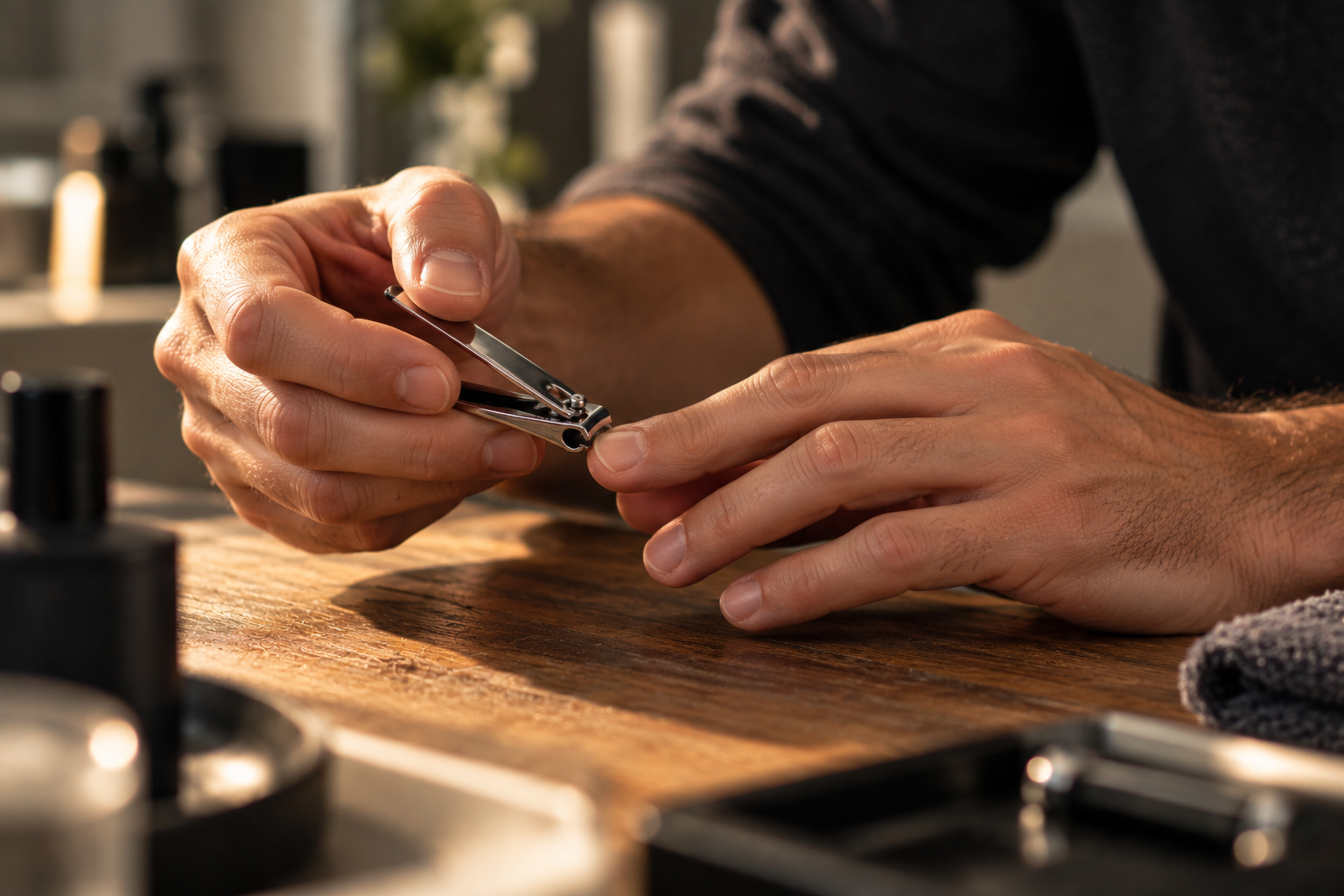
1. Cutting or pushing back cuticles
Cuticles seal the gap at the base of the nail. Cutting that seal opens a direct route for bacteria.
Fix: Leave cuticles alone. If they look rough, massage in a little cuticle oil or petroleum jelly before bed instead.
2. Using nails as tools
Popping a can open or scraping a label with a nail is a near-guaranteed way to crack or lift it from the nail bed.
Fix: Keep a small tool — even a flat key — for the jobs a nail keeps getting volunteered for.
3. Cutting straight across versus rounding the corners
Cutting too far into the corners is one of the more common, least-discussed causes of ingrown nails, particularly on the big toe.
Fix: Cut straight across with sharp clippers, then round only the very tip with an emery board — never cut into the corners themselves.
4. Too much water exposure without a barrier
Extended time in water — washing dishes, cleaning — softens and weakens the nail structure over time.
Fix: Gloves for extended wet tasks, and a little hand cream worked into the nail bed after washing hands.
Aftercare and Tool Mistakes That Undo a Good Routine
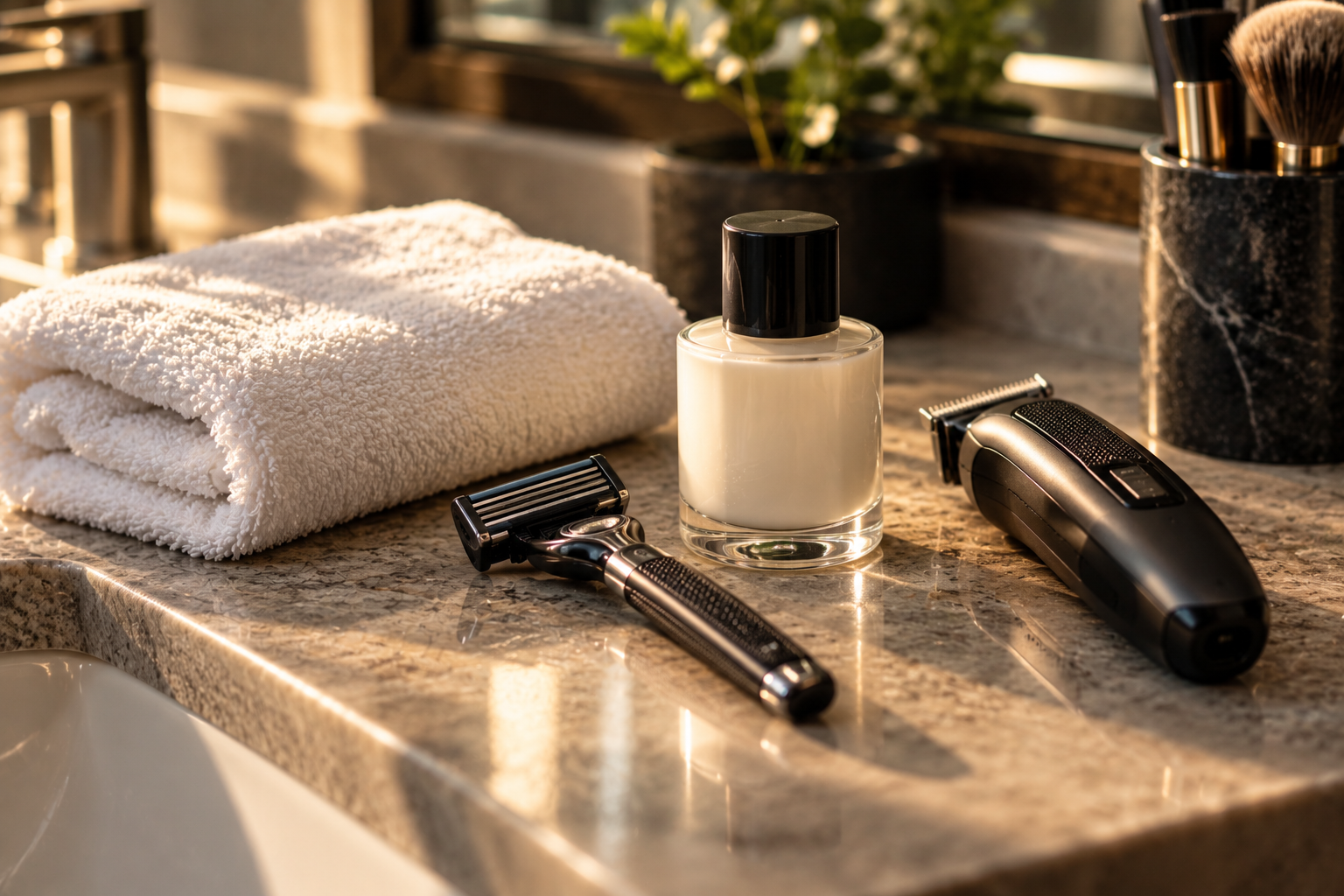
Aftercare and tool mistakes are grooming mistakes most guides skip entirely. Even a correct shave or trim can be undone afterwards by what happens to the skin, and to the tool, in the next five minutes.
- Rinse warm, finish cool. A cool-water rinse calms irritation that warm water opened up.
- Moisturise every time, not just on dry days. A fragrance-free balm with SPF 30+ locks in water and protects freshly exposed skin.
- Choose fragrance-free if skin reacts easily. Scented aftershaves and balms are one of the most common, and most avoidable, triggers for post-shave rashes.
- Dry tools fully before storing them. A damp razor left in a shower stall is exactly the environment bacteria need — store it somewhere dry instead.
- Clean electric trimmers on a schedule, not “eventually.”
Maintenance intervals worth keeping on a calendar
| Tool | Replace or clean |
|---|---|
| Cartridge or disposable razor | New blade every 5–7 shaves |
| Electric shaver / trimmer | Clean after every use; deep-clean every 5–7 shaves |
| Nail clippers | Wipe with alcohol monthly |
| Hairbrush / comb | Wash monthly to clear product buildup |
Grooming Mistakes That Depend on Your Day, Not Just Your Skin
Most grooming guides write for one generic reader. In practice, the mistake that matters most depends heavily on what the day actually involves.
Client-facing or office days. The biggest risk is not a bad shave — it is a styling product applied too heavily that looks fine at 8am and visibly greasy by a 2pm meeting. A lighter-hold product applied to towel-dried (not wet) hair holds its finish longer through a full working day. (Looking for the cut itself, not just the routine around it? See our hairstyles guides.)
Warm climate or a daily commute in heat. Sweat re-activates both styling product and beard oil, which is why a routine that works fine in a cooler climate can suddenly cause breakouts in summer. The fix is less product, applied more precisely, rather than skipping it — a few drops worked only into the jawline rather than the whole beard.
Long desk-bound days. Dehydrated indoor air from heating or air conditioning is an underrated cause of both scalp flaking and dry cuticles in men who otherwise have no skin issues at home. A desk-drawer hand cream and an occasional reapplication of lip balm covers most of it.

A Weekly Grooming Routine You Can Actually Keep
A grooming routine built around fixing these grooming mistakes does not need to be long to work. It needs to be repeated without becoming a chore.
| When | What to do |
|---|---|
| Every shave | Warm water, shave cream or oil, shave with the grain, cool rinse, moisturiser with SPF |
| Daily | Wash face and beard, moisturise, keep hands off the beard |
| 2–3 times a week | Shampoo scalp only (or as the scalp needs), condition |
| Weekly | Cut nails straight across, moisturise cuticles, wash hairbrush |
| Every 5–7 shaves | New blade or deep-clean an electric trimmer |
These grooming mistakes rarely show up one at a time, so do not try to fix every habit on this list of grooming mistakes at once. Pick the two mistakes that sound the most familiar and correct those first — the rest compounds once the basics are consistent.
When to See a Dermatologist Instead of Adjusting the Routine
- Bumps or rashes that do not improve after changing shaving habits
- Skin irritation hidden under a beard that persists past a few weeks
- Nails that change colour or shape, swell or hurt
- Scalp flaking or itch that does not respond to adjusted wash frequency or a new conditioner
A dermatologist identifies the actual cause faster than cycling through products on a guess — the American Academy of Dermatology has further guidance on when skin or scalp issues need a professional opinion.
FAQ
How often should I change my razor blade?
Every five to seven shaves. A dull blade drags rather than cuts, which is what causes most of the burn and bumps blamed on sensitive skin rather than on actual shaving grooming mistakes.
Should I wash my beard every day?
Yes, with a dedicated cleanser rather than bar soap. If the skin underneath feels tight or dry afterwards, wash slightly less often and increase the oil or conditioner instead.
How often should I shampoo?
It depends on scalp type more than hair type. An oily scalp can often take daily washing; most men do well with two to three times a week; thick, curly or coily hair can often go longer between washes.
Is it okay to cut my cuticles?
No. Cuticles protect the base of the nail from bacteria. Moisturise them instead, and only push them back gently, after a shower, if needed.
What is the single biggest grooming mistake men make?
Treating grooming as a fixed routine rather than one that should flex with the day — the same products and frequency that work on a quiet weekend are often wrong for a hot commute or a desk-bound week.
The Bottom Line
Most grooming mistakes come down to a handful of habits: preparing skin before a shave, replacing tools on schedule, matching products to the actual beard and skin type rather than whatever is on the shelf, and leaving cuticles alone. None of it requires an elaborate routine — it requires the right product at the right step, repeated consistently.
Pick the two mistakes above that sound the most familiar, fix those this week, and give the skin a few weeks to show the difference. Pair a clean grooming routine with the right outfit and a sharp haircut, and the whole look holds together.