15 Beard Styles for Bald Men That Actually Balance a Shaved Head
A shaved head removes the top half of your silhouette. Whatever balance your hair was providing is gone, and the eye now has nothing to settle on above the brow line. That is the real reason a beard works so well on a bald head: it is not decoration, it is weight put back where the face needs it.
Most guides treat this as a matter of taste. It is closer to geometry. The beard styles for bald men that work are the ones that answer a specific question about your head shape, and the ones that fail are usually the right beard on the wrong skull.
This guide gives fifteen beard styles for bald men with the length in millimetres, the head shape each one suits, and how often it needs attention. There is also a four-week test for working out what your growth can actually support before you commit to a style it cannot fill.
Why a Beard Changes a Bald Head
Hair gives a head vertical length and a soft edge. Remove it and two things happen at once: the head reads rounder than it did, and the jaw becomes the only hard line on the face.
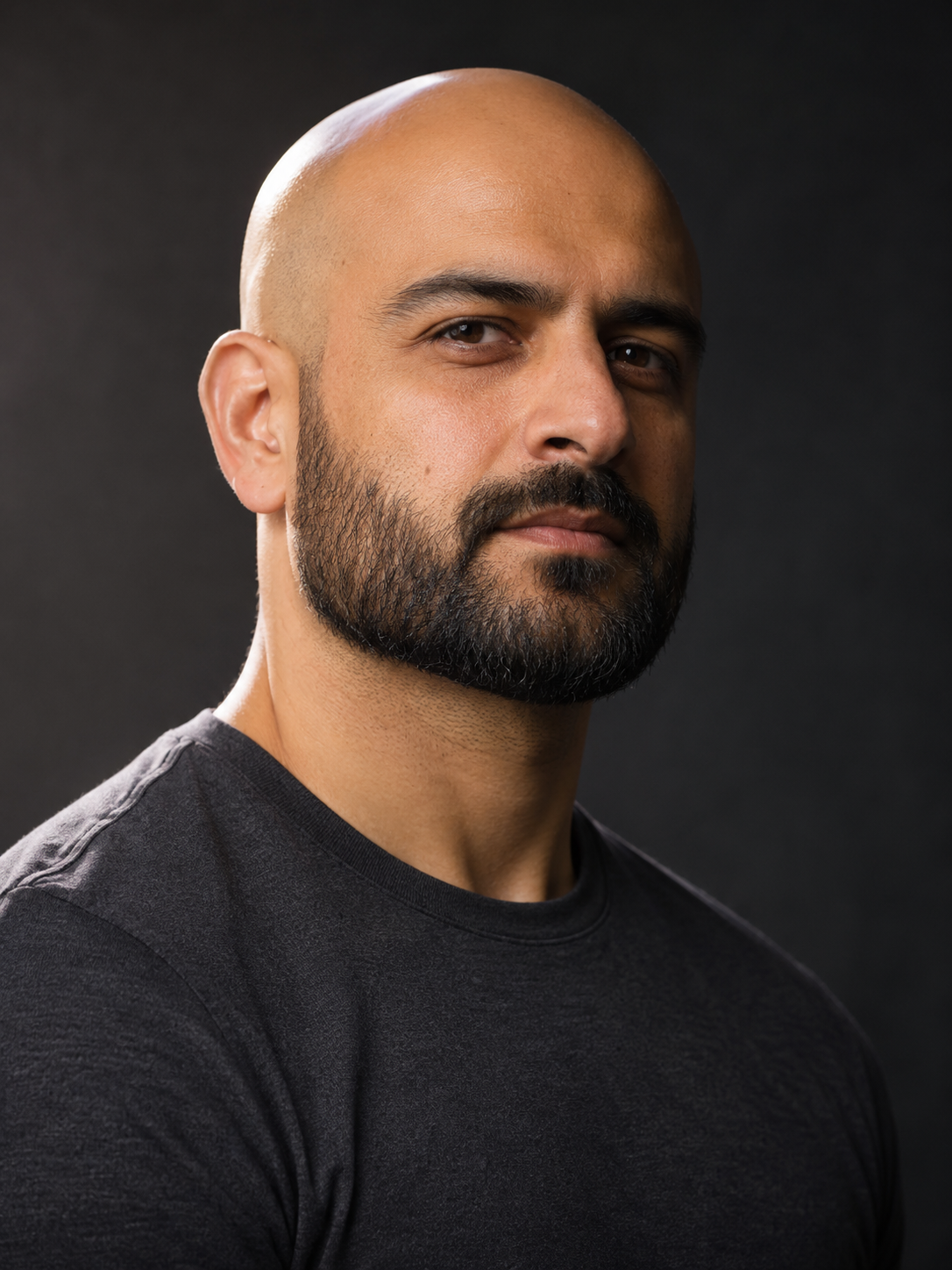
A beard answers both. It restores vertical length at the bottom instead of the top, which is why a pointed beard makes a round head look longer and a wide beard makes a long head look shorter. It also gives the jaw a second line to sit behind, so a soft jawline reads as defined and a strong one reads as stronger.
This is why beard styles for bald men split along different lines than beard advice aimed at men with hair. With hair, the beard balances the haircut. Without it, the beard is doing the whole job on its own, so it has to be more deliberate and usually a little heavier than it would otherwise be.
The practical consequence is simple. A light beard on a bald head often reads as unfinished rather than understated, because there is nothing above it to share the visual load. If you are choosing between two lengths, the longer one is usually the safer bet.
The Four-Week Thumb Test
Before choosing from a list of beard styles for bald men, you need to know what your face can grow. Almost every man who abandons a beard does so because he picked a style that needed density he does not have, decided the problem was his face, and shaved it off in week three.
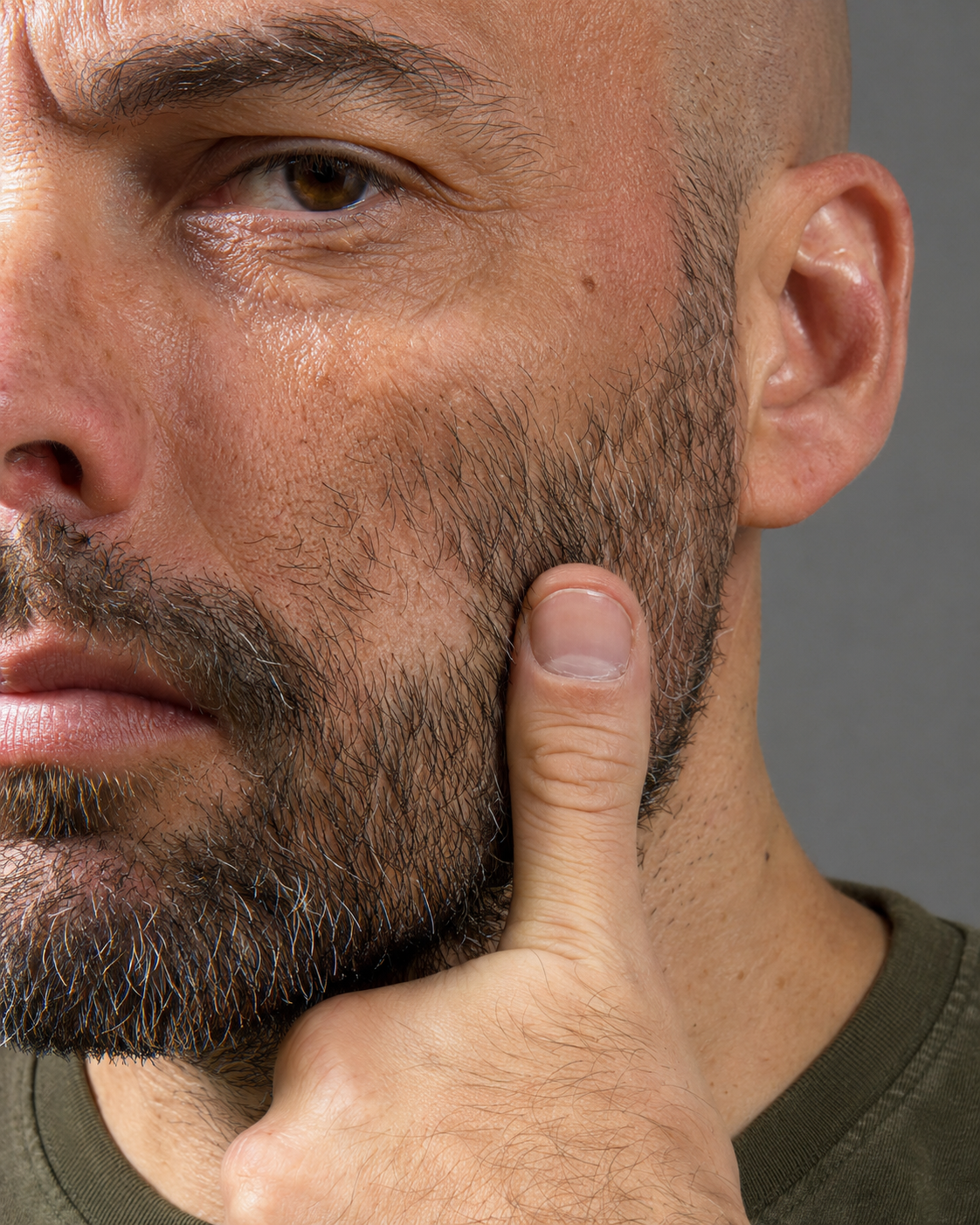
Here is the test. Grow your beard untouched for four weeks. Trim the neckline if you must, but nothing else. At the end of week four, stand in direct side lighting, which means a window to one side of you rather than a bathroom light overhead, and look at where the gaps are.
Then measure each bare patch against the width of your own thumb.
Narrower than a thumb: the surrounding hair will close it as the beard lengthens. Any style on this list is open to you, including a full beard.
About a thumb’s width: it will close at medium length and above but stay visible at stubble. Pick something at ten millimetres or longer.
Wider than a thumb: it will remain visible at every length. This is not a defect and it is not worth fighting. Choose a style that routes around it, which in practice means one of the chin-focused options rather than a full beard.
Four weeks is the right interval because facial hair grows at roughly a centimetre a month, so four weeks is long enough for the pattern to declare itself and short enough that you have not wasted a season. Run this test once and you will never again pick from the beard styles for bald men below a style your face cannot deliver.
How to Read Your Own Head Shape
The second input is the shape of the head itself. Most men get this wrong because they judge it from the front in a mirror, where the eye corrects for it automatically.
Take a photograph of yourself from the front with a neutral expression, and a second one in profile. Then look at the front photograph and compare two measurements: the width across your cheekbones, and the length from hairline to chin.
- Length clearly greater than width, with a narrow jaw: long or rectangular
- Length and width close to equal, with a soft jaw: round
- Length and width close to equal, with a hard jaw: square
- Length moderately greater than width, jaw narrower than cheekbones: oval
- Widest at the cheekbones, narrow at both brow and chin: diamond
Oval is the shape most beard styles for bald men are designed around, so if you land there, your choice is genuinely a matter of preference. Everyone else is solving a specific problem, and the table further down says which one.
The 15 Beard Styles for Bald Men
These run from shortest to longest, then finish with the moustache-only option. The lengths are in millimetres because guard numbers vary between brands, though the common guard equivalents are given where they are standard.
1. Light Stubble
Best for: Any head shape, patchy growth, anyone testing whether a beard suits them at all
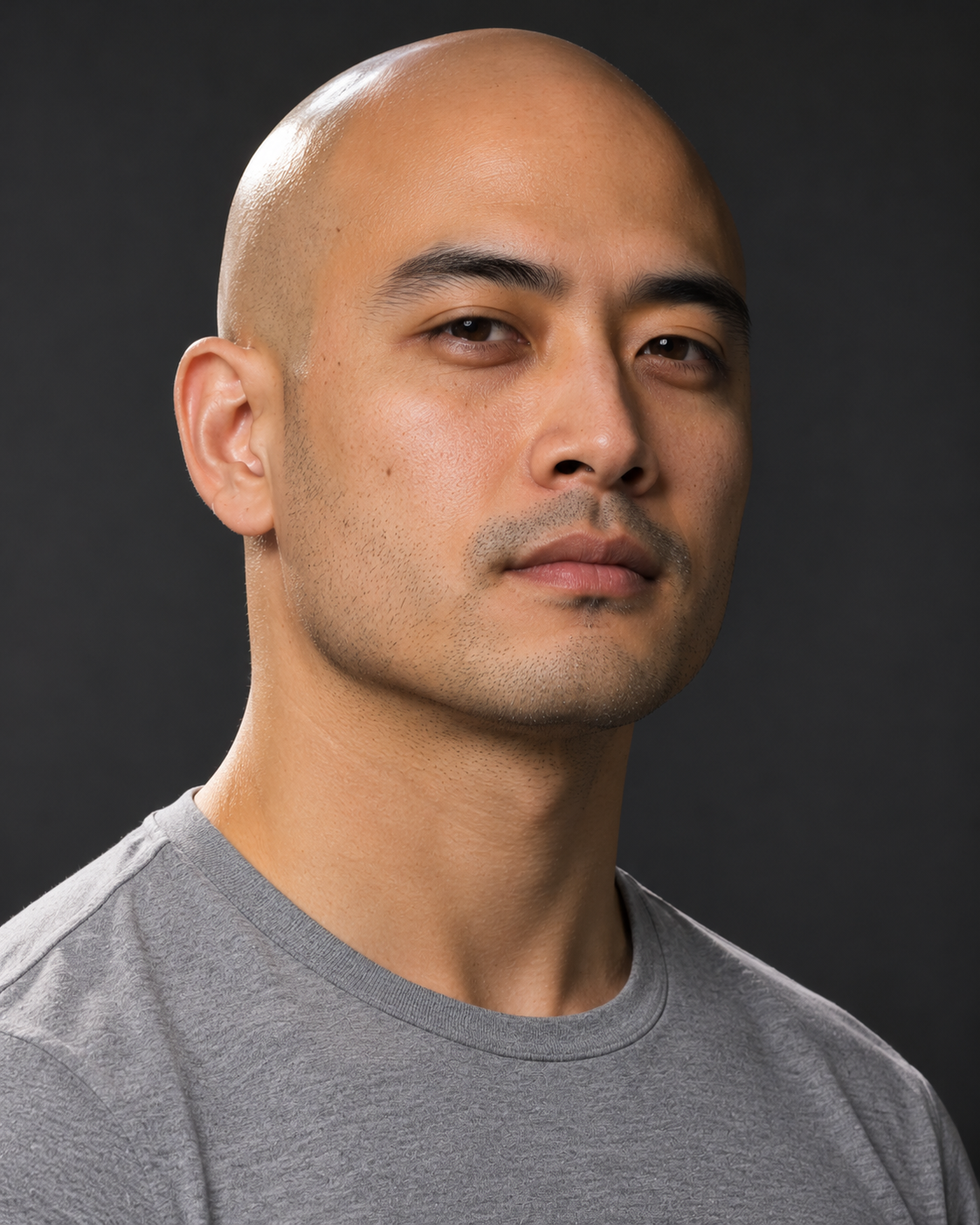
At one to two millimetres, every follicle on your face contributes the same amount, which is why light stubble hides patchiness better than any other option on this list. A gap only becomes visible once the hair around it is long enough to lie down and cast a shadow.
On a bald head it reads as intentional rather than lazy, provided the neckline is clean. That is the whole trick with stubble: an untidy neck turns two millimetres of beard into five o’clock shadow, and the difference between the two is entirely in the line under the jaw.
Length: 1 to 2mm, usually the trimmer’s shortest fixed setting rather than a guard
Upkeep: Every second day
2. Heavy Stubble
Best for: Round and square heads, moderate density, most men most of the time

Four to six millimetres is the point at which stubble starts behaving like a beard. It casts a real shadow along the jaw, it gives the chin some weight, and it still needs no shaping beyond two lines. For a bald head this is the most reliable starting point of all the beard styles for bald men, because it adds visible structure without requiring either density or maintenance.
There is a practical argument for it as well. The NHS advice on preventing ingrown hairs notes that leaving at least a millimetre of stubble rather than shaving to the skin reduces them, which matters a great deal if you are already shaving your scalp and have discovered what razor bumps feel like on a head.
Length: 4 to 6mm, guard 1 or 2 on most trimmers
Upkeep: Every three to four days
3. Short Boxed Beard
Best for: Oval, square and diamond heads with even growth
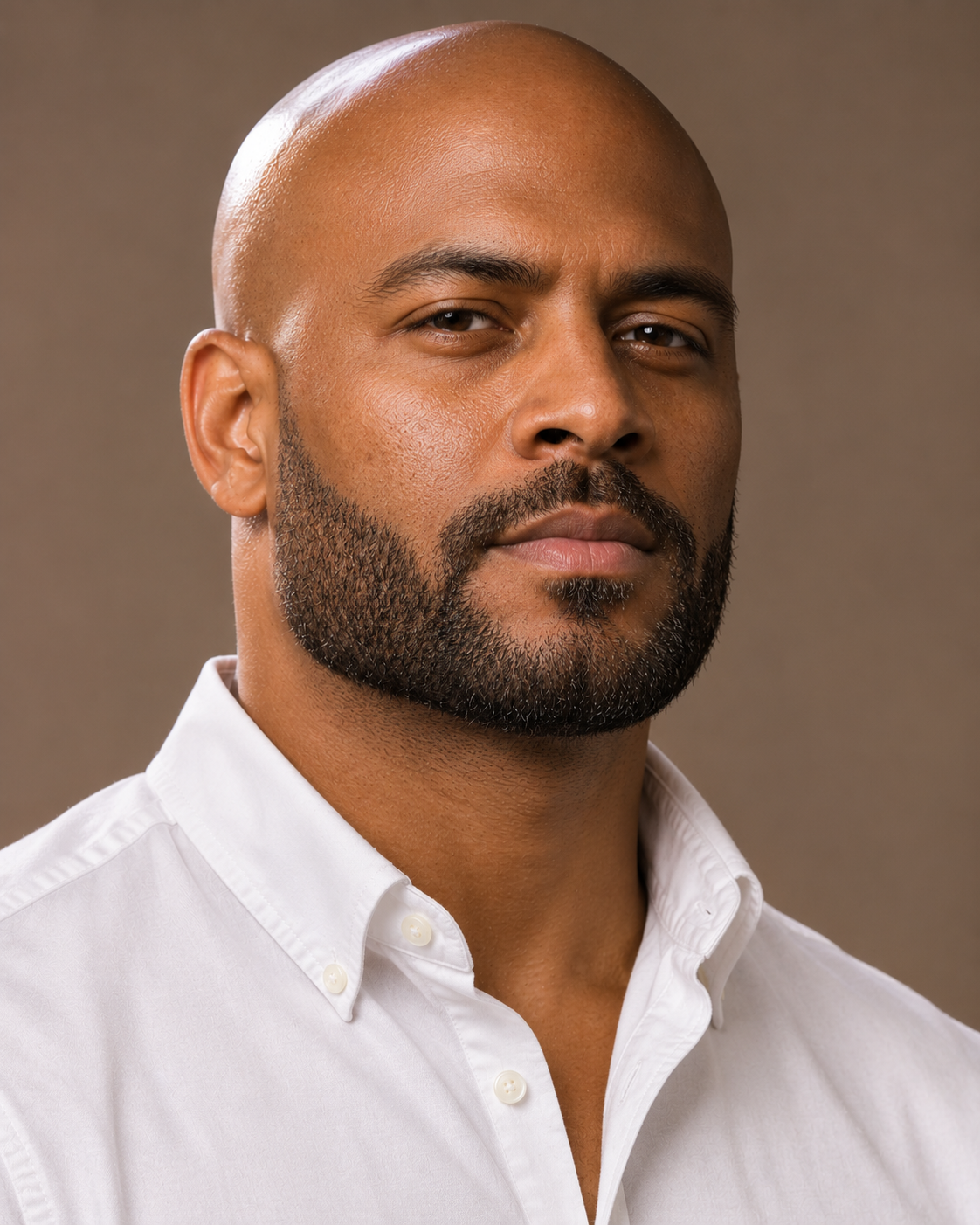
The short boxed beard is the default answer for a bald head and the style most barbers will suggest first out of all the beard styles for bald men. Six to twelve millimetres all over, a defined cheek line, a clean neckline, and the corners of the jaw squared off rather than rounded.
What makes it work is the squaring. By keeping the hair at the back corner of the jaw as long as the hair on the chin, you build a visible rectangle under the face, and a rectangle is exactly what a smooth round dome above needs for balance. Round the corners off and the whole effect collapses into something closer to a goatee.
Length: 6 to 12mm, guard 2 to 4
Upkeep: Trim weekly, redraw the lines every four or five days
4. Tapered Short Beard
Best for: Round heads, and anyone whose beard grows heavier at the cheeks than the chin
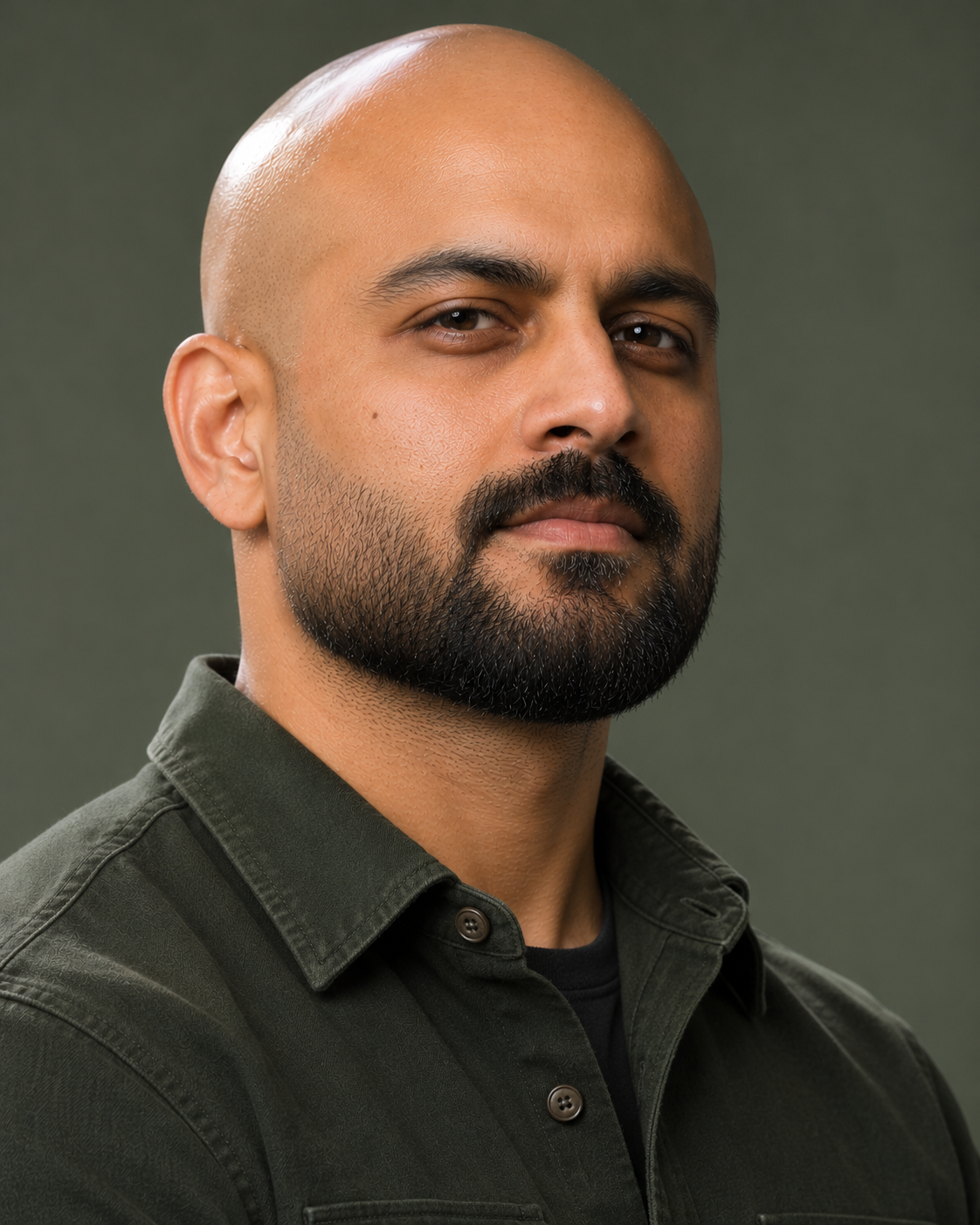
Same length range as the boxed beard, but faded rather than uniform: near zero at the sideburn, building gradually to full length at the jaw and chin. It is the one entry on this list that genuinely needs a barber for the first cut, because a fade on the face is as technical as a fade on the head.
The reason to bother is width. A uniform beard adds width at the temples, which is the last thing a round head needs. Taking the sides down to almost nothing removes that width and pushes all the visual weight to the bottom of the face, where it does useful work.
Length: 0 to 12mm, graduated
Upkeep: Barber every three weeks, neckline yourself between visits
5. Circle Beard
Best for: Square and rectangular heads, and conservative workplaces
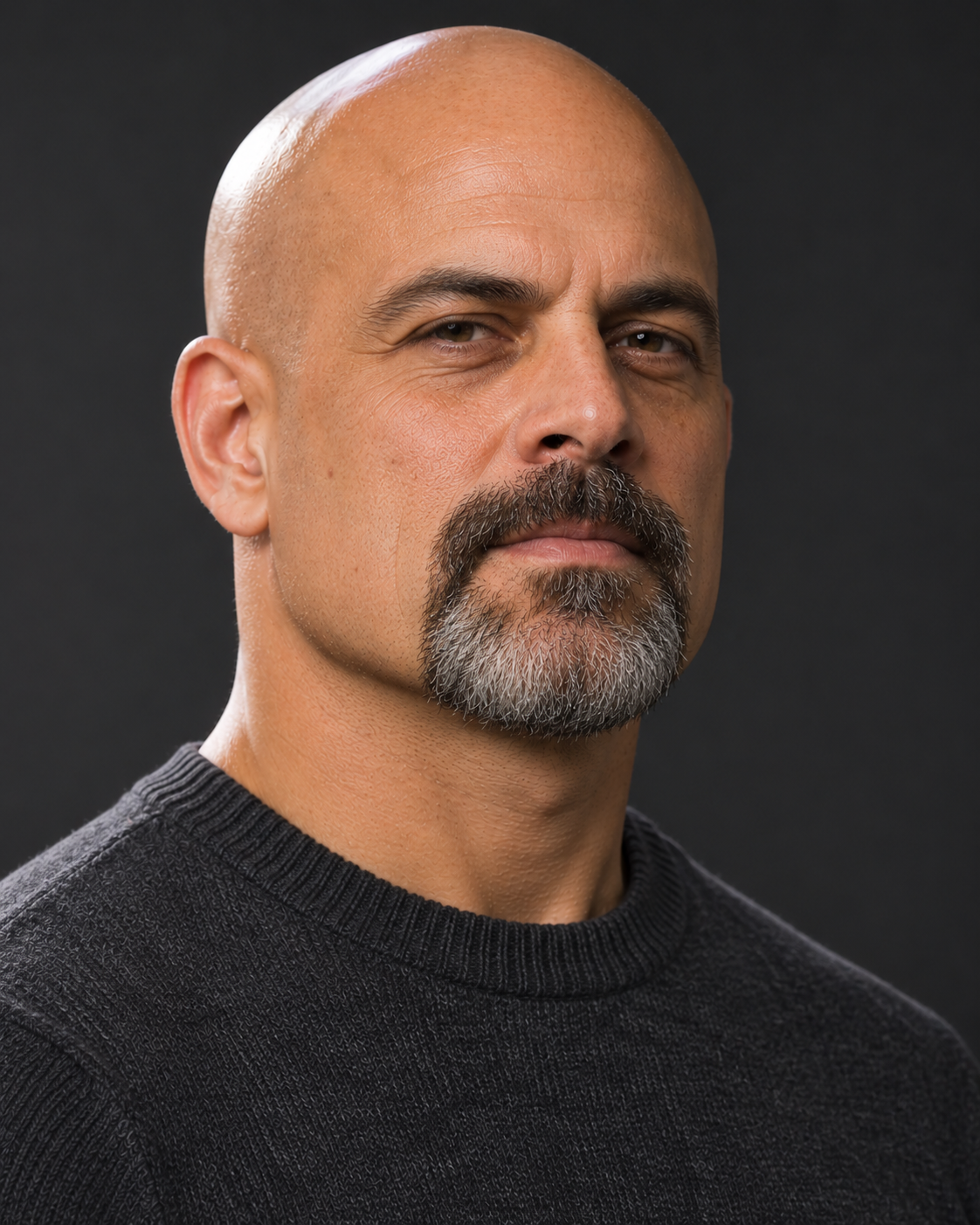
A moustache joined to a rounded chin beard, with the cheeks shaved clean. Of the beard styles for bald men here, it is the lowest-visual-weight option that still reads unmistakably as a beard rather than as stubble, which is why it survives in offices where a full beard would attract comment.
The roundness is the point. On a square or rectangular head the hard angles at the jaw are already doing enough work, and a boxed beard simply adds more of the same. A circle beard puts a curve against those angles instead, which softens the whole lower face.
Length: 5 to 10mm within the circle
Upkeep: Redraw the outline every two to three days
6. Goatee
Best for: Oval and round heads, narrowing a wide chin area
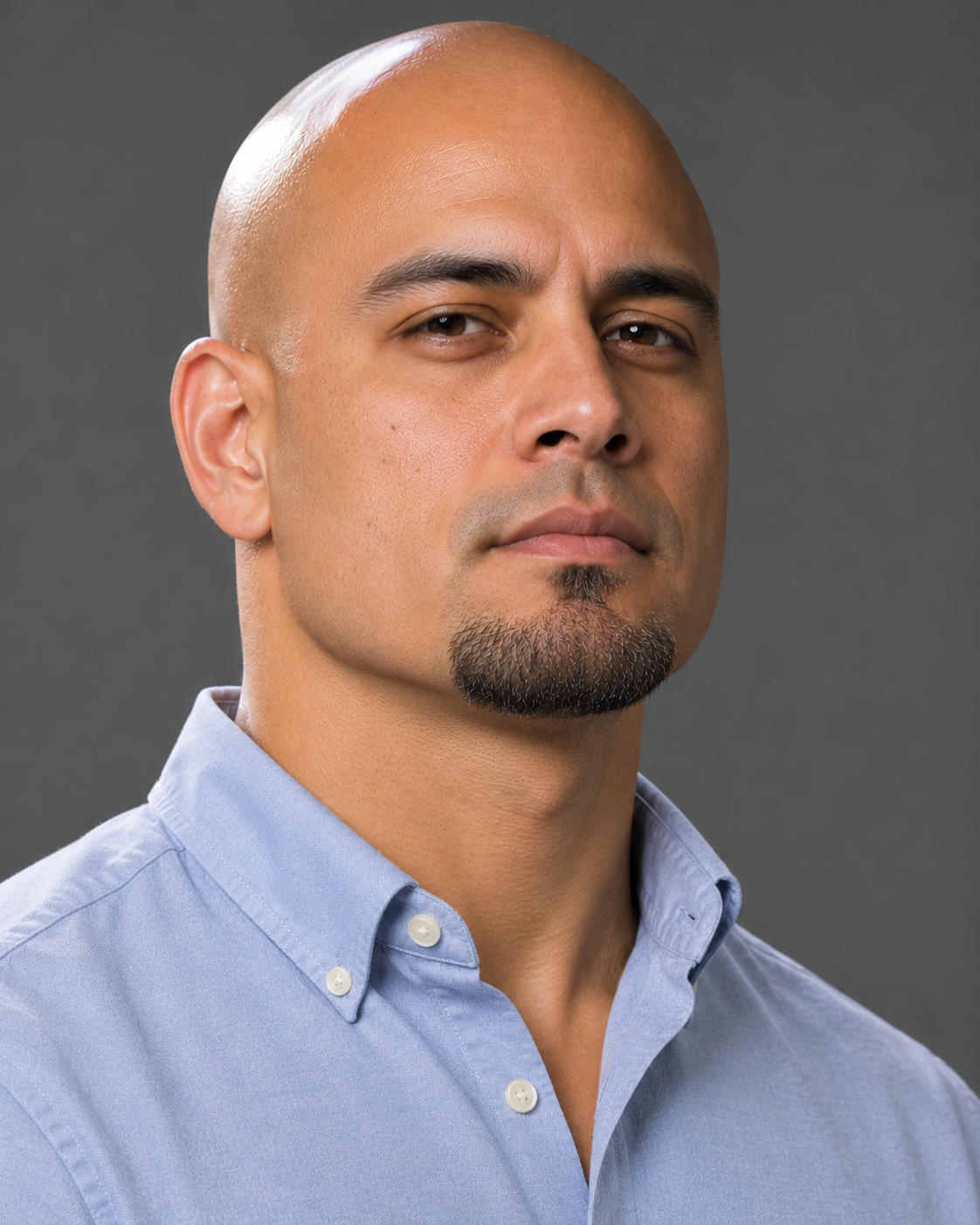
Chin only, no moustache connection, kept tight. A goatee narrows and lengthens the bottom of the face, which makes it useful on a round head and actively unhelpful on a long one.
An honest caveat, since most lists will not give you one: on a bald head a bare goatee has a strong association with a particular era, and it only escapes it by being kept very short and very precisely edged. At eight millimetres with a crisp border it looks current. At fifteen millimetres with a soft edge it does not.
Length: 5 to 10mm
Upkeep: Every two to three days, and the edges are unforgiving
7. Extended Goatee
Best for: Round and heart-shaped heads needing jaw width
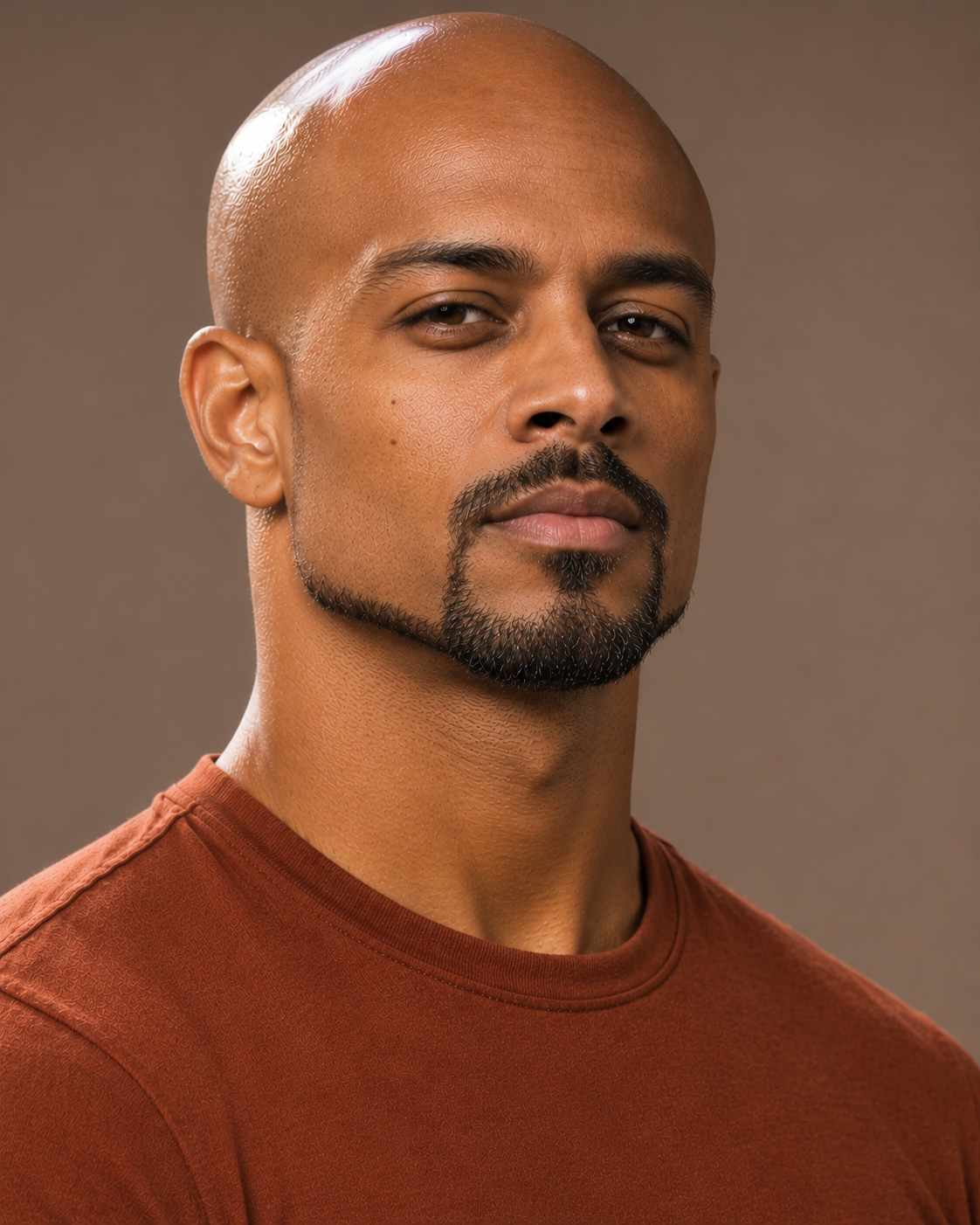
The goatee stretched outward along the jawline in a narrow band, with the cheeks left bare. It is sometimes called the Hollywoodian when the band is wider.
This is the fix for a face that is wide at the cheeks and narrow at the jaw. By running hair along the jawbone itself you draw a horizontal line where the bone does not provide one, which squares the bottom of the face without the bulk of a full beard. It is one of the more flattering beard styles for bald men with soft or receding jaws.
Length: 6 to 12mm
Upkeep: Every three days
8. Anchor Beard
Best for: Oval and square heads, and men who enjoy precision work

A pointed chin beard with a moustache above it and a gap between the two, shaped so that the whole thing resembles a ship’s anchor. It is the most technically demanding style on this list and the one most likely to look wrong if you rush it.
The payoff is that it is genuinely distinctive without being loud. Everything about it is small and deliberate, and on a bald head that contrast between a bare scalp and a very precisely built piece of facial hair reads as considered rather than accidental.
Length: 5 to 8mm
Upkeep: Every two days, with good light and a steady hand
9. Van Dyke
Best for: Round and square heads needing vertical length
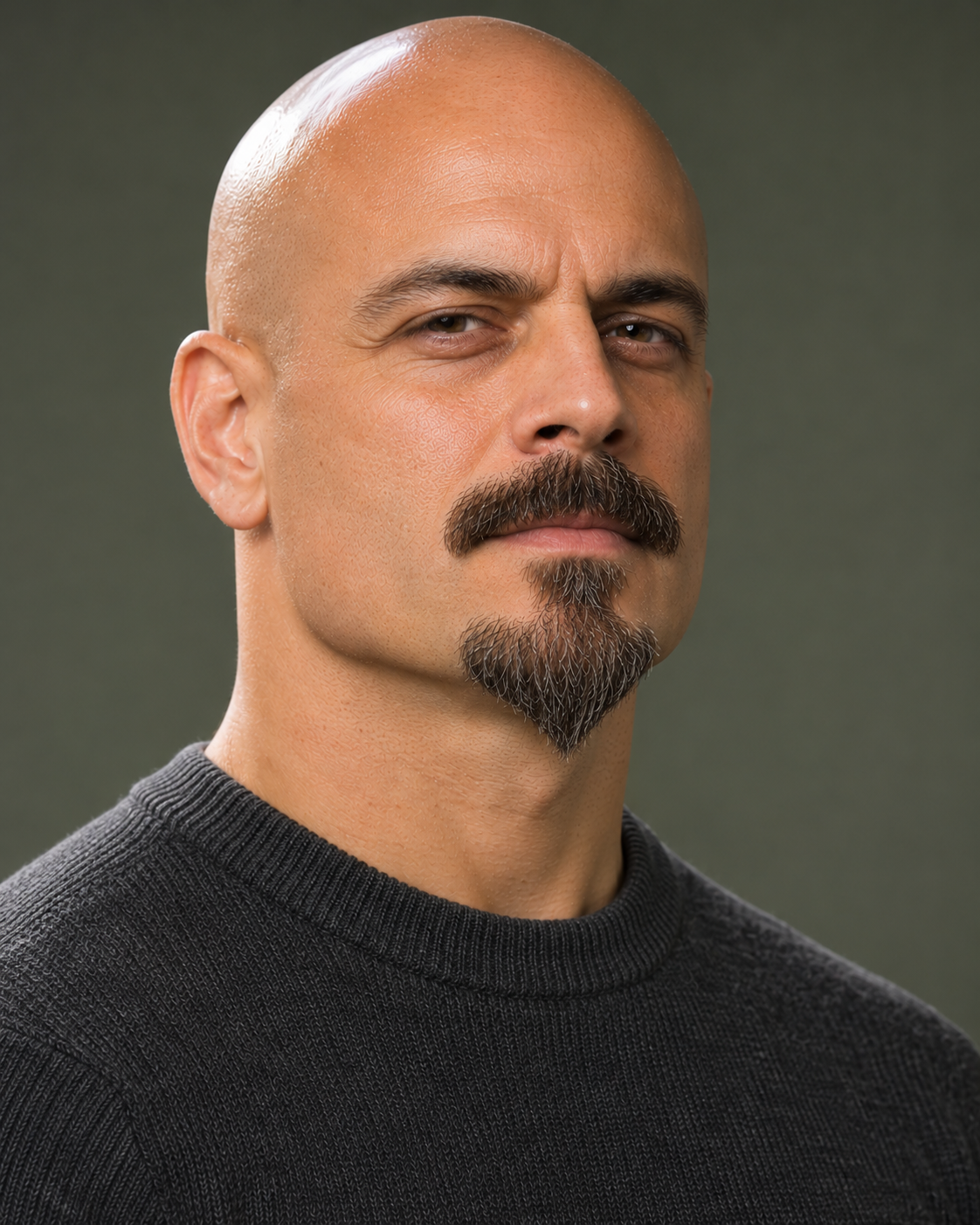
A moustache and a pointed chin beard, deliberately disconnected at the corners of the mouth. The disconnection is what separates it from a circle beard, and it is also what makes it work on a round head: two separate shapes read as taller than one continuous one.
It rewards a little styling. A moustache left to grow straight down drags the whole arrangement sideways, so the ends want either a trim above the lip line or a small amount of wax to hold them outward.
Length: 8 to 15mm at the chin, shorter at the moustache
Upkeep: Every two to three days
10. Balbo
Best for: Square and diamond heads
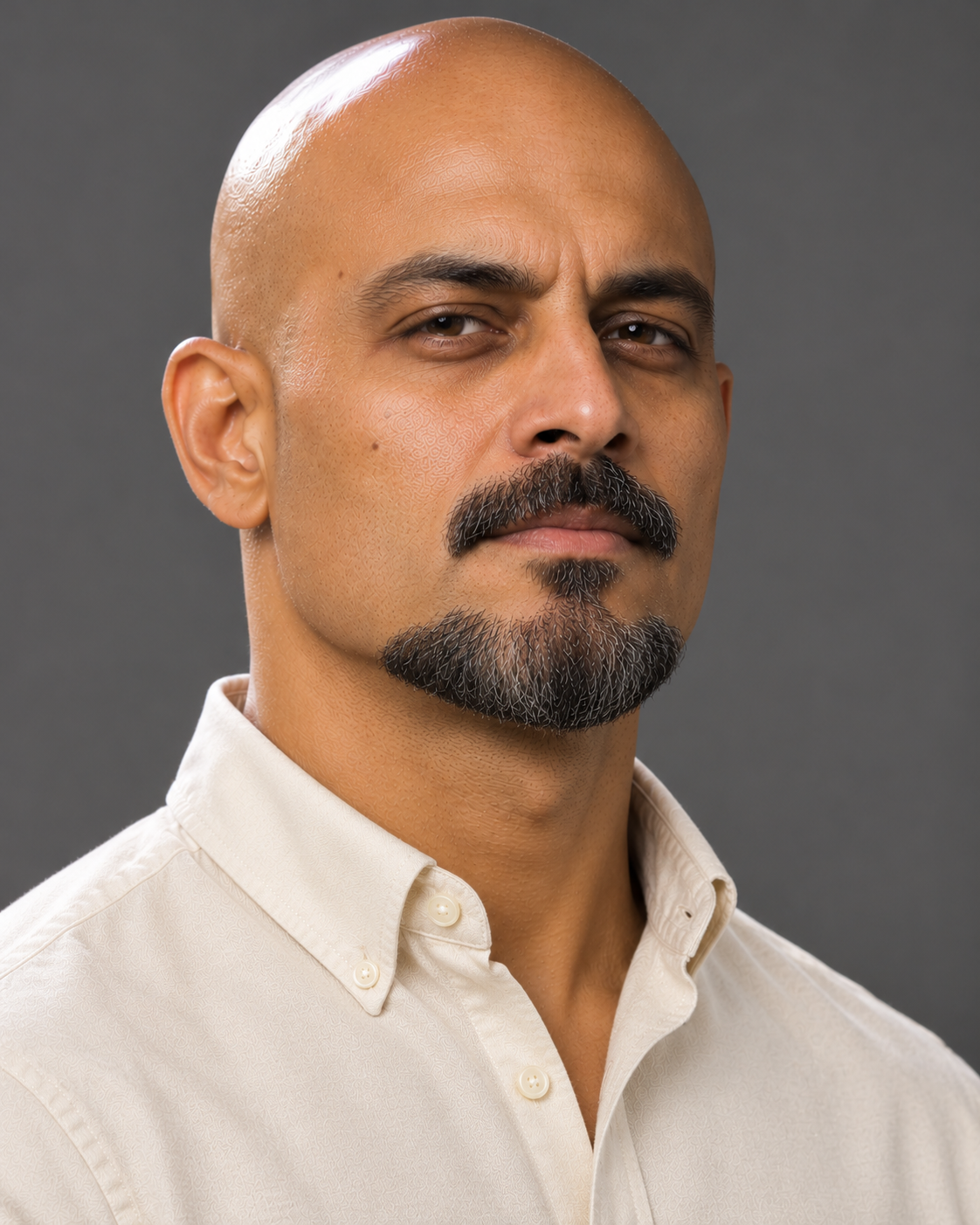
A moustache, a gap, and a chin beard that flares slightly outward along the jaw, with no sideburn connection at all. It sits between the Van Dyke and the extended goatee, and it suits a face that needs a little width at the jaw but not a full band of it.
Because there is no connection to the sideburns, the Balbo works well on men whose cheek growth is thin or patchy. You are not asking the cheeks to do anything, so it does not matter what they can grow.
Length: 8 to 12mm
Upkeep: Every two to three days
11. Chinstrap
Best for: Soft or undefined jawlines
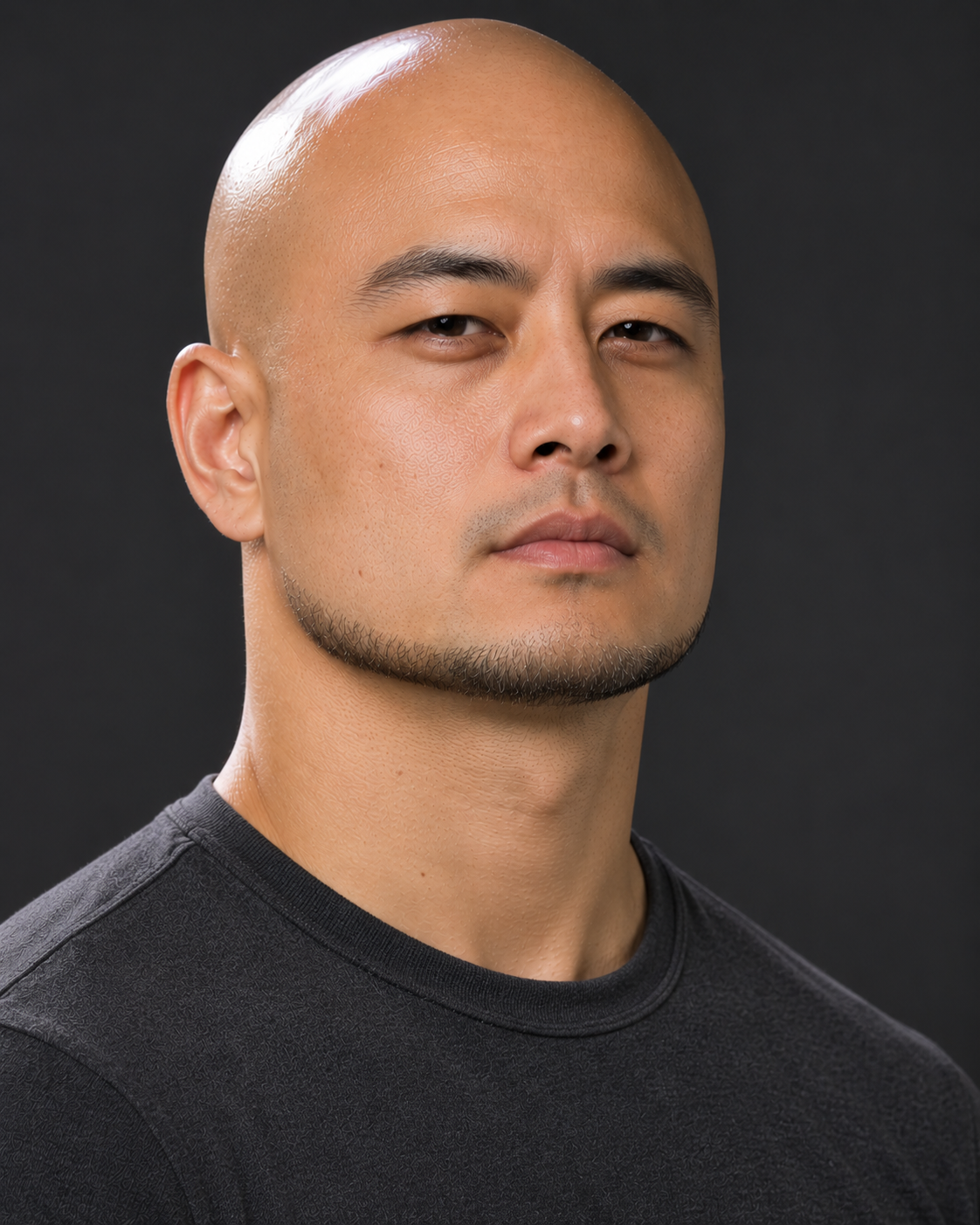
A narrow band of hair following the jawbone from ear to ear, with the chin and cheeks bare or nearly so. It exists for exactly one purpose: to draw a jawline where the bone is not providing a visible one.
It is also the least forgiving style here. The band has to be the same width on both sides along its whole length, and because it sits directly on the jawbone, any wobble is obvious from across a room. It is the same both-sides discipline that governs our method for trimming men’s eyebrows, and it fails in exactly the same way when only one side gets checked. If you are not going to check it in a proper mirror every two days, pick the extended goatee instead, which does a similar job with far more tolerance for error.
Length: 3 to 6mm, in a band roughly 10 to 15mm wide
Upkeep: Every two days without exception
12. Medium Full Beard
Best for: Oval, square and long heads with good density
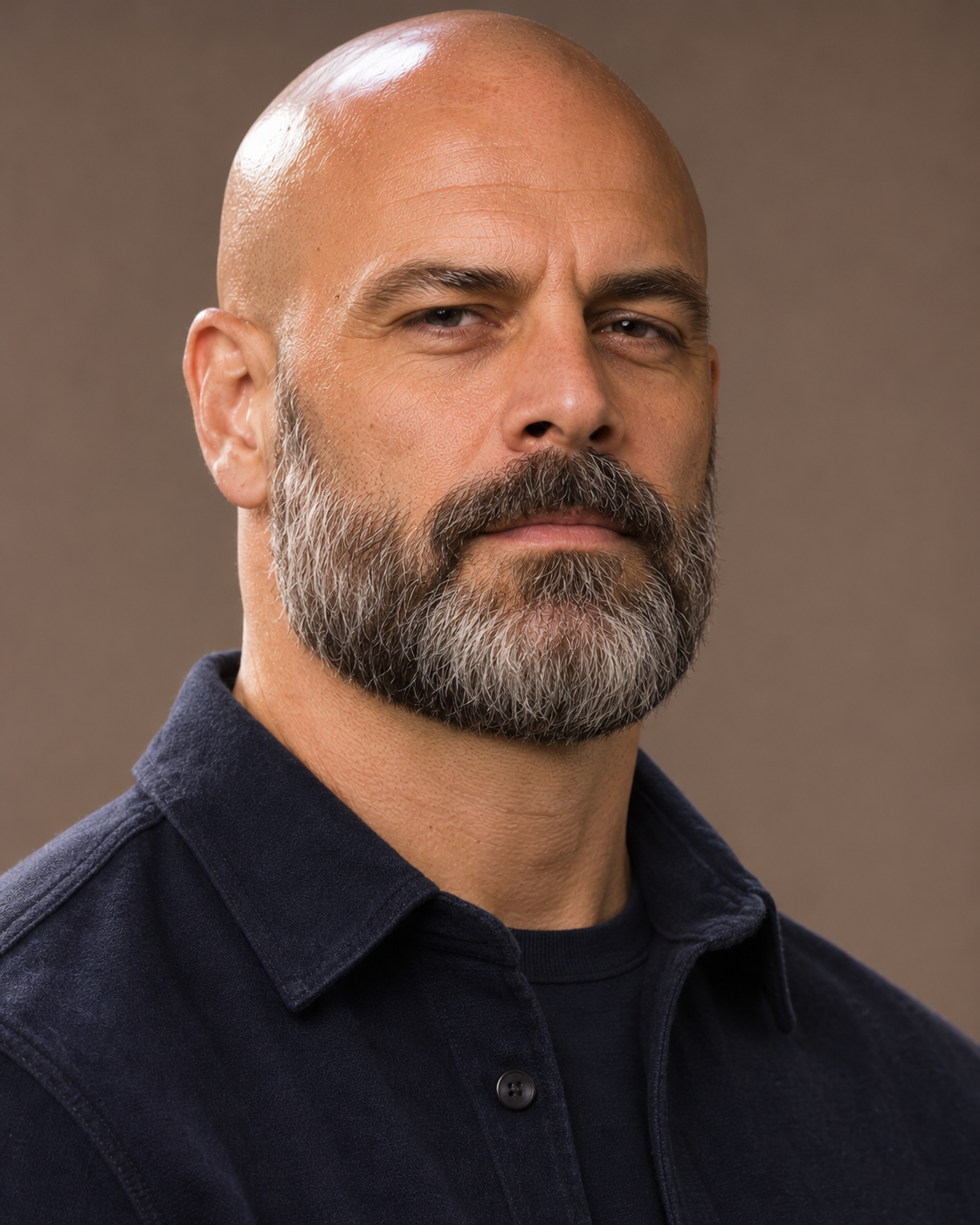
Twenty to thirty millimetres everywhere, with a defined neckline and a cheek line that is tidied rather than sharply drawn. This is the first length at which the beard becomes the dominant feature of the face rather than a supporting one.
On a bald head the effect is strong, and it is the reason this length is so often associated with the look. The contrast between a completely smooth scalp and a substantial beard is the clearest possible statement that the baldness is a choice. Of all the beard styles for bald men, this is the one that most reliably reads as deliberate from a distance.
It does need density. If your four-week test turned up a patch wider than a thumb, this length will show it.
Length: 20 to 30mm, guard 6 to 10 or scissor-trimmed
Upkeep: Weekly scissor trim, lines weekly, oil most days
13. Ducktail
Best for: Round heads, where maximum vertical lengthening is needed
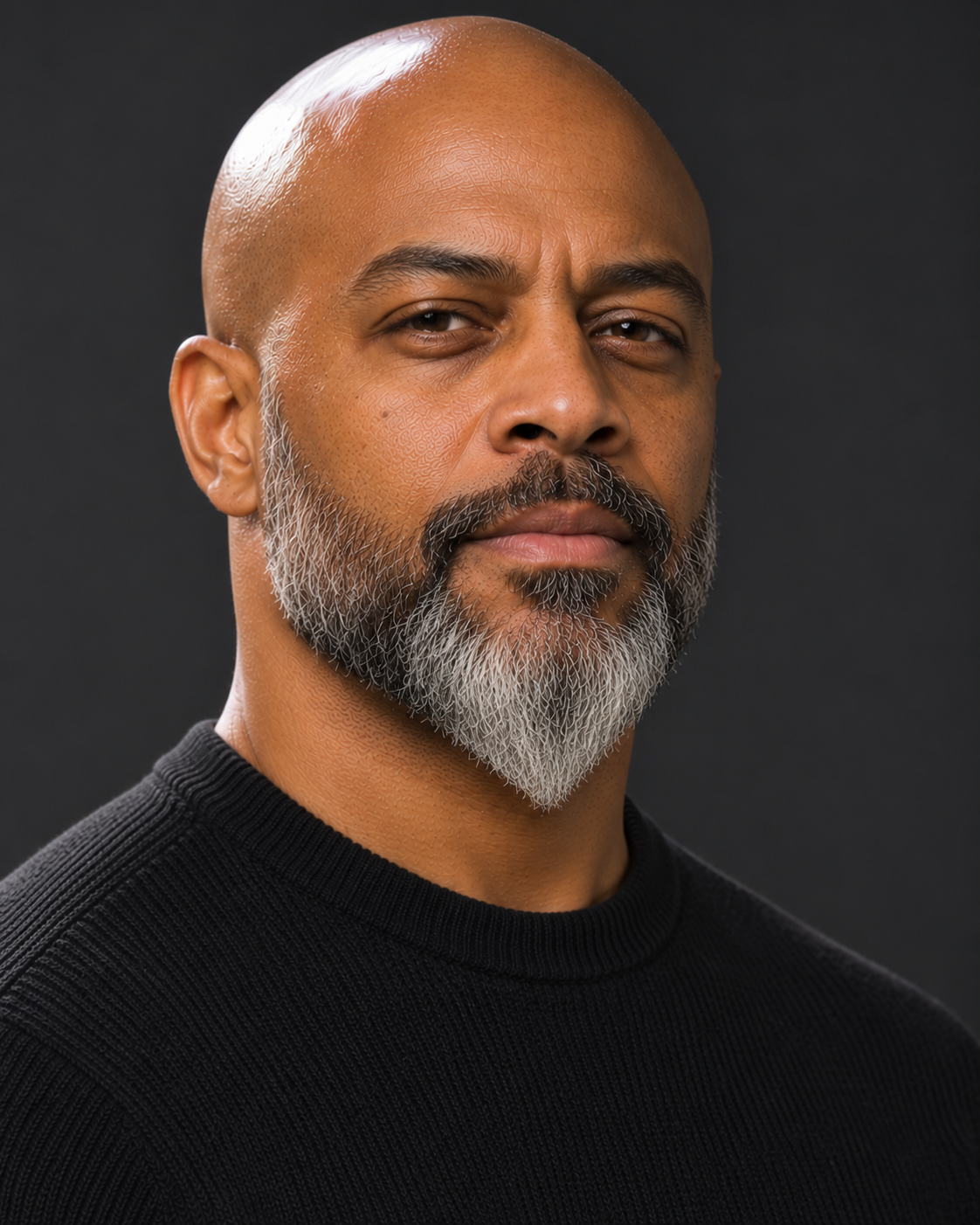
A full beard kept shorter at the sides and tapered to a point below the chin, named for the obvious resemblance. It is the full-beard answer to a round head, because every millimetre of extra length at the chin pulls the face longer while the shorter sides keep it from widening.
It is also the full beard that tolerates uneven growth best, since the sides are deliberately shorter than the chin anyway. If your growth is heavy below the mouth and thin at the cheeks, which is a very common pattern, the ducktail turns that into the intended shape rather than a problem to hide.
Length: 15mm at the sides, 35 to 50mm at the point
Upkeep: Shape weekly, oil daily
14. Garibaldi
Best for: Long and rectangular heads
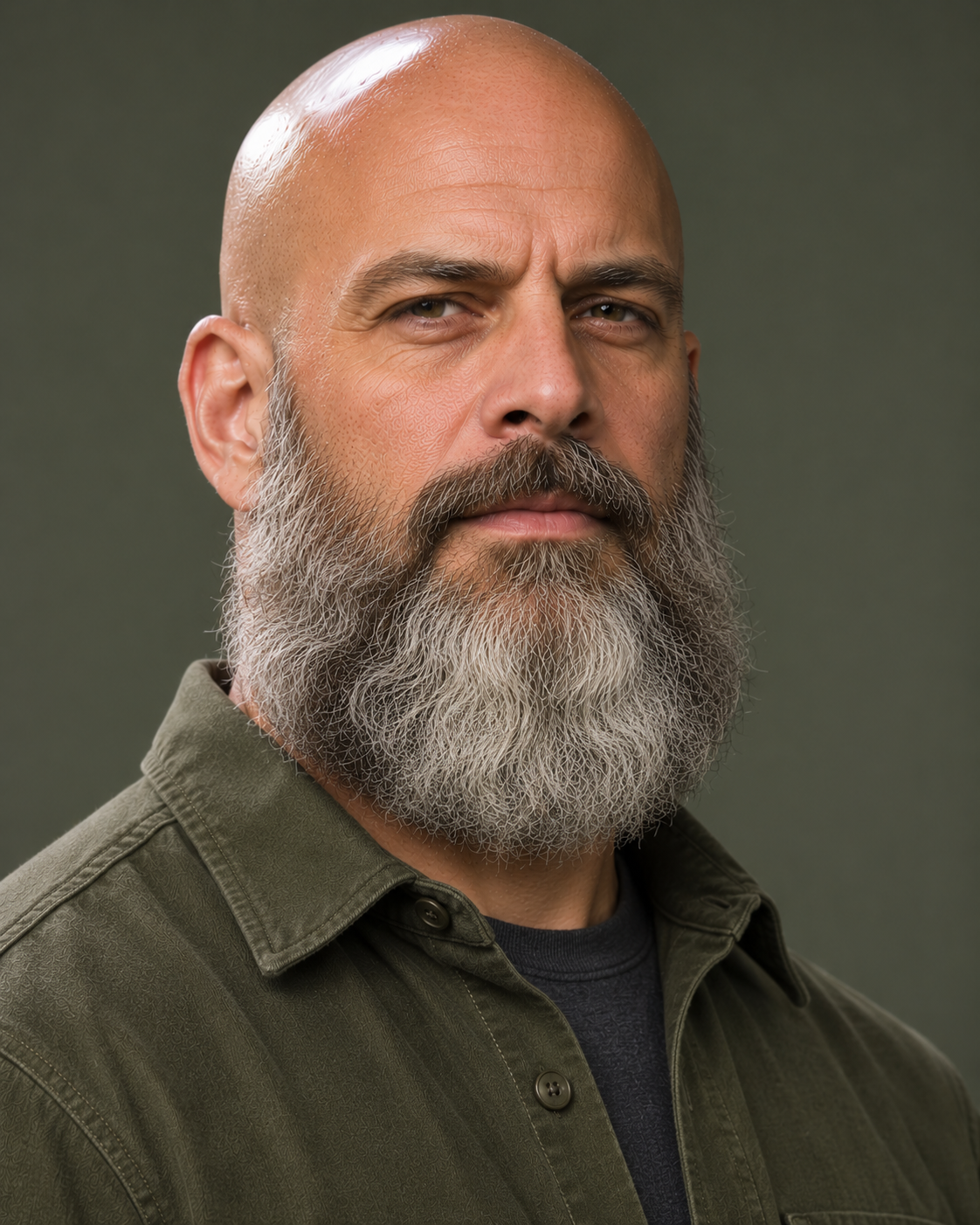
A wide, full, rounded beard with a natural bottom edge rather than a cut one, usually fifty millimetres or more. The moustache is kept trimmed above the lip while the beard itself is allowed to find its own shape.
Where the ducktail lengthens, the Garibaldi widens. On a long or rectangular head, which already has more vertical than it needs, a wide rounded beard at the bottom restores the proportion. It is the single best option for that head shape and it is consistently underused among beard styles for bald men, probably because most beard advice is written for round faces.
One practical warning at this length: a wide beard and a high collar compete for the same space, and the beard usually loses. If you wear a lot of knitwear, check the interaction before committing, because the collar heights in our guide to turtleneck outfits for men change noticeably in what they can accommodate.
Length: 50mm and upward
Upkeep: Fortnightly tidy, wash twice weekly, oil daily
15. Horseshoe Moustache
Best for: Square heads with a strong existing jawline

A full moustache with two vertical bars running down past the corners of the mouth to the jaw, with the chin shaved bare. It is the only one of these beard styles for bald men that is not technically a beard, and it is included because on the right bald head it is extremely effective.
The right head is a square one with a jaw that already has definition. The horseshoe frames that jaw rather than building one, which means it fails completely on a soft jawline and succeeds dramatically on a hard one. It is a commitment in the social sense more than the practical one, since it takes about two minutes a day to maintain.
Length: 8 to 15mm
Upkeep: Every two days
Matching the Beard to the Head Shape
The short version of everything above, in one place. This is the table to use when narrowing the beard styles for bald men down to two or three candidates: find your shape in the left column and start with the styles in the middle.
| Head shape | What the beard needs to do | Best styles | Avoid |
|---|---|---|---|
| Oval | Nothing in particular — balance is already there | Short boxed, medium full, anchor, heavy stubble | Nothing, though very wide shapes can overwhelm |
| Round | Add vertical length, remove width at the sides | Ducktail, Van Dyke, goatee, tapered short beard | Garibaldi, wide full beards, mutton chops |
| Square | Soften the angles or lean into them, not both | Circle beard, Balbo, horseshoe, short boxed | Chinstrap, which doubles a line that already exists |
| Rectangular or long | Add width at the bottom, never length | Garibaldi, wide full beard, circle beard | Ducktail, goatee, anything that comes to a point |
| Diamond | Build width at the jaw, leave the cheeks alone | Balbo, extended goatee, short boxed | Styles that add bulk at the cheekbones |
| Heart | Add weight and width at a narrow chin and jaw | Extended goatee, medium full, chinstrap | Thin chin-only styles, which emphasise the narrowing |
The column on the right matters more than men expect. Picking a reasonable style is easy, and most of the bad outcomes with beard styles for bald men come from picking one that actively works against the head shape rather than one that merely fails to help it.
Guard Lengths and What They Actually Produce
Guard numbering is not standardised across brands, so the millimetre figure is the one to trust when setting up any of the beard styles for bald men above. The right-hand column is the honest answer to how often each length needs your attention.
| Guard | Length | How it reads | Trim interval |
|---|---|---|---|
| None or 0.5 | 0.5 to 2mm | Light stubble, shadow at the jaw | Every 2 days |
| 1 | 3mm | Heavy stubble, the shape of a beard without the bulk | Every 3 days |
| 2 | 6mm | Short beard, clearly deliberate | Every 4 to 5 days |
| 3 to 4 | 9 to 12mm | Boxed beard territory, needs defined lines | Weekly |
| 6 to 8 | 18 to 24mm | Medium full beard, needs oil to behave | Weekly, with scissors |
| 10 and above | 30mm and above | Full beard, scissor work rather than clipper work | Fortnightly |
One useful habit: whatever guard you settle on, write it down. Men consistently misremember which guard they used last time, come back a month later, take a number off by mistake, and spend three weeks regrowing a length they already had.
The Two Lines That Decide Everything
Length and style matter less than most men believe. Whichever of the beard styles for bald men you settle on, the neckline and the cheek line matter more.
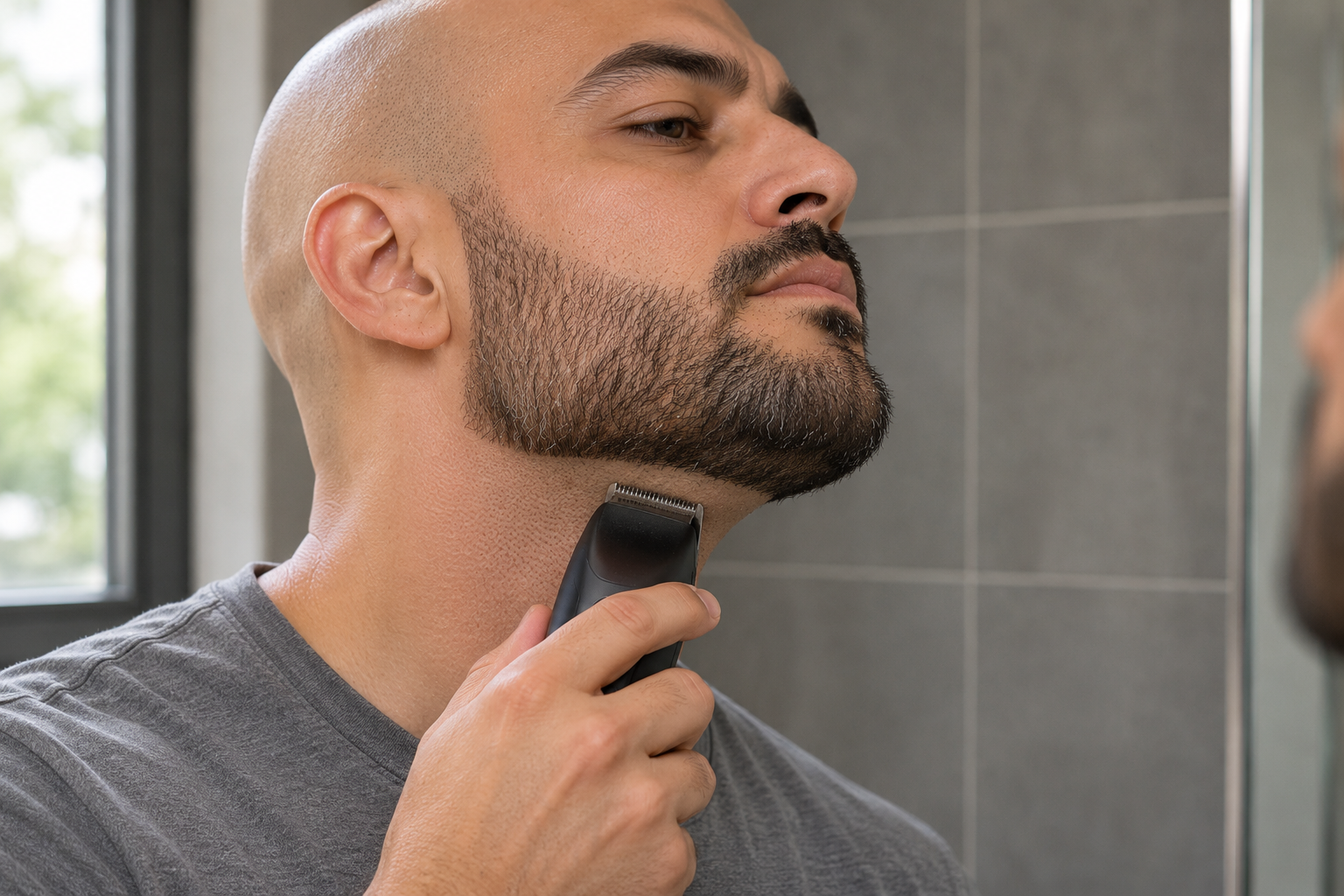
The neckline. It belongs roughly two fingers above the Adam’s apple, following a gentle curve from behind one ear to behind the other. The single most common error is setting it along the jawbone instead, which removes the hair that was covering the transition between jaw and neck and makes a soft neck look softer. If you are unsure, err downward: a neckline that is slightly too low is invisible, and one that is too high is the first thing anybody notices.
The cheek line. Draw an imaginary line from the corner of your sideburn to the corner of your mouth, and let the natural growth sit on or just below it. Anything above gets taken off. A cheek line set too low makes the face look narrow and the beard look sparse, which is the opposite of what a bald head needs.
Both lines want checking in daylight rather than under bathroom lighting, for the same reason the rest of your grooming does. The sequence for that is in our daily grooming routine for men, and the shaping technique transfers almost entirely from our guide to the flow haircut with a beard, where the same two lines govern the result.
Growing It Out: Four Stages
Nobody abandons a beard at week six. They abandon it at week two or three, which means the growing-out period is a maintenance problem rather than a patience problem.
Days 1 to 7. Nothing to do. Do not shape it, do not trim it, and in particular do not tidy the cheeks, because at this length you cannot see where the natural line will fall.
Weeks 2 and 3: the itch. The itch is cut hair ends growing back through the skin as they lengthen, and it genuinely stops. Wash the beard with a mild cleanser rather than soap, moisturise the skin underneath rather than the hair on top, and leave it alone. This is where most attempts end, and almost always a week before the itch would have resolved on its own.
Week 4: the assessment. Run the thumb test described above. This is the first point at which you have real information about what your face can grow, and the first point at which choosing between beard styles for bald men becomes a decision rather than a guess.
Weeks 5 to 8: shaping. Now set the neckline and cheek line properly and bring the length down to whatever the chosen style calls for. If you are going to see a barber once in the whole process, this is the visit that pays for itself, because the first set of lines is the hardest and everything afterwards is just maintaining them.
Grey and Patchy Beards
Two situations that most guides to beard styles for bald men skip entirely, and both of which are more common among bald men than the general population simply because of age distribution.
Grey. A grey or salt-and-pepper beard against a shaved head is one of the strongest looks available, and it needs no intervention at all beyond keeping it clean and oiled. Grey hair is coarser and drier than pigmented hair, so it wants oil more often rather than dye. If the greying is patchy rather than even, a slightly shorter length evens out the appearance, because at length the grey strands catch light differently and the unevenness becomes obvious.
Patchy. Established above: measure it, do not fight it. The three practical responses in order of preference are to grow longer so the surrounding hair covers the gap, to choose a chin-focused style that does not rely on the patchy area, or to go to heavy stubble where no patch is visible at all. What does not work is trimming shorter in the hope of evening things out, which does the opposite, or waiting for a sparse area to fill in after the four-week mark, which it will not.
Scalp and Beard Are One Routine
A bald head with a beard is two different surfaces that need two different things, and treating them as one job is the usual reason either goes wrong. None of the beard styles for bald men above survives a neglected scalp underneath it.
The scalp is exposed skin with no hair protecting it, which makes sun protection non-negotiable and moisturiser close to it. Our bald men’s skincare routine covers the whole of that side properly, including the shaving technique that avoids razor bumps on the head.
The beard is hair over skin, and the skin underneath is the part that gets neglected. Beard oil is for the skin, not the hair, which is why it is applied by working it into the roots with the fingertips rather than stroking it over the surface. Two or three drops for a short beard, five or six for anything over twenty-five millimetres.
Cold months make both surfaces worse at once, because indoor heating lowers the humidity the skin sits in and a shaved scalp has nothing protecting it. The same seasonal problem, from the other side, is covered in our guide to winter hairstyles for men.
The order that works in a morning: shave or trim first, wash second, moisturise the scalp third, oil the beard last. Doing it in any other sequence means washing off something you just applied. The common errors around product choice here, including picking an oil by scent rather than by skin type, are covered in our list of grooming mistakes men make.
What to Buy and What It Costs
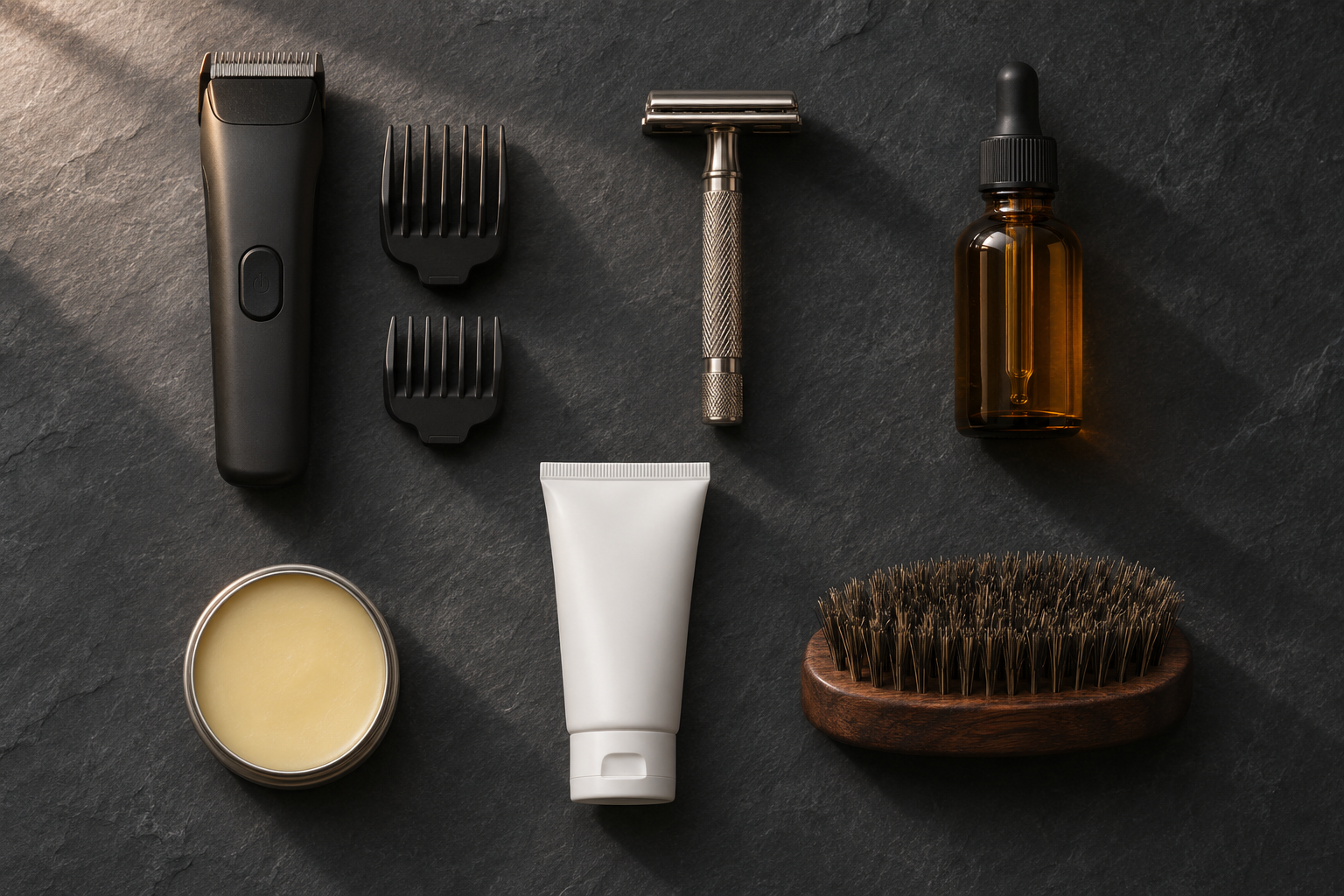
Six items cover every one of the beard styles for bald men in this guide. Prices are in US dollars and reflect typical retail rather than sale pricing.
| Item | Budget | Mid | Premium | What the extra money buys |
|---|---|---|---|---|
| Beard trimmer | 20 to 30 | 45 to 70 | 90 to 150 | Guards that hold position mid-pass, better battery, blades that stay sharp |
| Head shaver or razor | 10 to 20 | 30 to 50 | 70 to 120 | Fewer passes needed, which is the whole game for razor bumps |
| Beard oil | 8 to 12 | 15 to 25 | 30 to 50 | Carrier oil quality and absence of fragrance, which matters on sensitive skin |
| Beard balm | 10 to 15 | 18 to 30 | 35 to 55 | Hold without stickiness, which cheap balms genuinely do not manage |
| Scalp moisturiser with SPF | 10 to 15 | 20 to 35 | 45 to 80 | Finish and texture, not protection — SPF 30 is SPF 30 at any price |
| Beard brush or comb | 8 to 12 | 15 to 25 | 30 to 60 | Boar bristle rather than nylon, which distributes oil instead of dragging it |
The honest summary is that the trimmer and the head shaver are where money is worth spending, because both are used several times a week for years and both produce visibly worse results at the bottom of the range. The oil, the balm and the moisturiser can all sit at the budget tier without anyone being able to tell. A complete starting kit at the budget tier runs roughly sixty-five to a hundred dollars, and most of it lasts six months or more.
Mistakes to Avoid
Setting the neckline along the jaw. It is the most common error by a wide margin, and it is the one that makes an otherwise good beard look wrong. Two fingers above the Adam’s apple, following a curve, every time.
Picking a style before running the four-week test. Choosing from the beard styles for bald men above and then discovering a thumb-wide gap at week five means starting over. Ten minutes of assessment at week four prevents a month of frustration.
Going too short. The instinct on a bald head is to keep the beard modest so the overall look stays restrained. The geometry argues the other way: with nothing above the brow, a very short beard leaves the face without an anchor. Among the beard styles for bald men that disappoint in practice, most are simply two or three millimetres shorter than they should be.
Trimming a patchy area shorter to even it out. This makes the patch more obvious, not less, because shorter hair around a gap removes the shadow that was partly concealing it.
Treating the beard and the scalp as one surface. They need different products at different moments. One all-purpose moisturiser applied to both is a compromise that serves neither.
Shaving the head and the neckline to the skin on the same morning. Both are irritation-prone areas and doing both at once concentrates the problem. Alternate them, or leave the millimetre of stubble the NHS advice recommends.
Applying beard oil to the hair rather than the skin. The hair looks shinier for an hour. The skin underneath, which is the thing producing flakes and itch, gets nothing.
Copying a style from a photograph without checking the head shape. The man in the photograph has an oval head roughly seventy per cent of the time, because that is who gets photographed for these things. Check the table above against your own shape first.
Frequently Asked Questions
Which beard styles for bald men suit a round head?
Anything that adds vertical length and avoids width at the sides. Of the beard styles for bald men in this guide, the ducktail is the strongest option, with the Van Dyke and a tapered short beard close behind. Avoid the Garibaldi and any wide full beard, which make a round head read rounder.
How long does it take to grow a full beard?
Facial hair grows at roughly a centimetre a month, so a medium full beard at twenty-five millimetres takes between two and three months from clean-shaven, and a Garibaldi at fifty millimetres takes five or six. The four-week mark is when you will know whether your density supports the plan.
Does a beard make a bald head look bigger or smaller?
Smaller, in practice, though what is actually happening is a change in proportion rather than size. Adding visual weight below the jaw shifts the balance of the face downward, which makes the scalp occupy a smaller share of what the eye takes in.
Should the beard be trimmed to match the head stubble?
Only if you are keeping a very short beard. If your scalp has visible stubble and your beard is at the same length, the whole head reads as one uniform surface and the balance disappears. Either shave the scalp fully or keep at least a four-millimetre difference between the two.
What are the best beard styles for bald men in a conservative workplace?
The circle beard and the short boxed beard, both kept under ten millimetres with clean lines. Both read as deliberate grooming rather than as a statement. Our guide to professional men’s hairstyles covers the same question from the other direction, for men who are not shaving their heads.
Can a patchy beard still work on a bald head?
Yes, and often better than on a man with hair, because a bald head draws the eye to the shape of the beard rather than its texture. Several of the beard styles for bald men here are built for it: choose a chin-focused option such as the Balbo or the extended goatee, which asks nothing of the cheeks, or stay at heavy stubble where no patch shows.
How often should the neckline be redone?
Every two to three days for short styles, weekly for anything over twenty millimetres. The neckline grows down at the same rate as the rest of the beard, but because it is a line rather than a surface, the drift is visible far sooner.
The Bottom Line
The question is not which of the beard styles for bald men looks best. It is which one does the specific job your head shape needs doing, and that question has a different answer for a round head than for a long one.
Run the four-week test before you choose anything, because it tells you which half of these beard styles for bald men is actually available to you. Then pick by head shape rather than by photograph, set the neckline two fingers above the Adam’s apple, and give it the eight weeks it needs to become the thing you were aiming at.
If there is one correction worth making to how most men approach beard styles for bald men, it is to go slightly longer than instinct suggests. The bare scalp above is doing nothing to balance the face, so the beard has to do all of it, and a beard that is three millimetres too long is a far smaller error than one that is three millimetres too short.
For the grooming side of a shaved head, our bald men’s skincare routine and the full hairstyles archive are the natural next reads, and if you are not fully shaved yet, the messy textured crop is the cut most men move through on the way.


